July 28, 2026 • Brian Webb • 10 min reading time • Prices verified June 29, 2026
Two-Person Home Gym on One Equipment Budget: How Couples Are Solving the Shared Gear Problem
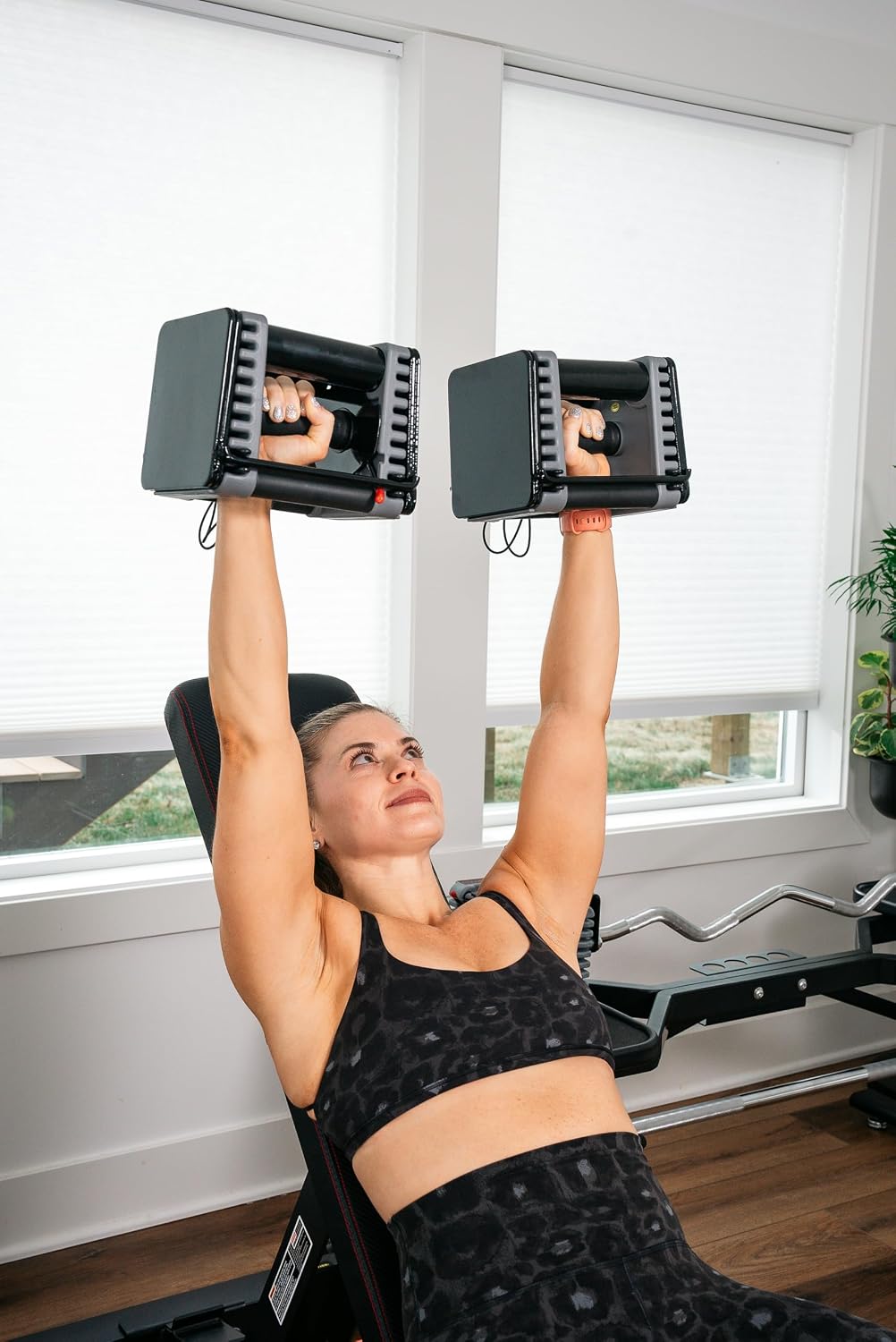
Building a home gym when two people are sharing one budget is genuinely different from building one for yourself. The word “sharing” is doing a lot of work there — it doesn’t just mean two sets of hands on the same dumbbell. It means two different strength levels, two different exercise preferences, two different ideas about what counts as a good workout, and zero interest in one person resetting every piece of equipment before they can start their session. If you’ve ever stood in your garage staring at a weight that’s too heavy to start from and too light to finish with, you already know the problem. This guide is a practical framework for couples, housemates, or any two-person training household trying to get real value out of a shared equipment investment — without fighting over who left the dumbbell at the wrong setting.
| EDITOR'S PICKPowerBlock Elite EXP Adjustable… | Mid-tierYes4All Kettlebell Sets | Budget pickTribe Lifting Fabric Resistance… | |
|---|---|---|---|
| Weight range | 5-50 lb | 5-30 lb | — |
| Type | Adjustable | Kettlebell | Band |
| Material | Steel | Cast Iron | Fabric |
| 5 pieces | — | — | ✓ |
| Price | $399.99 | $79.39 | $19.97 |
| See on Amazon → | See on Amazon → | See on Amazon → |
The Core Problem: A “Strength Gap” Is Normal, and Your Equipment Needs to Accommodate It
Here’s a number worth keeping in mind: in a mixed-gender couple where both partners train, the typical working-weight gap between them is somewhere between 30% and 60% across most movements. That gap is not a problem to solve through harder training — it’s a structural feature of human physiology. ACE Fitness’s published guidance on resistance training notes that programming should always be anchored to the individual’s current capacity, not a shared target. Which means the equipment you buy has to be flexible enough to serve both people at their actual weights, not some compromise number in the middle.
The reason this matters for purchasing decisions: equipment that only handles a narrow weight range will inevitably leave one partner underserved. The goal is to find gear with a wide enough range — or complementary enough coverage — that neither person is constantly working around what they have.
By the numbers:
| Equipment type | Typical range covered | Useful for both partners? |
|---|---|---|
| Fixed dumbbell pair (e.g., single 25 lb set) | 1 weight | Rarely — serves one person well |
| Adjustable dumbbell set (e.g., 5–52.5 lbs) | 15+ settings | Usually yes, if range is wide enough |
| Resistance band kit (tube or loop) | Light to heavy resistance | Often yes, especially across movement types |
| Kettlebell progression set (3–5 bells) | Multiple fixed weights | Yes, if you buy across the gap |
Adjustable Dumbbells: The Single Best Investment for Mixed-Strength Households
If there’s one piece of equipment that repeatedly comes up in shared-gym conversations, it’s the adjustable dumbbell — specifically because the same handle can be 8 pounds for one workout and 45 pounds for the next. Wirecutter’s guide to the best adjustable dumbbells, one of the most thoroughly reported buying guides in the fitness space, consistently highlights weight range as the primary filter when recommending for households with multiple users. That’s not an accident.
Owners of the Bowflex SelectTech 552 — which adjusts from 5 to 52.5 pounds in 2.5-pound increments at the low end — repeatedly note the dual-user case in their reviews. A common pattern: one partner is working in the 10–20 lb range for most exercises while the other is pulling 35–50 lbs. The same set covers both without compromise. The SelectTech 1090, which reaches 90 pounds per dumbbell, serves the same dual-user logic for households where the stronger partner is already an experienced lifter.
PowerBlock’s Elite EXP series draws similar praise from owners of shared home gyms, with particular attention to the stand — which reviewers regularly describe as a “housekeeping” item as much as a storage one, keeping the floor clear and making it obvious when weights haven’t been returned properly. In a two-person space, that kind of organizational infrastructure matters more than it sounds.
The tradeoff worth knowing: Adjustable dumbbells require a few seconds of adjustment between sets. That’s fine when you’re training independently. When you’re doing back-to-back sets with a partner on opposite ends of the weight range, that adjustment time stacks up. The fix most owners land on: one set for the primary user, one lighter fixed set (or a band) for warm-up and accessory work. A set of fixed hex dumbbells in the 5–20 lb range costs a fraction of an adjustable set and removes the bottleneck entirely during partner training.
Decision frame:
- If you train at different times: One wide-range adjustable set (SelectTech 552 or PowerBlock Elite) handles everything.
- If you train at the same time and alternate sets: Add a small fixed set or band kit so neither person is waiting.
- If the weight gap between partners is large (40+ lbs): Consider pairing an adjustable set with a second, lighter adjustable or fixed set rather than buying one massive set that one partner rarely touches below the midpoint.
Resistance Bands: Underrated as a Shared Solution, Especially Across Movement Types
Resistance bands — the two main types are tube bands (cylindrical, often with handles) and flat loop bands (continuous loops, no handles) — have a reputation as beginner gear, which undersells them badly in the shared-gym context. The real reason they work well for two-person households is that they’re naturally complementary across movement patterns and body types.
Tube band sets, which typically stack resistance levels from light to very heavy through a clip-and-handle system, serve upper-body pulling and pushing work across a wide range. Owners of WHATAFIT tube sets and similar stackable kits regularly note the range covered — light enough for shoulder rehabilitation or warm-up work, heavy enough for serious rows and presses. The portability is a side benefit; the range is the actual value.
Flat loop bands (also called fabric resistance bands or hip bands) skew toward lower-body use — glute bridges, lateral walks, banded squats. Review patterns across Renoj and Tribe Lifting fabric band products show heavy use by one partner for lower-body activation work, while the other partner is using tube bands for upper-body movements. That’s not a conflict — it’s a natural parallel-use case. Both people can train simultaneously without anyone waiting for equipment.
Barbend’s reviews of resistance band sets note that a full kit — light, medium, heavy, and extra-heavy tubes plus a set of loop bands — gives most intermediate users access to meaningful progressive overload on at least 10–15 exercises. For a beginner-to-intermediate pairing, that coverage is often enough to run complete programs for both partners without adding anything else.
The honest limit: Bands don’t replace heavy loaded movements for experienced lifters. For the stronger partner in a household where one person is already pulling deadlifts over 200 lbs, bands are accessories and warm-up tools, not primary strength work. Know which role they’re playing before you build your budget around them.
Kettlebells: The Case for Buying Across the Gap, Not to a Single Weight
A single kettlebell weight is almost never the right shared-gym purchase. The reason is mechanical: the swing, the goblet squat, the press — each movement has a wildly different appropriate load, and what’s challenging for one movement is trivial for another. Add two people with different baselines and you’re trying to serve four or five different weight needs with one fixed bell.
The Yes4All 5–30 lb kettlebell set consistently draws reviews from buyers who describe the range as intentionally spanning two users — a beginner and an intermediate. That framing is accurate. A 12 kg (26 lb) bell is a reasonable starting point for swings for one partner while the other is using an 8 kg (18 lb) bell for presses and a 16 kg (35 lb) bell for swings. Buying in a progression — rather than a single weight — gives both partners room to grow without buying new equipment every few months.
Best Choice Products’ kettlebell-with-rack sets draw attention in owner reviews for a reason that goes beyond aesthetics: the rack makes it visually clear which bell belongs where, which in a shared space means less time hunting and less friction over “who moved what.” Consumer Reports’ home gym equipment guidance consistently flags organization and storage as underweighted factors in shared-space planning. In a two-person gym, the rack is a cohabitation tool.
Decision frame for kettlebells:
- If one partner is a beginner: Buy a 3-bell progression centered on the beginner’s starting weight, not the advanced partner’s working weight.
- If both partners are intermediate or beyond: Buy across the range — light for accessory work, medium for presses, heavy for swings and deadlifts. Budget permitting, REP Fitness and Wolverson both offer quality singles that let you fill gaps without buying a full set.
Frequently Asked Questions
Can two people with very different strength levels share the same set of adjustable dumbbells?
Yes — this is specifically what wide-range adjustable sets are designed for. The Bowflex SelectTech 552 and PowerBlock Elite EXP both cover enough range to serve a beginner and an intermediate or advanced lifter on the same handle. The key is confirming the set actually covers the low end well; some adjustable dumbbells start at 10 or 15 lbs, which is too heavy for many beginner movements.
What’s the fastest way to switch weight settings between partners mid-workout?
Dial-select systems (like SelectTech) are faster than pin-select for small adjustments. For very large jumps — say, 15 lbs to 45 lbs — having a second piece of equipment at the ready (a fixed dumbbell or band) is faster than any adjustment system. If you’re training truly back-to-back, write both workouts in advance and sequence them so the weight overlap is higher.
Should we buy one heavy adjustable dumbbell set or two lighter fixed sets for a couple?
One wide-range adjustable set is almost always the better value if you train at different times. If you train simultaneously and do alternating sets, two moderate fixed sets covering each partner’s working range can eliminate adjustment wait times entirely — but they cost more and take up more space.
Do resistance band sets cover enough range to work for both a beginner and an intermediate user?
A full stackable tube band kit — typically five bands from light to extra heavy — covers most upper-body work for beginner through intermediate levels, per Barbend’s band testing coverage. The honest ceiling: bands become insufficient for primary strength work for advanced users, particularly in lower-body pulling patterns where loads need to be heavy.
Is a kettlebell rack worth buying if only two people are using the equipment?
For three or more bells, yes. The organizational benefit is real — owner reviews consistently mention the rack as the reason the space “feels like a gym” rather than a pile of iron in the corner. For one or two bells, a rubber mat keeps them stable and accessible without the cost of a rack.
How do we prevent one person from always having to reset the weight after the other uses it?
Build a simple shared rule into your gym setup: whoever finishes last returns equipment to the lowest setting. This is a standard practice in commercial gyms and it works because it’s unambiguous. For adjustable dumbbells, “lowest setting” is easy to define. For bands, “clipped and coiled” works the same way. The habit takes a week to establish and eliminates the friction permanently.
Sources cited: ACE Fitness, “Resistance Training for Different Fitness Levels”; Barbend, “Best Adjustable Dumbbells” and resistance band coverage; Wirecutter / New York Times, “The Best Adjustable Dumbbells”; Consumer Reports, “Home Gym Equipment Buying Guide.”