August 5, 2026 • Brian Webb • 10 min reading time • Prices verified June 29, 2026
Resistance Bands for Physical Therapy at Home: What Real Patients and Rehab Users Actually Buy
If you’ve been handed a printed exercise sheet by a physical therapist — or found one online after an injury — chances are it calls for a “resistance band.” That’s simply a stretchy band or tube made of latex or similar elastic material that creates gentle, scalable tension when you pull or push against it. Unlike heavy free weights, resistance bands let you work a muscle or joint through a controlled range of motion at loads low enough to protect healing tissue. They’re the workhorse of physical therapy (PT) clinics worldwide, and the good news is that the versions sold for home use are increasingly close in quality to what clinics stock on their shelves. This guide is for anyone navigating recovery — whether you broke an ankle, are rehabbing a rotator cuff, or are helping an elderly parent regain strength — who wants to spend their money on the right tool the first time, without overpaying or accidentally buying something that won’t hold up.
What follows draws on aggregated owner reviews from verified purchasers, published clinical guidance from the American College of Sports Medicine and ACE Fitness, and editorial analysis from Wirecutter. No brand paid for placement here.
The Two Main Band Types — and Why It Matters for Rehab
Walk into any PT clinic and you’ll see two distinct product families sitting in a basket by the treatment table. Understanding the difference before you buy saves you from a frustrating return.
Flat loop bands (also called flat therapy bands or exercise bands) are thin, wide strips of latex that come either in a continuous loop or as a long flat sheet you tie or hold yourself. TheraBand is the name most associated with this format — their color-coded system (yellow through black) has been a clinical standard for decades. The American College of Sports Medicine’s resistance training guidelines note that flat latex bands are among the most studied elastic resistance tools in rehabilitation research, making them a defensible choice when you’re following a clinical protocol.
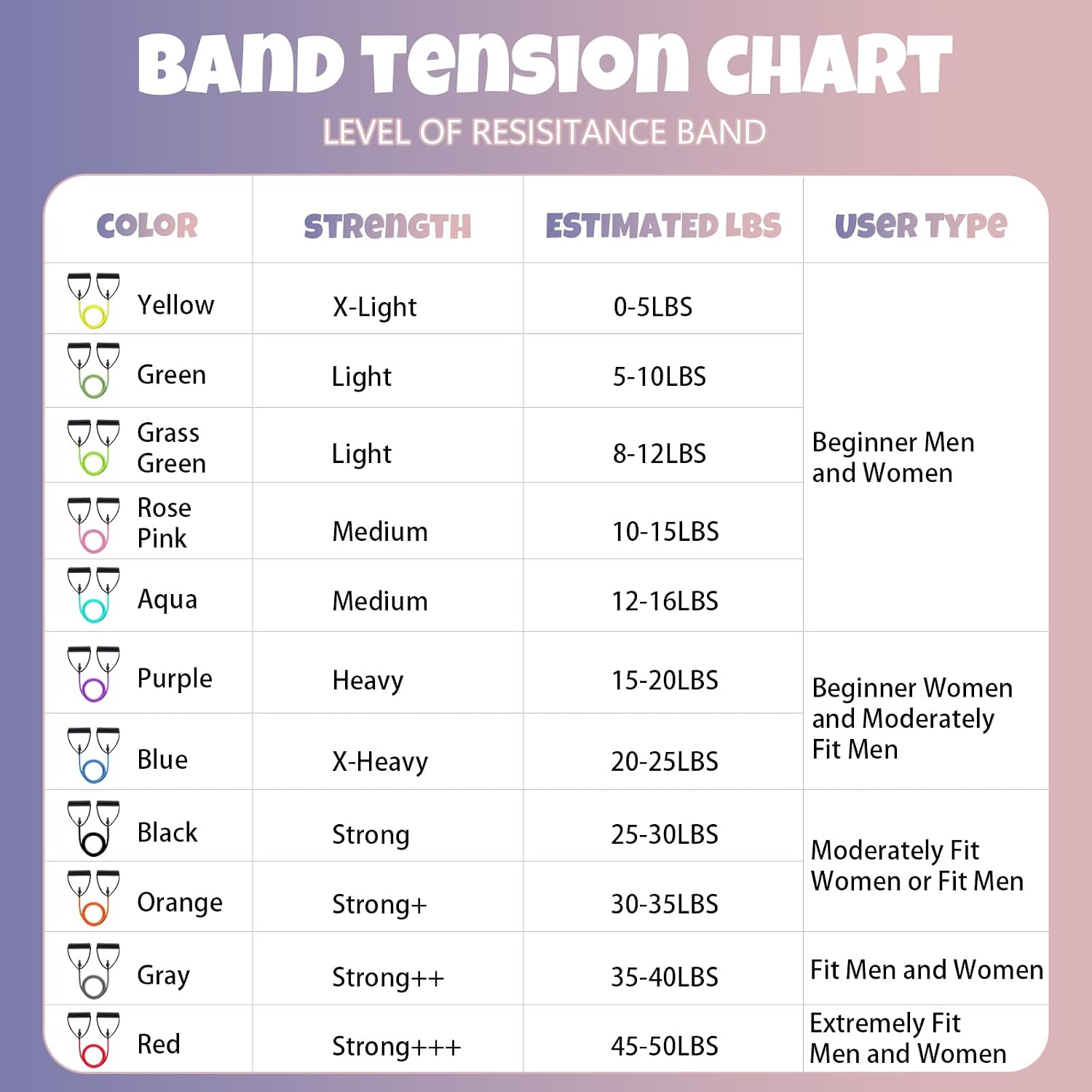
Tube bands with handles are exactly what they sound like: hollow rubber tubes with molded plastic handles on each end, sometimes sold with door anchors and ankle straps. Brands like Fit Simplify and RitFit sell popular sets in this format. They’re versatile for general fitness but require grip strength to hold the handles — which can be a problem if your injury involves the hand, wrist, or shoulder.
The third, increasingly important category is the connected-loop CLX design, pioneered by TheraBand. CLX bands have finger-loop segments built directly into the band at regular intervals along its length. This design was created specifically for users who cannot safely grip or wrap a band — including people with arthritis, post-surgical swelling, or limited hand dexterity. Reviewers from osteoporosis exercise classes and caregivers working with elderly users consistently call out the CLX loop design as a meaningful safety feature, not a marketing gimmick.
Decision frame:
- Gripping a handle is painful or impossible → CLX-style looped band
- Following a standard PT protocol with resistance levels in kilograms → flat TheraBand-style sheet or loop
- General conditioning and you want a full set with door anchor → tube band set with handles
What Real Rehab Users Are Actually Buying (And What They Wish They’d Known)
Aggregated owner reviews across the major bands in this category show a clearer picture than most product pages let on.
Fittest Pro flat loop bands show up repeatedly in ankle and lower-limb rehab contexts. One verified owner details a recovery from a broken ankle with extensive tendon and ligament damage — unable to walk for over a year — and using these bands as a self-directed PT tool specifically because clinical PT was financially out of reach. That’s a genuinely high-stakes use case, and the consensus from owners in similar situations is that the bands hold their shape and resistance through months of daily use without the snapping or delamination issues that cheaper sets sometimes develop.
Fit Simplify tube bands appear frequently in shoulder rehab reviews. One owner describes using the set to rehab a torn rotator cuff with the explicit goal of avoiding surgery — praising the consistency of resistance across reps and the durability relative to clinical-grade equipment they’d used in a PT office. Tube bands do require grip, so if your rotator cuff work involves positions where you’re holding tension overhead or behind your back, test the handle comfort before committing.
TheraBand CLX generates a distinctive reviewer profile: older adults, caregivers, and users in supervised group exercise settings. Reviewers from osteoporosis exercise classes specifically name the connected-loop design as what made the band usable for participants who couldn’t safely wrap a flat band around a hand. A caregiver working with a 90-year-old on seated arm and leg strengthening reports the CLX as the only format that worked safely for that population. This is meaningful signal — it’s not hype, it’s a specific design solving a specific real problem.
RitFit single bands attract a pragmatic buyer: someone who wants one band at one resistance for a specific protocol, without buying a set of five. Owners in this group frequently mention eliminating gym membership costs as a motivating factor, and the single-band format supports following a printed PT protocol without the confusion of “which of my five bands do I use today?”
The Resistance Level Problem — and Why PT Users Get It Wrong More Than Anyone
This is the most important practical section in this article, and it’s where a lot of self-directed rehab goes sideways.
Resistance band sets sold at retail are labeled with terms like “light,” “medium,” “heavy,” and “extra heavy.” These labels are not standardized across brands. One brand’s “medium” is another brand’s “light.” More importantly, the resistance ratings on most consumer flat loop bands run optimistic — reviewers consistently report that bands labeled “extra heavy” are, in practice, a baseline minimum for lateral walks (a common hip and glute rehab exercise), not a high-intensity option. For a PT user who needs precise, conservative loading to protect a healing joint, this is a real risk. Starting too heavy because a label says “light” when it’s actually moderate loads the injury before the tissue is ready.
ACE Fitness’s resistance band training guidance recommends that rehab users ignore color labels on unfamiliar brands and instead base starting resistance on a simple functional test: if you cannot complete 15 repetitions of the prescribed movement with good form and zero pain, the band is too heavy. Start lighter than you think you need to. You can always progress up.
By the numbers — a rough resistance reference for flat loop bands across common brands:
| Label | Approximate force at moderate stretch |
|---|---|
| Yellow / X-Light | 1–3 lbs |
| Red / Light | 3–5 lbs |
| Green / Medium | 5–8 lbs |
| Blue / Heavy | 8–13 lbs |
| Black / X-Heavy | 13–18 lbs |
These are approximations based on published manufacturer spec sheets from TheraBand and similar clinical-grade producers. Consumer-market bands vary widely. When in doubt, go one level lighter than you think you need.
Frequently Asked Questions
Are home resistance bands actually the same quality as the ones physical therapists use?
Sometimes yes, sometimes close. TheraBand’s flat bands and CLX bands are literally the same products sold to clinics and consumers — the clinic doesn’t get a special formula. What varies is manufacturing consistency at the lower end of the market; cheaper unbranded sets can have inconsistent thickness or latex mixing that makes resistance unpredictable. Owners consistently report that name-brand flat bands (TheraBand, Theragun-compatible alternatives) match the clinic feel, while bargain multi-packs are more of a gamble.
What resistance level should I start with if I’m recovering from a joint injury?
Lighter than your instinct says. Per Healthline’s overview of at-home physical therapy, the general clinical principle for early-stage joint rehab is that you should feel mild fatigue by rep 15, with zero pain during or after. If you feel any joint pain — not muscle burn, but joint pain — the resistance is too high. For ankle, rotator cuff, and knee rehab, most patients start in the yellow-to-red range on TheraBand’s scale regardless of their general fitness level.
Are looped CLX-style bands better than regular flat bands for PT exercises?
Better for specific populations, not universally superior. The CLX design is meaningfully better for anyone who cannot safely grip or wrap a band — older adults, post-surgical hands, arthritis, or limited hand strength. For users without those limitations, a standard flat band or tube band works equally well and costs less. The NSCA’s Essentials of Strength Training and Conditioning notes that the primary variable in elastic resistance effectiveness is consistent tension through the range of motion — which both formats can deliver when used correctly.
Can resistance bands really replace going to physical therapy?
They can replicate the equipment, not the expertise. Bands are the tool; a licensed physical therapist provides the diagnostic assessment, exercise selection, load progression, and movement correction that makes those tools work safely. That said, Wirecutter’s coverage of resistance bands acknowledges the real economic reality: many people cannot access or afford PT, and self-directed band work following evidence-based protocols is substantially better than no rehabilitation at all. If you’re doing your own PT, lean on published protocols from accredited sources and progress conservatively.
What’s the difference between flat loop bands and tube bands for rehab exercises?
Flat bands distribute force across a wider surface area, which tends to feel more stable against the skin during exercises like clamshells, lateral walks, or ankle dorsiflexion. Tube bands concentrate force at the handles or at a wrap point, which gives more versatility for pulling exercises but requires grip strength. Most clinical PT exercises for lower body and shoulder were originally designed with flat bands in mind; tube bands work fine as substitutes but may require slight setup modifications.
How do I know when to move up to a heavier resistance band during recovery?
The general principle from ACE Fitness’s resistance training guidance: when you can complete all prescribed repetitions with good form, no compensation, and no joint pain — for two consecutive sessions — you’re ready to consider a progression. In practice, most rehab progressions move one color/level at a time, not two. Jumping resistance levels too quickly is one of the most common self-directed PT mistakes and is how re-injury happens.
The Bottom Line: Decision Rules for Rehab Band Buyers
If you have limited grip strength, arthritis, or are buying for an elderly user → TheraBand CLX is the clear call. The connected-loop design exists specifically for this population and owners in exactly that situation validate it.
If you’re following a standard printed PT protocol for ankle, knee, or shoulder → start with a TheraBand flat band set in yellow through blue and ignore any resistance label from a brand you don’t recognize. Go lighter than you think you need.
If cost is the primary constraint and you need a full set → tube band sets like Fit Simplify or RitFit single bands offer solid durability per owner consensus, but map their resistance levels against your PT protocol carefully, since their labels rarely match TheraBand’s clinical scale.
If you’re uncertain about the resistance you need → buy the lighter option. Bands are inexpensive; re-injury is not. You can always add resistance next week. You cannot un-inflame a tendon.
The right band is the one you’ll actually use consistently, at a resistance that respects where your body is right now — not where you want it to be.