August 27, 2026 • Brian Webb • 10 min reading time • Prices verified June 29, 2026
Resistance Bands for Back Pain, Knee Rehab, and Home PT: What Real Patients Buy
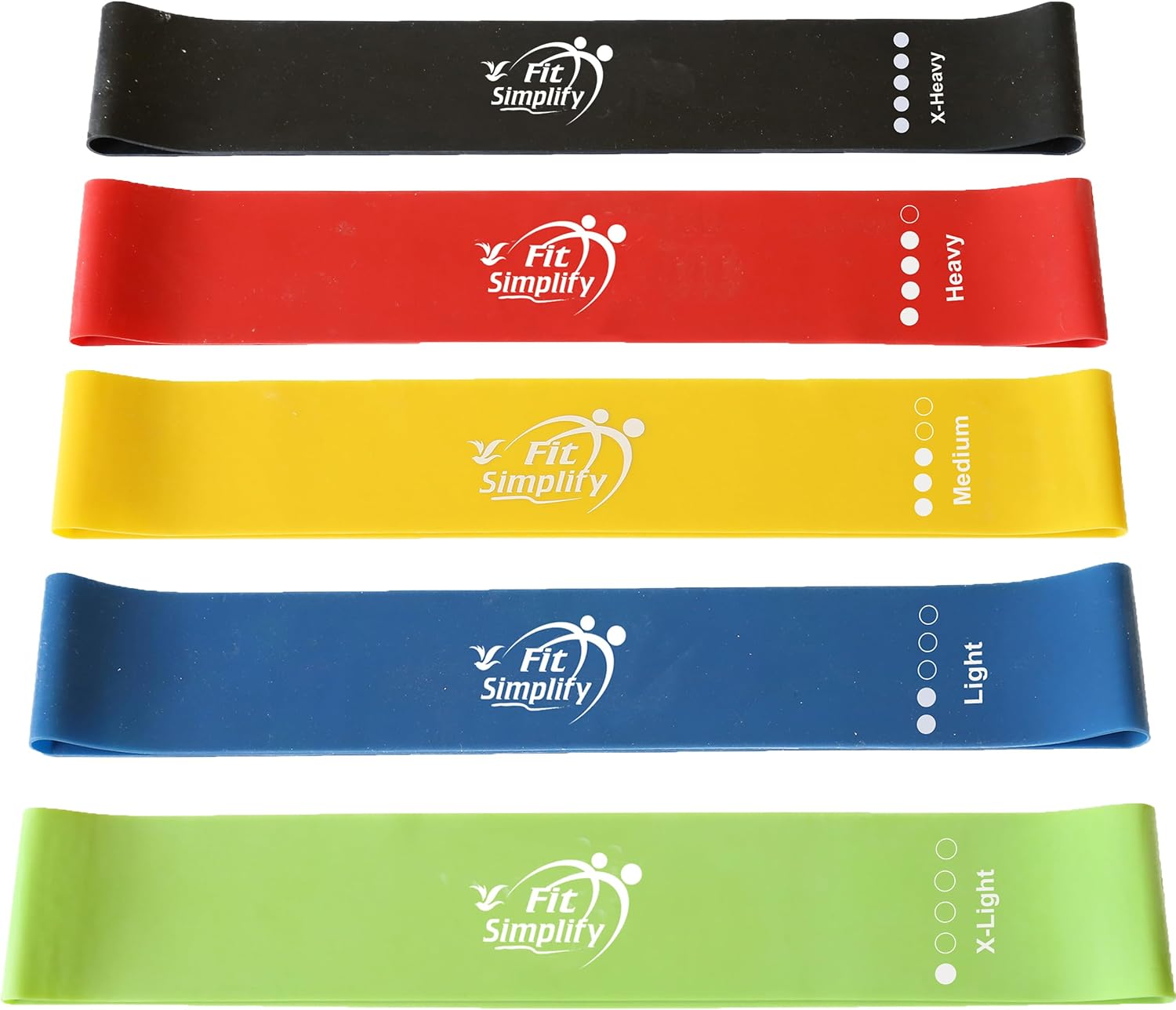
Resistance bands — flat or looped strips of elastic rubber that create tension when you stretch them — are one of the most commonly recommended rehab tools you’ll encounter in a physical therapist’s office. They’re low-impact, portable, cheap, and versatile enough to target the small stabilizing muscles around your knees, hips, lower back, and ankles that are often the root cause of chronic pain. If your PT handed you a printed exercise sheet and told you to “grab a band,” or if you’re navigating recovery on your own without regular clinic access, this guide will help you understand exactly what to buy, what the resistance colors mean, and when a basic loop band is enough versus when you need something more specialized.
The market is crowded with options ranging from a $10 five-pack to a $40 clinical-grade single band, and the difference matters more in rehab than in general fitness. Here’s what real patients and PT-referred buyers actually purchase — and why.
Why Physical Therapists Keep Recommending Resistance Bands
Physical therapists reach for resistance bands because they offer something weight machines and dumbbells can’t: graduated, joint-friendly resistance through a full range of motion. That means the band gets slightly harder to stretch as you move through the exercise, which mimics the natural resistance curve your muscles need during functional movements like standing from a chair (relevant for knee rehab) or rotating your torso (relevant for back pain).
Per ACE Fitness’s comprehensive guide to resistance band training, bands are especially effective for rehabilitation because they allow eccentric loading — controlled resistance on the return phase of a movement — without requiring heavy loads that could aggravate an injured joint. Harvard Health Publishing’s overview of knee osteoarthritis exercises specifically calls out light resistance band work as appropriate for rebuilding the quadriceps and hamstring strength that protects the knee joint over time.
The American Physical Therapy Association’s guide to low back pain similarly identifies progressive resistance exercise — starting light and adding load only as pain decreases — as a core component of evidence-based back rehab. Bands make that progression easy to self-manage at home because you can simply swap to the next resistance level without recalibrating a weight machine.
What real buyers confirm in aggregated reviews: the trigger for most band purchases is a PT recommendation, not general fitness interest. Fit Simplify’s loop band set is one of the most commonly PT-cited products in consumer reviews, with multiple owners explicitly stating their therapist named it or a product like it by description. That word-of-mouth trust carries a lot of weight in this category.
The TheraBand Color System and How to Use It
If you’ve done any reading on rehab bands, you’ve seen color-coded resistance charts. TheraBand, the clinical brand most often found in PT offices, established a standardized color sequence that has become the industry reference point. Understanding it helps you communicate with your PT and buy the right starting level.
TheraBand’s standard progression (lightest to heaviest):
| Color | Resistance Level | Typical Starting Use |
|---|---|---|
| Yellow | Extra-thin / lightest | Acute injury, post-surgery, osteoporosis exercise |
| Red | Thin / light | Early-stage rehab, low baseline strength |
| Green | Medium | Mid-stage rehab, general conditioning |
| Blue | Heavy | Stronger patients, later-stage rehab |
| Black | Extra-heavy | Advanced strengthening |
Per TheraBand Academy’s CLX product and exercise reference guide, this color sequence is consistent across their flat band, loop band, and CLX looped-segment products. Other brands — including generic loop band sets — often use their own color systems that do not match TheraBand’s scale. A “green” band from a budget five-pack may be meaningfully heavier or lighter than a TheraBand green. When your PT says “start with red,” they almost certainly mean TheraBand red or equivalent — ask them to clarify if you’re buying a different brand.
Practical starting point for common conditions:
- Knee rehab (post-meniscus, ACL, or osteoarthritis): Most PTs start patients at light or medium resistance — TheraBand red or green — for clamshells, terminal knee extensions, and leg press variations.
- Back pain (lumbar stabilization): Light to medium bands for bird-dog rows, pull-aparts, and seated rows. The goal is endurance and activation, not max strength.
- Ankle rehab: Very light resistance, especially in acute phases. TheraBand yellow or red for inversion/eversion and alphabet ankle exercises.
When in doubt: start lighter than you think you need. Barbend’s guide to resistance bands for physical therapy notes that the most common self-directed rehab mistake is starting too heavy, which shifts the load away from the target muscle and into compensatory patterns that can prolong recovery.
What to Buy: A Decision Framework by Condition and Budget
If Your PT Gave You a Sheet and Said “Get a Band”: Start with a Loop Set
A five-pack of flat loop bands (the small circular bands that slip around your thighs or ankles) covers 80% of common PT home exercise programs for knees, hips, and back. The Fit Simplify resistance loop band set is the most frequently PT-recommended consumer product in this category based on aggregated buyer reviews — multiple reviewers across verified purchase histories state their physical therapist either named it specifically or recommended a product matching its description. The set includes five resistance levels in a compact storage bag, which means you can match the PT’s intended progression without buying multiple products.
If you: were handed a standard knee or hip rehab sheet with exercises like clamshells, lateral band walks, or glute bridges — pick a loop band set.
If You’re Self-Directing Recovery Without Regular PT Access: Consider a Broader Set
One of the most striking real-world use cases in this category comes from reviewers of the Limm Fittest Pro resistance band set. A buyer recovering from a serious ankle injury and without current access to a physical therapist describes using the set for both functional recovery exercises and general muscle building — essentially self-directing a recovery program. The variety of band types in that set (flat loop bands plus longer bands for anchored exercises) gave her flexibility that a single-level loop set wouldn’t provide.
If you: are managing a longer-term recovery, doing a mix of rehab and general conditioning, or need bands you can anchor to a door for rows and pull-downs — pick a set that includes both loop bands and longer resistance bands.
If You Were Specifically Recommended TheraBand: Consider the CLX
The TheraBand CLX is a distinct product from TheraBand’s standard flat bands. CLX stands for “Consecutive Loops eXercise” — the band has a series of pre-formed loops along its length, like a long daisy chain. Reviewers who were referred by PT clinics or structured exercise programs (including osteoporosis exercise class instructors, based on published buyer reviews) praise it specifically for making exercise transitions faster and more intuitive. Instead of needing to tie knots or adjust grips between exercises, you simply move your hand or foot to a different loop.
The CLX design also makes it easier to involve a partner in assisted stretching, and it’s cleaner to use around arthritic hands because you don’t need to grip a rigid handle or tie a makeshift loop.
If you: were specifically told to get a TheraBand, do a high volume of exercises in sequence, or have grip or hand issues — pick the TheraBand CLX.
If You Want One Band That Might Replace a Gym Membership
The RitFit resistance band earns a notably enthusiastic review from a buyer who states the band eliminated her need for a gym membership entirely. This speaks to a real use case: a single heavy-resistance flat band, anchored to a door, can replicate rows, lat pull-downs, chest presses, and standing core work — enough to build a real full-body workout around.
The Fit Simplify pull-up resistance band set attracts a different but related buyer: a reviewer in her 50s describes using the bands specifically as a weight-free strength alternative, not for pull-up assistance. Wide, heavy flat bands anchored overhead or used for assisted bodyweight work fill a gap that loop sets can’t.
If you: want bands that double as general fitness tools beyond rehab, or need something that can anchor to a door or pull-up bar — pick a longer flat band or pull-up band set.
Is It Safe to Use Resistance Bands Without a PT Supervising?
This is the right question to ask, and the honest answer is: it depends on your condition and where you are in recovery.
For general back pain maintenance, post-discharge knee rehab following a clear PT-approved protocol, or low-load osteoporosis exercise, home band work is widely supported. Harvard Health Publishing’s knee osteoarthritis exercise guidance explicitly describes home exercise with bands as appropriate for ongoing management. ACE Fitness notes that resistance bands are among the lowest-risk modalities for independent exercise because the loads are inherently limited.
For acute post-surgical rehab, significant nerve involvement, or any situation where you’ve been told to follow a strict weight-bearing protocol, you should have at least one PT session to learn the correct form before going independent. Bands don’t protect you from bad form — they just don’t add much load if form breaks down, which is why the risk is lower but not zero.
The reviewer from the Limm Fittest Pro reviews who was self-directing her ankle rehab is a real case, not an edge case — a meaningful portion of the buying public in this category cannot access regular PT visits due to cost, geography, or insurance limits. If that’s your situation, start lighter than feels necessary, move slowly through ranges of motion, and stop any exercise that creates sharp or joint-specific pain (as opposed to muscle fatigue, which is expected).
Frequently Asked Questions
Are resistance bands actually effective for physical therapy at home? Yes, for most common conditions. Per the American Physical Therapy Association’s published guidance and Harvard Health Publishing’s exercise recommendations for knee osteoarthritis, progressive resistance exercise with bands is a core component of evidence-based home rehab for back pain, knee conditions, and hip instability.
What resistance level should I start with for knee or ankle rehab? Start lighter than feels challenging. For most adults beginning knee or ankle rehab, TheraBand red (light) or green (medium) is the standard clinical starting point. If you’re using a non-TheraBand set, choose the second-lightest band in the set and assess after a few sessions.
What is the TheraBand color-coding system and how do I follow it? TheraBand uses a standardized color sequence from yellow (lightest) through red, green, blue, and black (heaviest). Progress to the next color only when you can complete all prescribed reps with good form and minimal effort. Ask your PT which color to start with — if you’re self-directing, default to red or green.
Can I do physical therapy with a loop band, or do I need a band with handles? Most PT home exercise programs — especially for knees, hips, and ankles — are designed for loop bands used around limbs, not bands with handles. Handles become useful when you anchor a band to a door for pulling exercises (rows, pull-downs), which are more common in shoulder and upper-back rehab.
Is it safe to use resistance bands without a physical therapist supervising? For standard maintenance and post-discharge rehab following a clear protocol, yes. For post-surgical or complex neurological conditions, get at least one supervised session first. Start with the lightest resistance, move slowly, and stop for joint pain (not muscle fatigue).
What is the TheraBand CLX and why does it have loops along the band? The TheraBand CLX (Consecutive Loops eXercise) is a flat band with pre-formed loops at regular intervals. The loops eliminate the need to tie knots or adjust grip between exercises, making it faster to transition through a series of movements. Reviewers with arthritis or limited hand strength particularly value this design.