September 25, 2026 • Brian Webb • 9 min reading time • Prices verified June 29, 2026
Resistance Bands for Beginners: What First-Timers Actually Need to Know Before Buying
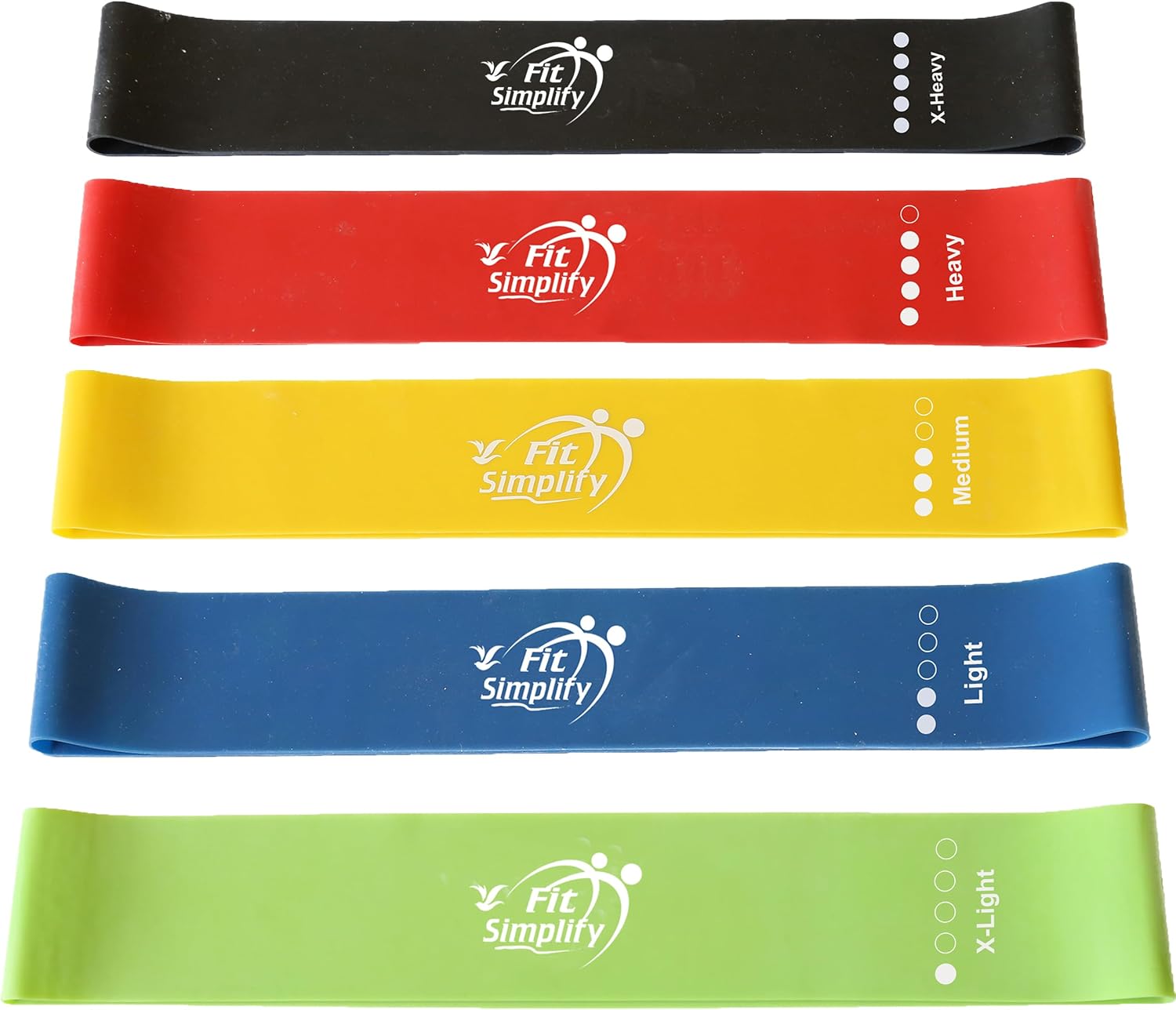
Resistance bands are exactly what they sound like: stretchy loops or tubes — usually made of latex or a synthetic rubber compound — that create tension when you pull, press, or step against them. That tension is what your muscles work against, the same basic principle as lifting a dumbbell. The difference is that bands are roughly the size of a rolled-up pair of socks, cost somewhere between $10 and $60 for a full starter set, and can train almost every muscle in your body without a rack, a bench, or a dedicated room. If you’ve been putting off home fitness because the gear feels expensive or complicated, bands are almost always the honest answer to “what should I actually start with?” This guide covers what the different band types do, which labeled resistance levels mean in practice, and what experienced band owners consistently say they wish they’d known before ordering their first set.
The Two Band Types You’ll Actually Encounter (and Which One to Buy First)
Walk the resistance-band aisle — virtual or physical — and you’ll run into two distinct product families. Knowing the difference before you buy saves you from ordering the wrong thing entirely.
Loop bands (also called flat bands, fabric bands, or mini bands depending on the width) are a continuous closed loop with no handles. They look like a thick rubber band or a fabric headband scaled up. You step inside them, pull them around your thighs, or anchor them under your foot. They’re the go-to for lower-body work — glute bridges, clamshells, lateral walks — and for assisted pull-up training at heavier resistances. The thin, flat ones you see in physical therapy offices are often called TheraBand-style bands (TheraBand is a brand name that became a generic term, the way Kleenex did for tissues).
Tube bands (sometimes called handled bands) look like a jump rope with D-ring handles at each end. They usually come in sets of five tubes color-coded by resistance, plus accessories: a door anchor (a small foam or rubber wedge that pins the band in a door frame so you can mimic cable-machine pulls), ankle straps for leg work, and a carry bag. The WHATAFIT set and Bodylastics sets are the most frequently referenced examples in this category.
The honest decision frame:
- If you want to do mostly lower-body and mobility work, start with a loop set.
- If you want a full-body workout — including rows, chest presses, and bicep curls — start with a tube set or buy both (many combo sets exist for under $35).
- If a physical therapist handed you a color-coded band for rehab, they almost certainly mean TheraBand or an equivalent single flat band, not a handled tube set. The RitFit single band is a frequently recommended equivalent in that category.
What the Resistance Labels Actually Mean (Spoiler: Lighter Than You Think)
This is the most consistent source of first-buyer surprise, and it’s worth being direct about it.
Band sets are usually labeled with pound or kilogram ranges printed on the band itself — “10–35 lbs,” “30–50 lbs,” that sort of thing. Those numbers represent peak tension at maximum stretch, not the average resistance you feel during a rep. Because bands follow a progressive tension curve — they start easy and get harder as you stretch them — the labeled number only tells part of the story. Across aggregated reviews on the Fittest Pro by Limm set specifically, buyers repeatedly flag that the band labeled “extra heavy” feels like a true beginner minimum for a healthy adult with any prior activity background. This is not a product defect; it’s just physics.
A quick frame for calibrating expectations:
| Band Label | Roughly Equivalent Dumbbell Feel (mid-range of motion) |
|---|---|
| Light (5–15 lb) | Appropriate for rehab, shoulder mobility, face pulls |
| Medium (15–30 lb) | Starter resistance for rows, curls, and pressing movements |
| Heavy (30–50 lb) | Intermediate-level work; “extra heavy” is a real starting point for healthy adults |
| X-Heavy (50–80 lb+) | Deadlift assistance, pull-up assistance, advanced pushing |
Per ACE Fitness’s practical applications guidance on resistance training, bands produce what’s called “accommodating resistance” — the resistance increases as you approach the strongest point in a lift rather than staying constant. This is actually a training advantage, but it means direct pound-for-pound comparisons to dumbbells don’t hold up neatly.
What Real Owners Consistently Report (the Good and the Annoying)
No single piece of sourced owner feedback shapes beginner buying decisions more than the pattern across reviews — so here’s what actually repeats:
The carry bag is more useful than it looks. Owners across multiple beginner-tier sets consistently mention buying for travel and ending up using the bands as their permanent home setup. The portability genuinely changes behavior: bands that fit in a bag get used; equipment that lives in a corner gets ignored. This sounds obvious until you’ve bought a set of dumbbells that now doubles as a coat rack.
The rubber smell is real and takes time to clear. WHATAFIT tube sets are the most frequently cited example, but the pattern appears across most latex and synthetic-rubber tube bands. Owners describe a strong chemical rubber smell that transfers to hands during the first several uses. The consensus recommendation — from reviewers and from practical guidance in Barbend’s band buyer’s guide — is to air the bands out flat outdoors or near an open window for 24–48 hours before first use. None of the reviewers who report this consider it a dealbreaker, and it fades with use and airing.
Budget bands snap. Build quality is a genuine differentiator. This is the single most emphatic pattern among Bodylastics buyers who switched from cheaper sets. Reviewers who’d owned entry-level bands that snapped during use describe the upgrade to Bodylastics as a clear quality step, specifically citing the layered safety cord inside the band tube that catches the snap if a band fails. This isn’t a claim that cheaper bands always fail — it’s a pattern in owner testimony worth weighing if durability matters to you.
Door anchors work on standard interior doors, but technique matters. More on this in the FAQ below.
Stacking bands for more resistance is real, but not infinite. Most tube-band sets and some loop sets are designed to let you clip multiple bands to one handle. Owners report this works well up to about three or four bands before the geometry gets awkward and the handles strain.
Do Resistance Bands Replace a Cable Machine?
This question comes up constantly, and the honest answer is: mostly yes for beginners, partially for everyone else.
A cable machine’s main mechanical advantage is constant tension through the full range of motion — the weight stack doesn’t change resistance as you move. Bands, as noted above, increase tension at stretch. For most beginner and intermediate goals — building general strength, learning movement patterns, improving mobility — bands cover the functional territory of a cable machine in exercises like rows, lat pulldowns, face pulls, tricep pushdowns, and chest flyes. Healthline’s overview of resistance bands vs. weights confirms that peer-reviewed research consistently shows comparable muscle-activation outcomes between band and free-weight training for beginners.
Where bands can’t fully replicate a cable machine: very heavy unilateral pulling work (like heavy cable rows for advanced lifters), exercises that require a smooth linear resistance curve, and any setup where you need the load to remain constant through the bottom of a range of motion. For a beginner training at home, this gap almost never matters in practice.
Frequently Asked Questions
Is the door anchor safe to use on interior doors?
Yes, with one important caveat: the anchor should be placed at the hinge side of the door, not the handle side, and the door should open away from you during the exercise so the anchor is wedged by your pulling force, not loosened by it. Standard interior hollow-core doors handle the forces involved in band training without issue for most exercises. Where owners occasionally report problems is with doors that don’t latch securely — a door that can swing open mid-rep is a safety issue, not a band issue.
Can you stack multiple bands together for heavier resistance?
Yes. Most tube-band sets are designed for it — the D-ring handles have multiple attachment points specifically for stacking. Loop bands can be doubled up as well, though the doubled-loop geometry is less comfortable. The practical limit most owners report is three to four tubes before the handle hardware starts to feel strained.
How do you get rid of the rubber smell?
Air them out before first use — lay them flat outdoors or near an open window for at least 24 hours. Wiping the bands with a damp cloth (water only; no harsh solvents that can degrade the latex) and then re-airing helps accelerate the process. The smell dissipates with regular use regardless. It is not a sign of a defective product.
What resistance level should a complete beginner start with?
A medium-weight band or the mid-range band in a five-piece set is the reliable starting point for upper-body work. For lower-body work, size up — glutes and legs are your body’s largest muscle groups and will outpace your medium band faster than you expect. Fittest Pro by Limm reviewer feedback specifically supports the pattern that “extra heavy” is often the real starting minimum for healthy adults, not the top of a beginner range.
Do these replace a cable machine entirely?
For most beginners, yes in practice. See the full discussion in the section above.
What does the included tape or mystery accessory do?
Some sets include a small roll of resistance-band tape or a figure-8 strap. The tape is for wrapping around the band anchor point or your wrist for grip comfort — not athletic tape for your skin. The figure-8 strap is an ankle or wrist attachment for exercises where the standard D-ring handle is awkward. If your set included something you can’t identify, the brand’s product page or instruction card almost always has a labeled diagram.
The Bottom Line: A Simple Decision Rule
If you are starting from zero and want to know what to buy: a five-piece tube-band set with a door anchor and a carry bag covers 90% of beginner home-workout needs for under $40. Air it out before first use, start with the medium band, and plan to upgrade to a heavier loop set or a higher-quality tube set like Bodylastics within six to twelve months as your strength catches up to the labeled resistance.
If a physical therapist has referred you to bands for specific rehab work, skip the handled tube sets entirely — a single flat TheraBand-style band or the RitFit equivalent at the resistance level your PT specified is the right tool for that job.
If you already own a cheap tube set that snapped on you: the Bodylastics internal safety cord is the specific upgrade owners in that situation consistently recommend.
The bands won’t let you down. The only real mistake is waiting longer than you need to.