August 15, 2026 • Brian Webb • 9 min reading time • Prices verified June 29, 2026
The Resistance Band Upgrade Path: When to Move From Loop Bands to Heavier Tube Sets
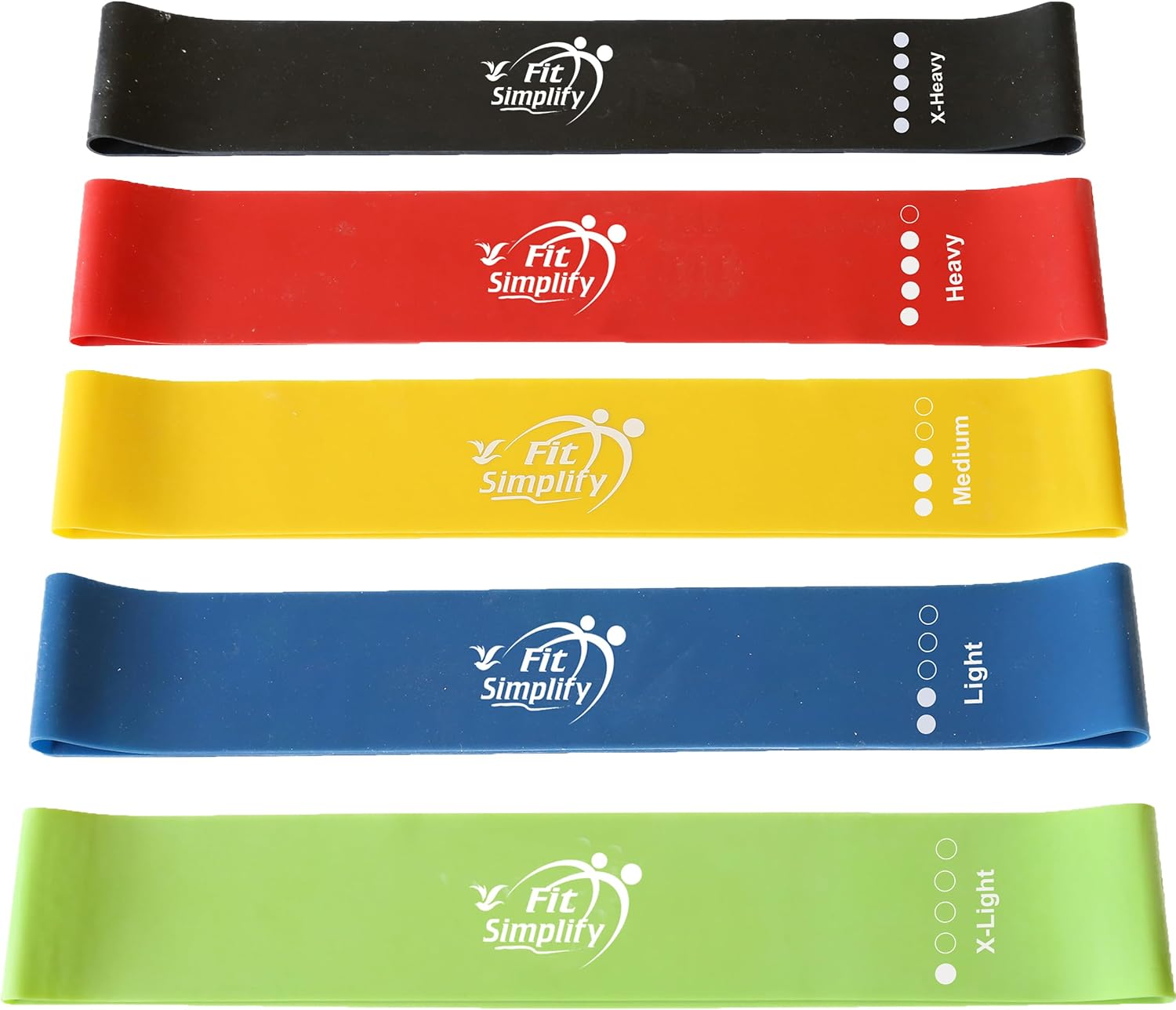
You started with a $12 loop-band set — a flat, stretchy ring, usually sold in a pack of four or five with color-coded resistance levels — and it served you well. Maybe you used it for glute bridges, lateral walks, and pull-apart stretches. But at some point things started to change: a band frayed, snapped during a set, or you simply ran out of resistance. You’re pulling the red (heaviest) band and it barely feels like anything anymore. That moment — the snap, the fray, or the plateau — is the clearest signal that it’s time to look at the next step: tube resistance bands with handles and a door anchor system.
This guide is for anyone standing at that crossroads. We’ll walk through what makes loop bands and tube bands genuinely different, what the real-world upgrade triggers look like, how to size your next purchase, and whether a high-resistance set is actually worth it. No fluff, just the decision framework.
Loop Bands vs. Tube Bands: The Functional Difference That Actually Matters
A loop band (also called a mini band or flat band) is a continuous flat ring of latex. It’s excellent for adding resistance to bodyweight movements: squats, hip thrusts, lateral walks, banded push-ups. The tension is distributed around a limb or across your back, which is comfortable and stable for those patterns.
A tube band is a hollow rubber or latex cylinder — think of a bungee cord — with handles attached at each end and, critically, a door anchor (a small loop or nylon tab) that lets you fix one end of the band to a standard door frame. That door anchor changes everything. Suddenly you have a fixed point to pull from or push against at shoulder height, chest height, or floor level, which replicates the movement patterns of a cable machine: rows, chest presses, lat pulldowns, tricep pushdowns, bicep curls, and single-arm exercises that loop bands physically cannot do.
This is the core value proposition that owners of mid-market tube band sets consistently return to: the door anchor and handle system functions as a cable machine replacement, not just a band upgrade. That framing matters when you’re budgeting. You’re not comparing a $12 loop set to a $40 tube set; you’re comparing a $40 tube set to a $1,500 cable stack machine. The tube set wins on square footage and cost every time.
The Three Real-World Signals That Tell You to Upgrade
The upgrade trigger is almost always one of three things:
1. Physical failure. The most common trigger is a band that frays at the connection point or snaps mid-rep. Loop bands are thin latex rings, and the edges near any stitching or overlap point are structurally the weakest spot. If you’ve had one band snap, the rest of the set is close behind.
2. Resistance ceiling. ACE Fitness’s resistance band training exercise science overview notes that as trainees develop foundational strength, progressive overload — the principle of gradually increasing the challenge on your muscles — requires more resistance over time. A standard loop band set tops out at roughly 30–40 lbs of resistance, which isn’t enough load to challenge intermediate pulling and pressing movements. If you’re consistently using the heaviest band in your set and the last two reps still don’t feel demanding, you’ve hit the ceiling.
3. Exercise ceiling. You want to do exercises the loop band simply can’t set up: standing rows, chest flyes, overhead tricep extensions, or single-arm cable-style work. These patterns require a fixed anchor point at variable heights. Without that, you’re working around physics rather than with it.
If you’re experiencing any one of these three, the upgrade decision is already made. The remaining question is which tube system to buy.
How to Size Your Tube Band Purchase
By the numbers
| Set type | Typical resistance range | Best for |
|---|---|---|
| Light starter tube set | 10–150 lbs stackable | Rehabilitation, beginners |
| Mid-range tube set | 10–200 lbs stackable | Most home gym users |
| Heavy-duty handle set | Up to 300 lbs stackable | Strength-focused, replacing cables |
The most important sizing insight comes from owners who purchased heavy sets in the 300-lb stackable category: a consistent and notable pattern emerges — buyers who upgraded from lighter sets say they wish they had bought even more resistance at purchase. This is actionable. Resistance bands feel lighter than free weights for the same labeled poundage because the tension increases as you stretch the band (you’re only at peak resistance at full extension). If you’re already an intermediate-level trainee, don’t buy to where you are today; buy to where you’ll be in 12 months.
A practical heuristic drawn from Barbend’s 2025 Best Resistance Bands buyer’s guide: if you can currently bench-press your bodyweight or row 135 lbs, start at a set that stacks to at least 200 lbs. If you’re newer to training, a set that reaches 100–150 lbs is the right entry point.
Stacking: yes, you can combine bands
Most tube band systems use a single carabiner-style clip at each handle, which means you can clip multiple bands to a single handle to stack resistance. This is a legitimate feature, not a workaround. The math: two 30-lb bands stacked equals roughly 60 lbs at peak stretch. The practical ceiling is usually four to five bands before the clip becomes awkward to hold. At the 300-lb set level, you rarely need to stack everything at once — those sets are designed for users who want to work up to that range over months.
The Safety Detail Generic-Set Buyers Miss
Here’s a spec that doesn’t appear on the box art of cheap sets: snap-reduction technology, a design approach most explicitly associated with Bodylastics sets in long-form owner feedback.
Snap-reduction refers to a construction method where each tube band is sheathed in a protective fabric sleeve or integrated with a containment cord that catches the band if it fails under load. When a standard latex tube snaps, it recoils at speed — which is a genuine injury risk to eyes, face, and hands. The sleeve catches the recoil. Bodylastics owners consistently mention this feature in long-form reviews, and it’s one of the few safety differentiators that generic-set buyers report wishing they’d known about before experiencing a band failure.
Is it mandatory? Not if you’re doing light work at low stretch. But if you’re stacking multiple bands for heavy pressing or rowing movements — where bands are under significant tension close to your face and torso — the sleeve design materially reduces risk. Wirecutter’s Best Resistance Bands review (New York Times) and Men’s Health’s resistance band buying guide both identify safety sheathing as a differentiating feature worth paying for at the mid-to-heavy tier. Budget accordingly.
A Note on the Physical Therapy and True Beginner Track
Before the FAQ, one important category clarification: a single high-quality tube band with a door anchor occupies a genuinely different niche from the upgrade path described above. Across owner reviews of entry-level single-band products, the dominant pattern is physical therapy patients and true beginners who describe the setup as a full starter gym at the entry level — not a step in the progression from loop bands to full tube sets. If you’re coming back from injury or starting from zero, a single reliable tube band may be exactly the right tool, full stop. You don’t need a five-band 200-lb system on day one of PT. The upgrade path described in this article assumes you’ve already cleared that baseline.
Frequently Asked Questions
How do I know when my loop bands are about to break?
Look for three warning signs: visible cracking or crazing along the surface (tiny surface fractures that look like a dried riverbed), discoloration or stickiness at the ends where the band forms its loop, and a loss of elasticity — if the band doesn’t snap back crisply when you stretch it lightly, the latex is degrading. Any of these means the band is close to failure. Retire it before it retires itself mid-rep.
Can you stack tube bands together to reach heavier resistance?
Yes — most tube band handles are designed for this. You clip multiple bands to the same carabiner handle and anchor. Two bands stacked doubles the resistance at any given stretch point. Most systems comfortably stack three to five bands. Above that, the grip becomes unwieldy. Always check that the clips are fully seated before pulling hard.
What exercises can tube bands with handles do that loop bands cannot?
The handle-and-anchor system opens up the full cable machine exercise menu: seated rows, chest presses, lat pulldowns, single-arm rows, tricep pushdowns, bicep curls, face pulls, and wood-chop core movements. Loop bands can approximate some of these by anchoring around a pole, but the handles give you a stable grip for true pulling and pressing mechanics. This is the main functional reason for the upgrade.
Is a 300-lb resistance band set actually usable for the average home gym person, or is it overkill?
For most people, a 300-lb set is aspirational hardware — you won’t use the full stack on day one. But owner feedback from buyers who stepped up to this tier consistently shows they wished they’d bought more resistance at the time of purchase, not less. If you’re replacing a cable machine, a 200–300 lb stackable set is the correct category. If you’re supplementing free weights for accessory work, 150 lbs of stackable resistance is plenty for most users.
What is snap-reduction technology and does it matter for safety?
Snap-reduction is a design feature — most commonly associated with Bodylastics — where each band is enclosed in a protective woven sleeve or integrated containment cord. If the latex band snaps under tension, the sleeve prevents full recoil toward the user. It matters most for high-tension stacked exercises performed close to the body. Generic sets at the $20–$30 price point rarely include this feature. At the mid-market tier and above, it’s worth checking the product spec sheet before buying.
Should I buy a single resistance band or a full set when starting physical therapy at home?
A single high-quality band is the right call for PT. You’ll be working in a controlled resistance range, following a therapist’s protocol, and likely doing high-rep, low-load movements. A full stacking set introduces variables you don’t need. A single tube band with a door anchor delivers reliable, consistent tension without the complexity of a multi-band system. If and when you’re fully recovered and want to build progressive strength, that’s the moment to revisit a full tube set with stacking capability.