September 27, 2026 • Brian Webb • 10 min reading time • Prices verified June 29, 2026
Plate-Loaded Kettlebell Handles vs. Adjustable Kettlebells: The Gear-You-Already-Own Advantage
A kettlebell is a cast-iron or steel ball with a flat base and a looped handle on top. You swing it, press it, and carry it — and those basic movements build functional strength across your whole body in ways that dumbbells alone don’t quite replicate. If you’ve been curious about kettlebell training but hesitated to buy a whole rack of fixed-weight bells (a quality set can cost hundreds of dollars), two alternatives have gotten genuinely good: plate-loaded kettlebell handles — essentially a steel frame that converts weight plates you already own into a kettlebell — and adjustable kettlebells, self-contained units that shift between multiple weights with a dial or pin mechanism. This article compares both types honestly, names the tradeoffs that actually matter, and gives you a clear decision rule so you can stop second-guessing and start training.
What You’re Actually Choosing Between
Before the math, a quick definition of each category:
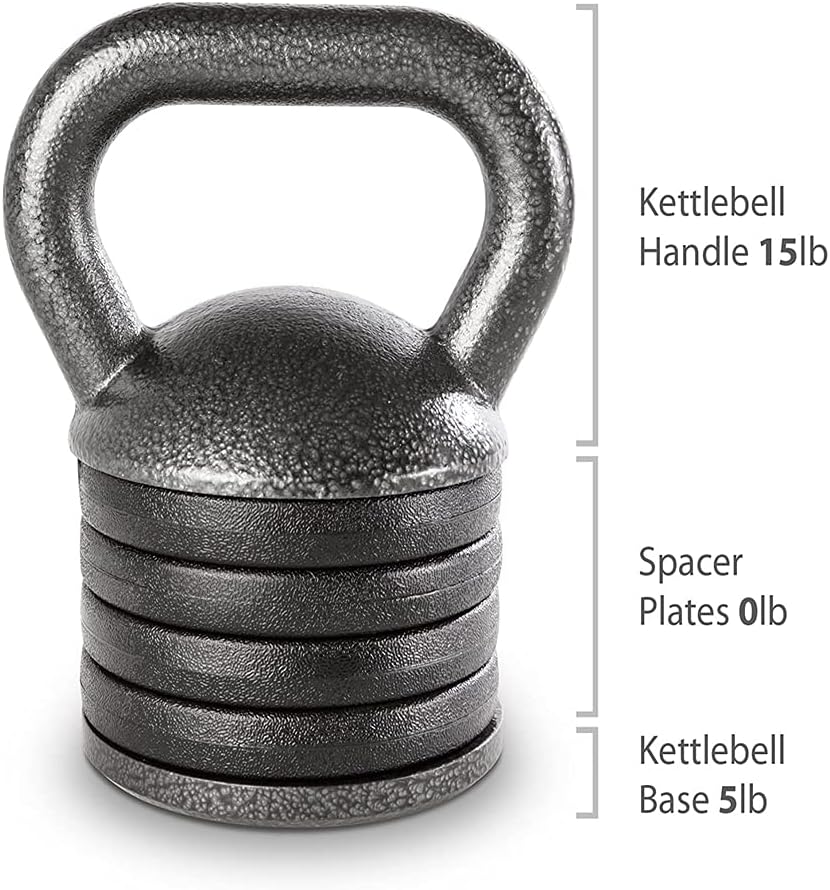
Plate-loaded handles are steel handles — sometimes called “kettlebell adapters” — that accept standard Olympic (2-inch hole) or standard (1-inch hole) weight plates. You slide plates on, secure them with a locking collar or nut, and train. The Apex Adjustable Kettlebell Handle is the most reviewed option in this space. It ships as just the handle, so your starting weight depends entirely on the plates you attach.
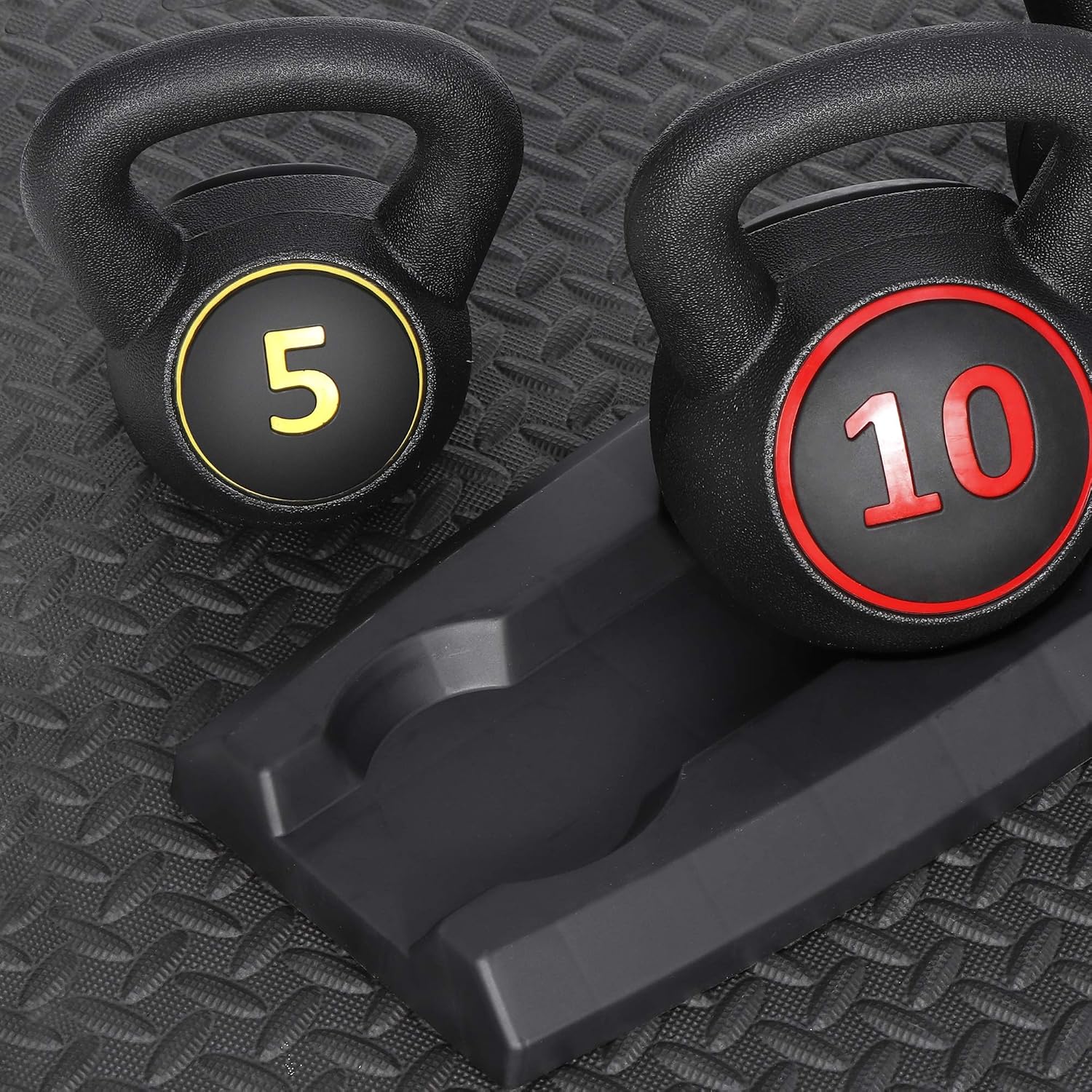
Adjustable kettlebells are purpose-built units with an integrated weight-selection system. The Bowflex SelectTech 840 Kettlebell is the dominant name here — it uses a dial mechanism that shifts an internal stack between six weight settings (8, 12, 20, 25, 35, and 40 lbs). The Yes4All Adjustable Kettlebell takes a different route: you add and remove weight plates yourself, similar in concept to the plate-loaded handle but housed in a shell designed to look and feel like a conventional kettlebell.
The core question isn’t “which is better in the abstract.” It’s: what do you already own, and what does your training actually require?
Head-to-Head: Three Tiers of Buyer
Budget Tier — The Plate-Loaded Handle for People Who Already Own Plates
The plate-loaded handle is a revelation for anyone with a barbell setup collecting dust. The Apex Adjustable Kettlebell Handle weighs approximately 5 lbs bare. Add a pair of 5 lb Olympic plates and you’re at roughly 15 lbs — enough for learning the swing pattern. Add heavier plates from your existing collection and you have a progressively loaded kettlebell for a fraction of the cost of buying cast-iron bells at each weight.
The genuine advantage is that the cost to unlock kettlebell training drops to near zero when you’re not buying iron from scratch. Barbend’s adjustable kettlebell buyer’s guide consistently identifies this as the defining value proposition for the plate-loaded category: if you already own plates, the handle is the obvious starting point.
The catch is the minimum starting weight. There is no 8 or 12 lb option. The practical minimum for a real training session lands around 15–20 lbs once you add the lightest pair of plates most people own, and that jump can be an issue for absolute beginners who need very light weight to learn movement patterns safely. Plan your plate inventory before assuming this covers your lowest-weight needs.
Plate swapping also takes time. You unscrew a collar, pull plates, add different ones, and re-secure. Barbend’s reviews of plate-loaded options flag this as the primary friction point across the category. It works fine for a planned workout where you know your weights in advance. It is annoying for super-sets or mid-set drops.
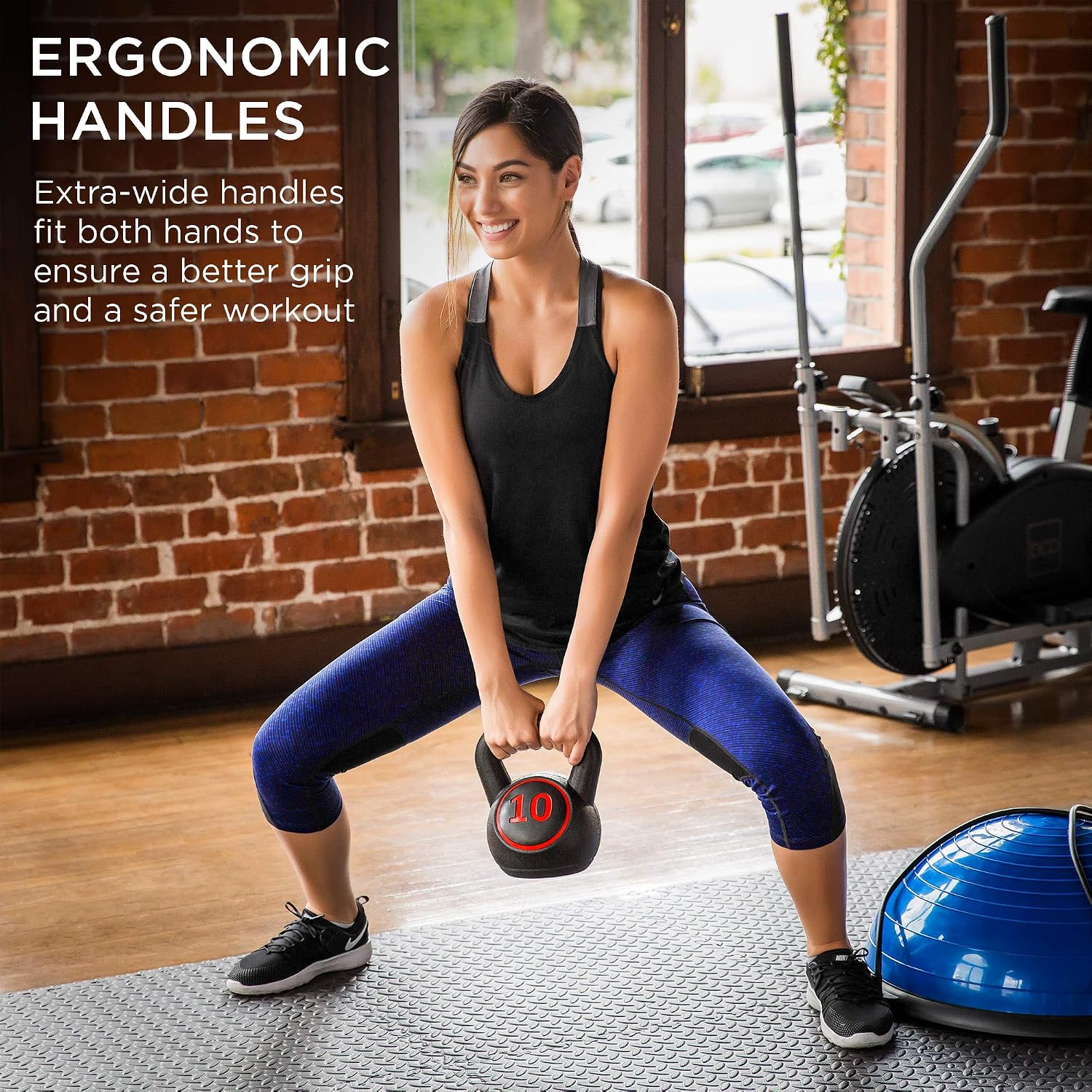
One durability point worth noting: Entry-level coated concrete or plastic-shell kettlebells in the sub-$30 range have a documented failure mode — cracking and material leakage under regular use. This is not a fringe complaint; it appears consistently in verified buyer feedback. The plate-loaded handle sidesteps this entirely because you are using actual iron plates — the same ones rated for barbell use.
F2C
$23.99
In stock on Amazon
Check price on AmazonMid-Tier — The Yes4All Adjustable Kettlebell
The Yes4All Adjustable Kettlebell sits between the bare handle and a premium dial-based unit. It uses a plate-loading design housed inside a kettlebell-shaped shell, so it looks and handles more like a conventional bell than the bare Apex frame does. It costs more than a bare handle and less than the Bowflex 840.
The experience is meaningfully different from the dial-based Bowflex — you are still removing and adding plates, which means the same collar-based friction. Owners who have used both report the Yes4All’s shell makes it feel more stable during swings than a bare handle loaded with loose plates, but the weight-change speed is similar to any plate-loaded system: slow relative to a dial mechanism.
Where the Yes4All earns its middle-ground position is versatility of loading. Because you control the plates, you can — depending on the plates you own — exceed the Bowflex 840’s 40 lb ceiling. For intermediate trainees who need weights in the 40–55 lb range but don’t want to spend on multiple fixed bells, this matters.
The ACE Fitness kettlebell training resource notes that handle diameter and shell geometry affect grip endurance in higher-rep sets. The Yes4All’s molded handle is closer in diameter to a conventional bell than the bare Apex frame, which some users find more comfortable for longer sessions.
Best
$54.99
In stock on Amazon
Check price on AmazonPremium Tier — The Bowflex SelectTech 840
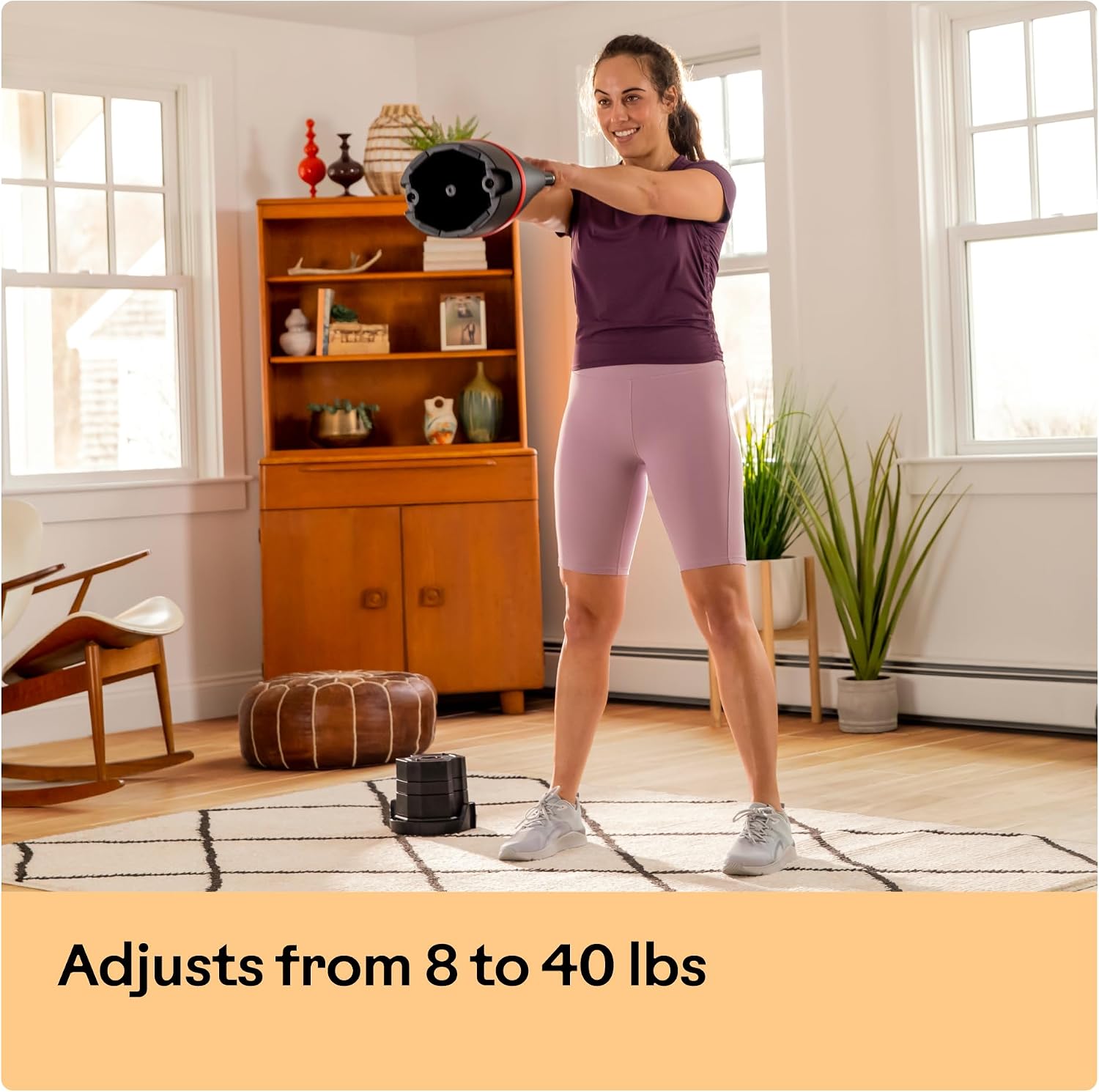
The Bowflex SelectTech 840 is, by a significant margin, the most reviewed adjustable kettlebell on the market. Its dial system works in seconds — no collars, no loose plates, no reassembly. Six weight settings (8, 12, 20, 25, 35, and 40 lbs) cover the full range most general fitness users will ever need.
The usage pattern that appears most consistently in owner feedback is two people with different strength levels sharing one unit. A partner using 20 lbs for goblet squats and another using 35 lbs for swings can hand the same bell back and forth without interrupting the session. The frictionless weight change stops being a convenience feature in this scenario and becomes a functional necessity. Wirecutter’s home gym equipment coverage identifies ease of shared use as a primary differentiator for dial-based adjustable weights across categories, and the 840 is the kettlebell expression of that principle.
Is it stable enough for swings? This is the most common performance question. Based on owner reports and Barbend’s assessment of the 840’s design, the answer is yes — with a caveat about feel. The 840’s housing is slightly wider than a traditional cast-iron bell, which changes the experience during ballistic movements. Owners who have trained with conventional bells note an adjustment period. That said, the community consensus across multiple fitness publications supports its use for swings, cleans, and goblet squats in general fitness contexts.
The Garage Strength equipment analysis of adjustable kettlebell categories notes that dial-based designs trade the tactile authenticity of a cast-iron bell for genuine convenience — a trade that suits general fitness training but is not the right call for competitive sport kettlebell, where handle diameter, balance, and shell shape are optimized specifically for high-rep ballistic work.
The 840’s 40 lb ceiling is its genuine limitation. Intermediate-to-advanced trainees who swing heavier weights will outgrow it. For that population, a plate-loaded system with heavier plates is the more economical long-term path.
BowFlex
$149.00
In stock on Amazon
Check price on AmazonBy the Numbers
| Feature | Apex Plate-Loaded Handle | Yes4All Adjustable | Bowflex SelectTech 840 |
|---|---|---|---|
| Min. weight (approx.) | ~5 lbs bare + plates | ~10–12 lbs | 8 lbs |
| Max. weight | Limited by your plates | ~50 lbs | 40 lbs |
| Weight increments | Whatever plates you own | Small plate jumps | 6 preset steps |
| Swap speed | Slow (collar required) | Moderate | Fast (dial system) |
| Entry cost if plates owned | Very low | Moderate | Higher |
| Entry cost with no plates | High (add plate cost) | Moderate | Lower |
| Best for | Plate owners, budget buyers | Mid-range flexibility | Shared use, convenience |
F2C — $23.99 Best — $54.99 BowFlex — $149.00
Soft Kettlebells: When Floor Safety Is the Priority
One category often left out of these comparisons deserves a direct mention: soft or sand-filled kettlebells, sometimes sold as kettlebell bags or soft-shell kettlebells. Buyers in this category are motivated almost entirely by one concern — protecting floors and feet — not exercise preference.
The Garage Strength equipment analysis notes that sand-filled designs absorb impact in ways iron cannot, making them a practical solution for hardwood floors, tile, and shared living spaces where dropping a cast-iron bell would be catastrophic. The trade-off is real: most soft options top out around 20–30 lbs, and the shifting fill can make ballistic movements like swings feel awkward compared to a fixed-weight bell.
Think of soft kettlebells as a first-apartment or apartment-dweller option — genuinely useful for a specific context, not the right primary tool once training intensity increases past the beginner stage.
The Clear Decision Framework
If you already own Olympic plates: The plate-loaded handle is the clear choice. You’re paying a fraction of the cost to unlock an entirely new movement pattern with equipment you already own. Accept the slower weight changes, plan your workouts ahead, and note the minimum-weight gap for very light needs.
If two people with different strength levels will share one bell: The Bowflex 840 is the right answer. The dial mechanism makes shared use genuinely practical. Its six settings cover most general fitness needs, and consistent owner reports support its durability for daily double-use.
If you’re starting from zero plates and want long-term flexibility: The Bowflex 840’s 40 lb ceiling may feel limited as you progress. Consider whether your long-term plan is to invest in a plate set anyway — if yes, start with the handle and buy plates progressively. If not, the 840 covers beginner-to-intermediate needs cleanly.
If floor and foot safety is your primary constraint: A soft kettlebell in a lower weight range is a legitimate first step. Upgrade to iron when you have a safer training space.
If you’re considering a coated concrete or plastic-shell budget bell: The durability complaints are too consistent to ignore. Cast iron or steel — even at a modest additional cost — is the reliable choice.
Frequently Asked Questions
Can the plate-loaded handle use standard weight plates I already own? Most plate-loaded handles, including the Apex, accept standard Olympic plates with a 2-inch center hole. Some handles also work with 1-inch standard plates — check the specific product specs before assuming. If you have a barbell setup, your existing plates almost certainly fit.
Is the Bowflex 840 stable enough for kettlebell swings or just slow movements? Owner reports confirm the 840 handles swings. The shell is slightly wider than a traditional cast-iron bell, so expect a brief adjustment period if you’ve trained with conventional bells. It is not designed for competitive sport kettlebell, but for general fitness swings, cleans, and goblet squats, the community consensus reported across Barbend and fitness review outlets is positive.
Will a coated concrete kettlebell hold up to daily use long-term? Not reliably. Verified buyer reports document cracking and material leakage from coated concrete and plastic-shell options under regular use. Cast iron is the baseline standard for durability. The additional cost is worth it to avoid that failure mode.
Are soft kettlebells heavy enough to provide a real workout? For beginners and for slower movements like goblet squats, yes — soft kettlebells in the 15–25 lb range are adequate. For ballistic movements like swings, the shifting fill feels awkward. They serve a specific use case (floor and foot safety in living spaces) better than they serve general fitness progression.
Can two people with very different strength levels share one adjustable kettlebell? Yes, and the Bowflex 840 is particularly well-suited for this. The dial system allows instant weight changes between users without any hardware. Multiple owner accounts describe couples and training partners with significantly different strength levels sharing one unit daily without interrupting workouts.
What is the minimum starting weight on the Apex plate-loaded handle without any plates? The Apex handle itself weighs approximately 5 lbs bare. The practical minimum for a real training session starts around 15–20 lbs once you add the lightest pair of plates most people own. If you’re starting from scratch with no plates at all, factor that plate cost into your total budget comparison.