June 27, 2026 • Brian Webb • 9 min reading time • Prices verified June 29, 2026
The Beginner Kettlebell Weight Mistake: Why Most People Start Too Heavy (or Too Light) Between 8kg and 24kg
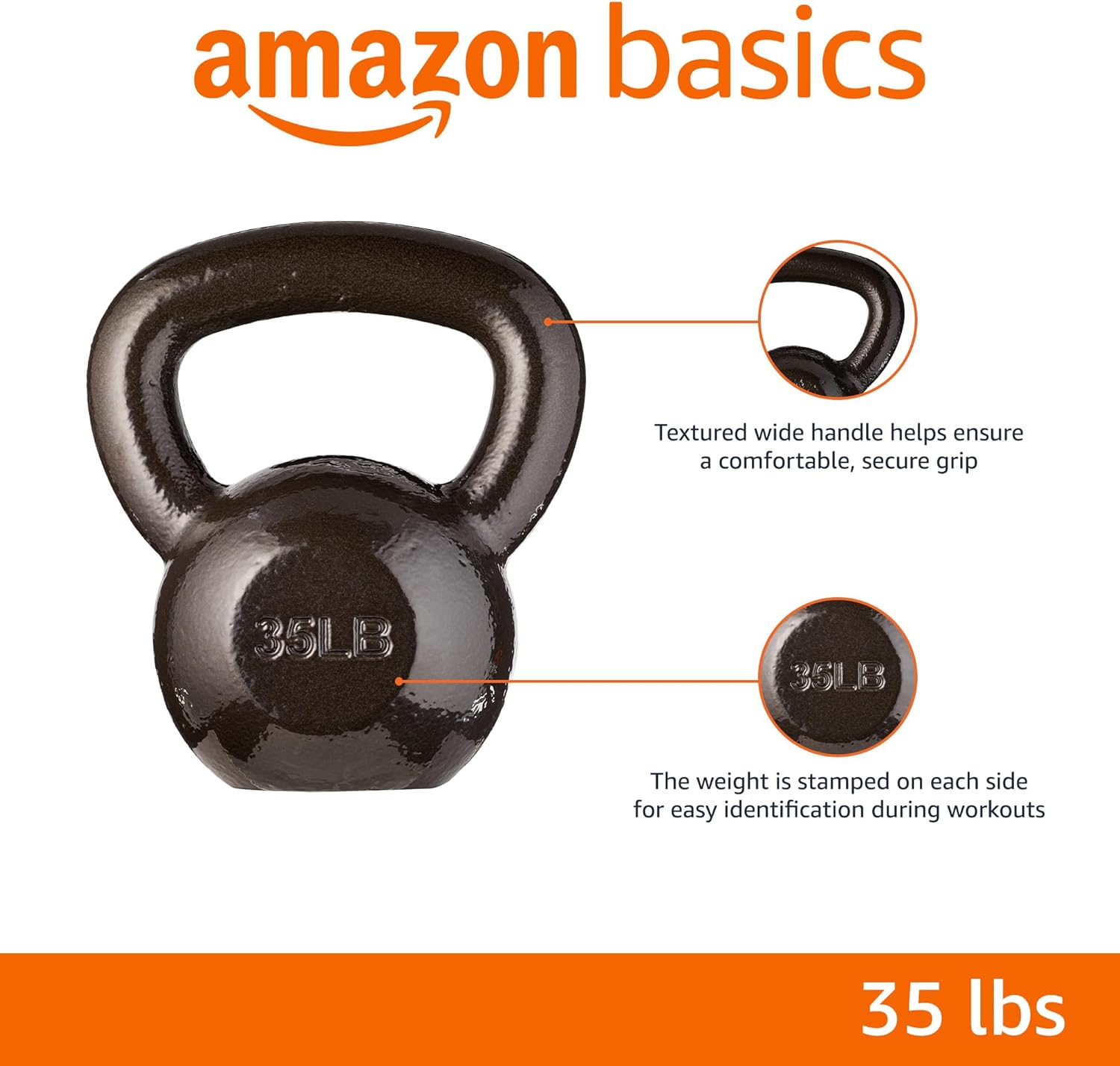
A kettlebell is a cast-iron or steel ball with a flat base and a looped handle on top — think of a cannonball you can grip and swing. Kettlebells are sold in kilograms (abbreviated “kg”), and the 8kg–24kg range — roughly 18 to 53 pounds — is where almost every beginner lands when shopping for their first one. That range sounds manageable, but it spans an enormous difference in difficulty. Pick a weight that’s too heavy and you’ll compensate with sloppy form, risk injury, and quit. Pick one that’s too light and you’ll feel nothing, get bored, and also quit. This guide exists to solve that problem. By the end, you’ll know exactly which weight makes sense for your body, your fitness background, and the movements you actually want to do — and you’ll understand the tradeoffs well enough to make a confident decision.
Why the 8kg–24kg Range Is Trickier Than It Looks
Most people assume kettlebell shopping works like buying dumbbells: heavier equals harder, lighter equals easier, start somewhere in the middle. That logic breaks down fast with kettlebells because the movements are fundamentally different.
The foundational kettlebell exercises — the swing, the goblet squat, the deadlift, and the Turkish get-up — are full-body, momentum-driven movements. A kettlebell swing, for example, uses your hips, hamstrings, glutes, and core simultaneously. It is not an arm exercise. That means the weight that feels appropriate for a swing is dramatically heavier than what you’d choose for, say, a shoulder press. Using one number for everything is the first mistake most beginners make.
The second mistake is treating “beginner” as a fixed attribute. Someone who has never exercised at all, someone who runs 5k three times a week but has never lifted anything, and someone who has done bodyweight training for a year are all “beginners” with kettlebells — but they have completely different starting weights. ACE Fitness’s kettlebell programming guidelines explicitly differentiate between movement-skill beginners and fitness beginners, noting that general conditioning history meaningfully affects appropriate load selection.
The third mistake is buying one weight and expecting it to cover every exercise. It won’t. The practical reality most experienced kettlebell practitioners report is that you need at least two reference weights — a heavier one for hip-hinge movements (swings, deadlifts) and a lighter one for pressing and Turkish get-ups.
The Weight Decision Framework: If You Are X, Start at Y
Here is the plain-language version of what the research and accumulated owner experience actually suggest. These aren’t arbitrary numbers — they reflect the load ranges cited in NSCA beginner resistance-training guidelines and corroborated by patterns BarBend’s buying guide editors and Garage Strength’s programming editorial consistently recommend.
By the Numbers: Suggested Starting Weights by Profile
| Profile | Hip-hinge movements (swings, deadlifts) | Pressing / get-ups |
|---|---|---|
| No fitness background, smaller frame (under ~140 lb) | 12kg (26 lb) | 8kg (18 lb) |
| No fitness background, larger frame (over ~140 lb) | 16kg (35 lb) | 12kg (26 lb) |
| Active background (cardio, sports) but new to lifting | 16kg (35 lb) | 12kg (26 lb) |
| Bodyweight or light resistance training experience | 20kg (44 lb) | 16kg (35 lb) |
| Strength training background (barbells, machines) | 24kg (53 lb) | 16–20kg (35–44 lb) |
A few things this table makes explicit that most buying guides gloss over:
The 8kg is almost always too light for hip-hinge work for anyone over a beginner-beginner. BarBend’s editors note that 8kg is a legitimate starting point for Turkish get-ups, halos, and arm-bar mobility work — movements where control and shoulder stability matter more than load. But for swings and goblet squats, an 8kg bell gives most adults almost no resistance to work against. You’ll be moving fast with no load, which teaches momentum without teaching strength. That’s not useful.
The 24kg is almost always too heavy for pressing movements in a true beginner. Owners across aggregated reviews consistently describe attempting military presses or cleans at 24kg without prior experience as a fast route to shoulder strain. The 24kg has a real place — it’s a legitimate swing weight for someone with a strength background — but it’s a poor first choice for someone who wants an all-around starting bell.
16kg is the weight that shows up most often as the right answer for the largest group of adult beginners. Men’s Health’s beginner kettlebell feature and multiple rounds of Garage Strength editorial guidance both land near 16kg as the consensus starting point for an average adult male with moderate fitness history and no dedicated lifting background. For women with a similar profile, 12kg covers most of the same ground.
The Movement-Specific Nuance That Changes the Calculation
If you’re planning a specific program — and you should be before you buy — the exercises in that program should determine your weight, not the other way around.
For the kettlebell swing: This is the highest-load movement for most beginners because the hips are doing the work. NSCA load-progression guidelines for beginners suggest starting at a weight that allows 10–15 clean reps with full hip extension, no rounding of the lower back, and no compensatory lean. If you can’t generate a crisp “pop” from the hips to drive the bell to chest height, the weight is either too heavy (you’re muscling it with your arms) or too light (you’re just flapping). Most beginners land on 16–20kg for swings once they’ve learned the hip-hinge pattern.
For the goblet squat: A goblet squat holds the kettlebell at chest height with both hands while you squat. The weight is front-loaded, which makes it easier than a swing — but the demand on your thoracic spine and core to stay upright is real. Plan on using a weight 4–8kg lighter than your swing weight for goblet squats, at least initially.
For the Turkish get-up (TGU): The TGU is a slow, controlled movement that takes your body from lying on the floor to standing, all while holding a kettlebell overhead. It rewards patience over load. Owners and coaches consistently describe starting TGU work with whatever weight you can comfortably press overhead for 5 reps — which for most beginners is 8–12kg. Garage Strength’s editorial guidance specifically calls out the TGU as the movement most likely to expose shoulder instability, so starting conservative is the right call.
For pressing movements (military press, clean and press): This is where weight selection matters most for injury risk. The shoulder joint is the most complex and most vulnerable structure you’re loading in a press. The NSCA’s beginner resistance-training position statement recommends starting pressing movements at loads that allow a minimum of 12 clean reps before adding weight. For most adults, that puts pressing at 8–12kg for women and 12–16kg for men — both lower than most people guess.
The “One Kettlebell” Problem and What to Do About It
Budget reality is real. If you’re buying one kettlebell to start, the honest guidance is:
If you’re buying one bell, buy 16kg (if you’re an average adult male) or 12kg (if you’re an average adult female), and accept that it will be imperfect for some movements. It will be slightly heavy for pressing and get-ups, which means you’ll spend more time on technique and less on load — which is actually useful early on. It will be slightly light for swings as you progress, which means you’ll need to add volume (more reps, more sets) instead of weight.
The moment you want a second bell, buy one size up for hip-hinge work and keep the original for pressing. That two-bell system covers about 80% of beginner programming without a large investment.
On budget: REP Fitness kettlebells in the 12–20kg range sit in the $40–$80 per bell window as of mid-2026, and owners in long-run reviews consistently rate their coating and handle finish as competitive with bells costing significantly more. Wolverson and Eleiko occupy the premium end of the market ($60–$120+ per bell in this weight class) and are worth the price if you’re building a permanent home gym and prioritize longevity — their spec sheets cite more precise weight tolerances and more durable powder coatings. For a single starter bell, the mid-market options are genuinely fine.
The Progression Path: What Comes After Your First Bell
One thing worth planning for before you buy: kettlebell training has clear, predictable progression steps, and knowing them in advance prevents you from buying the wrong starting weight.
The standard progression pattern documented in ACE Fitness programming guidelines and echoed in BarBend’s training editorial runs roughly like this:
- Weeks 1–4: Establish the hip-hinge pattern, basic swing form, goblet squat depth. Prioritize technique over rep count. Your starting weight should feel almost too easy by week 3 — that’s correct.
- Weeks 4–12: Add volume (sets and reps) before adding weight. Owners who rush the weight jump before completing this volume phase are the ones who report the nagging shoulder and lower-back issues in reviews.
- Month 3 onward: First weight jump, typically 4kg (one bell size). This is when that second bell purchase makes sense.
If your goal is to be swinging 24kg within six months — a completely realistic target for someone starting at 16kg with consistent training — you’ll move through 20kg on the way there. Planning the trajectory lets you buy smarter from the start.
The Decision in Plain Terms
Kettlebell weight selection has a reputation for being intuitive but is actually specific enough to get badly wrong. The moves matter as much as the person. Starting too heavy is the more common mistake — it shows up in form breakdown, compensation injuries, and early dropout. Starting too light is mostly just inefficient, not dangerous, but it does lead to underestimating the tool.
If you are an average adult with some activity background, the 16kg / 12kg split (heavy bell / light bell) covers most of what you need to start. If you have zero fitness background, drop to 12kg / 8kg. If you have a genuine strength-training history with barbells or machines, 20kg / 16kg is defensible. Every other scenario is a variation on those anchors — use the table above, match it to your program’s movements, and buy accordingly.
The goal isn’t to buy the weight that sounds impressive. It’s to buy the weight that lets you train consistently for the next three months without hurting yourself or getting bored. That’s the bell worth buying.