July 9, 2026 • Brian Webb • 10 min reading time • Prices verified June 29, 2026
Kettlebell Sets With Racks for Home Gyms: How to Build a Progression-Ready Weight Station Without Overspending
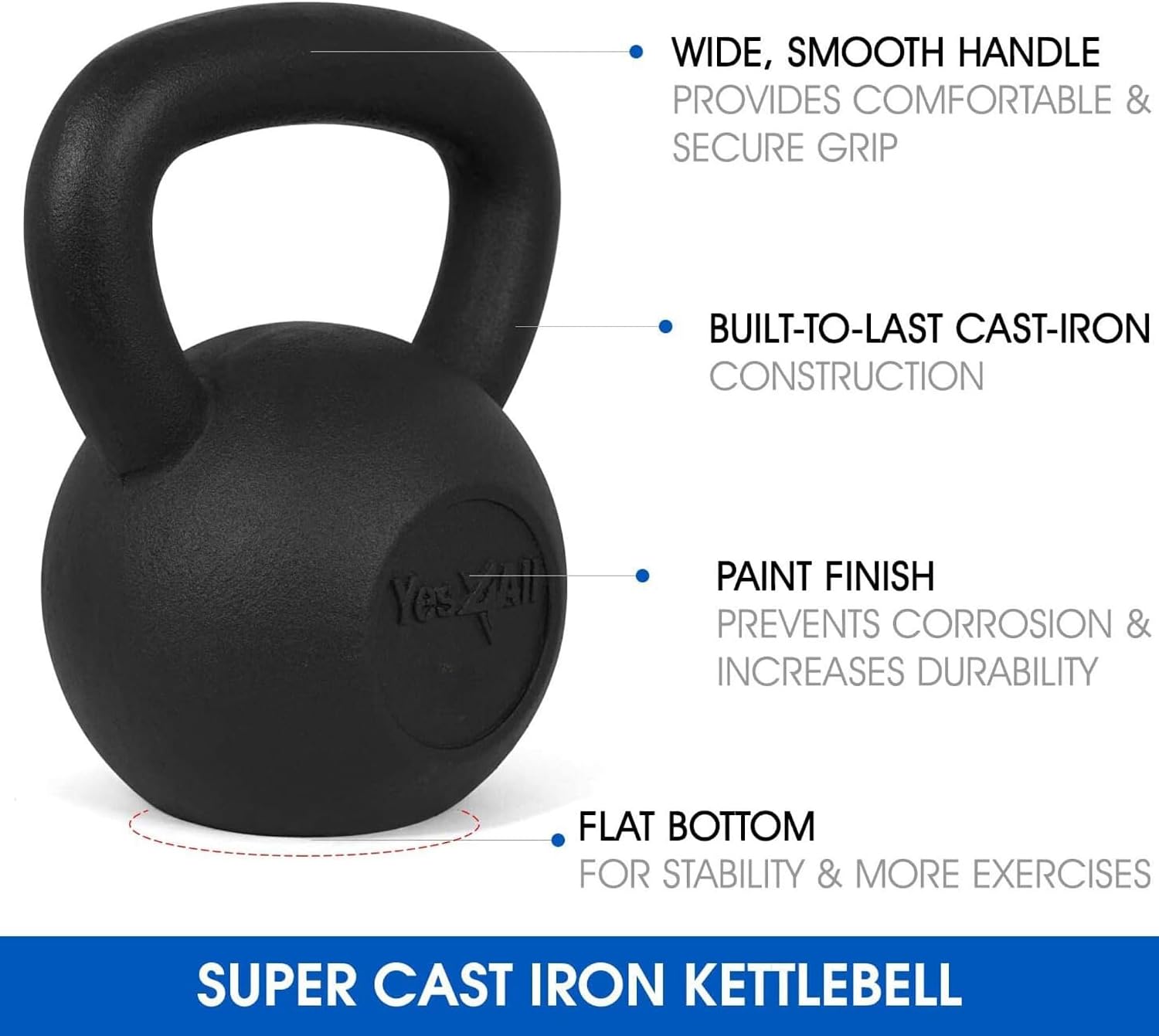
A kettlebell is a cast-iron or steel weight shaped like a cannonball with a flat base and a looped handle on top. Unlike a dumbbell — which you grip from the side — a kettlebell’s handle sits above its center of gravity, which changes how it moves and makes it unusually good for swinging, pressing, and carrying exercises that build strength and cardio at the same time. A rack, in this context, is simply a floor-level storage stand that holds your kettlebells upright and off the ground so they’re organized, easy to grab, and not a stubbed-toe waiting to happen. Together, a matched set of kettlebells on a dedicated rack is often called a weight station — and building one well, without buying more than you need or locking yourself into a dead-end setup, is exactly what this guide is about.
Whether you’re outfitting a garage gym for the first time or filling the last gap in a serious home setup, the decisions here matter more than they look. The wrong rack wastes floor space. The wrong weight spread means you’ll be replacing bells within a year. Here’s how to get it right.
Why Kettlebell Sets Beat Buying Singles (And When They Don’t)
The case for buying a set — typically three to five bells covering a weight range — comes down to one concept: progression. Progression means gradually increasing the challenge of your training over time, which is how the body actually gets stronger and more conditioned. ACE Fitness’s kettlebell training overview describes progression as the fundamental driver of long-term adaptation, and kettlebell work in particular demands it: a weight that’s hard for swings is often too light for deadlifts, and a weight that’s right for deadlifts can be too heavy for Turkish get-ups.
A set lets you match the right weight to the right movement, on the same training day, without guesswork.
The tradeoff: Sets cost more upfront. A three-bell set from a mid-tier brand like REP Fitness (say, 12 kg / 16 kg / 24 kg) runs roughly $120–$200 depending on current pricing, versus $40–$70 for a single bell. But owners on long-run reviews consistently report that people who buy singles end up repurchasing two or three times over 18 months, spending more in the end and storing a mismatched pile of bells that no rack fits cleanly.
When singles win: If you are locked into one specific training style — say, heavy one-arm presses only — and you know your target weight with confidence, a single bell makes sense. Coaches with a stable client population in boutique settings sometimes buy multiples of one weight for this reason. But for most home-gym builders with varied programming, a set is the economically and practically smarter move.
Choosing the Right Weight Spread for Your Rack
This is where most buyers make their first expensive mistake: buying weights that are either too close together (so there’s no meaningful jump between bells) or too spread out (so there’s a gap in the progression no one can train through).
The standard progression model used by most programming frameworks spaces kettlebell weights in the traditional increments: 8 kg, 12 kg, 16 kg, 20 kg, 24 kg, 28 kg, 32 kg. These correspond roughly to 18, 26, 35, 44, 53, 62, and 71 lbs. BarBend’s kettlebell buying guide notes that the 16 kg–24 kg range is the most-used for intermediate trainees, and that building your set outward from that core is the most cost-efficient approach.
A practical decision framework:
- If you’re brand new to kettlebell training: Start with three bells — a light (8–12 kg), a medium (16 kg), and a moderately challenging weight (20–24 kg). This covers the full range of movements you’ll encounter in any beginner or intermediate program.
- If you’re an experienced lifter adding kettlebells: You can skip the lightest bells and anchor at 16 kg / 24 kg / 32 kg. This is the classic “hard style” entry spread that accommodates swings, cleans, presses, and snatches at a meaningful level.
- If you’re a trainer or coach outfitting a studio: You’ll likely want 8 kg through 32 kg in full increments — six to eight bells total — which dictates a full-length horizontal rack (more on that below).
By the Numbers: Typical Set Costs in Mid-2026
| Set Configuration | Brand Tier | Approximate Cost |
|---|---|---|
| 3-bell starter (12/16/24 kg) | Mid-market (REP Fitness) | $130–$195 |
| 5-bell intermediate (12–32 kg) | Mid-market (REP Fitness) | $260–$380 |
| 3-bell premium (16/24/32 kg) | Premium (Wolverson / Eleiko) | $320–$550 |
| 6-bell pro spread (8–32 kg) | Premium (Wolverson / Eleiko) | $650–$1,100+ |
Prices reflect mid-2026 market conditions. Eleiko and Wolverson price at a premium partly due to tighter weight tolerances — spec sheets from both brands document ±1% or better, compared to ±3% typical at the mid-market tier.
Rack Types: What Actually Fits Your Space and Budget
A rack is not an afterthought. It determines your floor footprint, your expansion ceiling, and whether your weight station stays organized six months from now.
Horizontal A-Frame Racks
These are the most common: a low, angled frame with two or three tiers of horizontal bars, onto which kettlebells rest by their handles. Rogue Fitness’s horizontal kettlebell rack pages show units that hold six to eight bells in a footprint of roughly 36–48 inches wide by 18 inches deep — manageable in most garage or basement setups.
Pros: Stable, wide capacity, easy to load and unload. Most work with any round-base bell from any brand.
Cons: Fixed width. If you add more bells beyond capacity, you need a second rack or a longer unit. Owners on aggregated reviews note that cheaper versions (under $60) can wobble when partially loaded — a real issue if you’re pulling a 32 kg bell off a tippy frame.
Our read: For a three-to-five bell set, an A-frame rack in the $80–$150 range hits the right balance. REP Fitness’s horizontal rack is frequently cited in BarBend’s storage roundups as a reliable mid-market option with clean welds and a stable base.
Vertical / Tower Racks
Tower-style racks store bells in a vertical column, with each bell sitting in its own cutout or cradle. They take up less floor space in one dimension — sometimes as little as 12 inches square — but get tall. Wolverson Fitness produces a vertical tower rack that their spec sheets rate for bells up to 32 kg per slot, with a four-bell column configuration.
Pros: Minimal footprint, good for small rooms or shared spaces.
Cons: Harder to grab bells quickly. Top slots on taller units require lifting heavy iron overhead, which is awkward and a mild safety concern with very heavy bells. Expansion means buying a second tower, which can look disjointed.
Our read: Best for setups with three bells or fewer, or for a supplementary rack in a tight corner. Not the right choice if you expect to expand to six or more bells.
Wall-Mounted Brackets
A wall-mounted horizontal bracket — essentially a cantilevered shelf bolted into studs — takes up zero floor space and can be configured for almost any number of bells. Rogue sells bracket systems designed specifically for their bells, though most standard bracket designs work with any flat-base kettlebell.
Pros: Zero floor footprint, scales cleanly, looks intentional in a dedicated gym room.
Cons: Requires proper stud or masonry mounting — owners consistently report that improper installation on drywall alone fails quickly under loaded weight. Renters or anyone who can’t modify walls should skip this.
Our read: For serious home-gym builders with dedicated spaces and wall access, wall-mounted brackets offer the cleanest long-term solution. The upfront installation work pays off if you’re staying in the space.
The Brands Worth Your Attention (And One Honest Caveat)
REP Fitness sits at the mid-market sweet spot most home-gym builders will recognize. Their cast-iron competition-style bells have a consistent handle diameter (33 mm, per their published spec sheets), which matters for grip consistency across weights. Owners in long-run reviews describe the finish as durable and the weight accuracy as acceptable for general training. Good starting point for anyone spending $150–$400 on a set.
Wolverson Fitness is a UK-based manufacturer whose steel competition kettlebells maintain the same handle diameter and base size across all weights — a key feature for serious training because it means your technique doesn’t change as you move up in weight. Wolverson spec sheets document their weight tolerance at ±1%. Worth the premium if competition-style training or coaching is on the agenda.
Eleiko is the gold standard of weight room equipment, with kettlebells that match their reputation for precision manufacturing. Their pricing reflects it — reviewed by BarBend as among the highest-quality competition bells available — and is most defensible for coaches who need commercial-grade durability in a home footprint.
Rogue Fitness produces both cast-iron and competition-style bells, and their storage ecosystem (racks, brackets, accessories) is designed to integrate cleanly with their bells. For buyers already invested in a Rogue garage gym, the integration argument is real.
The honest caveat: The difference between a $35/bell mid-market option and a $75/bell premium option is primarily weight tolerance, handle diameter consistency, and finish durability — not the basic physics of how the bell trains you. If you’re a first-time kettlebell buyer, REP Fitness or a similar mid-market brand is entirely defensible. The premium options earn their cost for coaches, competition trainees, and people who will use these bells daily for years.
How to Avoid Overspending: A Clear Decision Framework
The most common way people overspend on this category is buying more rack than they need for their current set, or buying a set that skips logical increments because a bundle deal looked appealing. Here’s a clean decision tree:
If you’re new to kettlebell training and not sure you’ll stick with it: Buy two bells (a lighter and a moderately challenging weight), skip the rack for now, and store them in a corner. Budget: $60–$120. Add a rack when you’re confident you’re staying.
If you have a clear beginner-to-intermediate program in hand: Buy a three-bell set (light / medium / challenging) with a mid-range A-frame rack. Budget: $200–$350 total. This is the setup most home-gym builders in the mid-market should start with.
If you’re a committed home-gym builder or trainer: Anchor at a five-to-six bell set covering 12 kg–32 kg, pair it with a quality horizontal rack or wall-mounted system, and buy from Wolverson or Rogue if the budget supports it. Budget: $450–$900 depending on brand. This setup doesn’t need to be revisited.
If you’re outfitting a client-facing studio space: Buy Eleiko or Wolverson in full increments from 8 kg to 32 kg (or higher if your clientele demands it), mount on wall brackets if the space allows, and treat the purchase as infrastructure rather than equipment. The durability math holds up over a five-year horizon.
The rack is often the last thing people budget for and the first thing they regret skimping on. A $50 wobbly frame undermines a $400 bell set in ways that are immediately obvious every training day. Spend proportionately: roughly 20–25% of your total set budget on storage is a reasonable ratio that keeps the whole station functional and safe.
Build the set you’ll actually use for the next two years — not the one that looks impressive in a spec sheet. That’s the version worth every dollar.