July 15, 2026 • Brian Webb • 11 min reading time • Prices verified June 29, 2026
Kettlebell Material and Coating Showdown: Cast Iron vs. Coated vs. Concrete for Home Gyms
A kettlebell is, at its most basic, a cannonball-shaped weight with a flat bottom and a looped handle on top — designed to be swung, pressed, and carried in ways a regular dumbbell can’t match. If you’re shopping for your first one or upgrading a growing home gym, you’ll quickly notice that kettlebells come in wildly different materials: bare cast iron, powder-coated iron, vinyl- or neoprene-wrapped iron, poured concrete inside a plastic shell, and fabric-and-sand “soft” bells. Each choice affects how the bell feels in your hand, how your floor survives contact, how long the bell lasts, and — critically — whether you’re overpaying for a coating you don’t need. This article walks through every major material category, names the real tradeoffs owners report, and ends with a clear decision framework so you can stop second-guessing and just buy the right bell for your situation.
Cast Iron: The Baseline Everything Else Is Measured Against
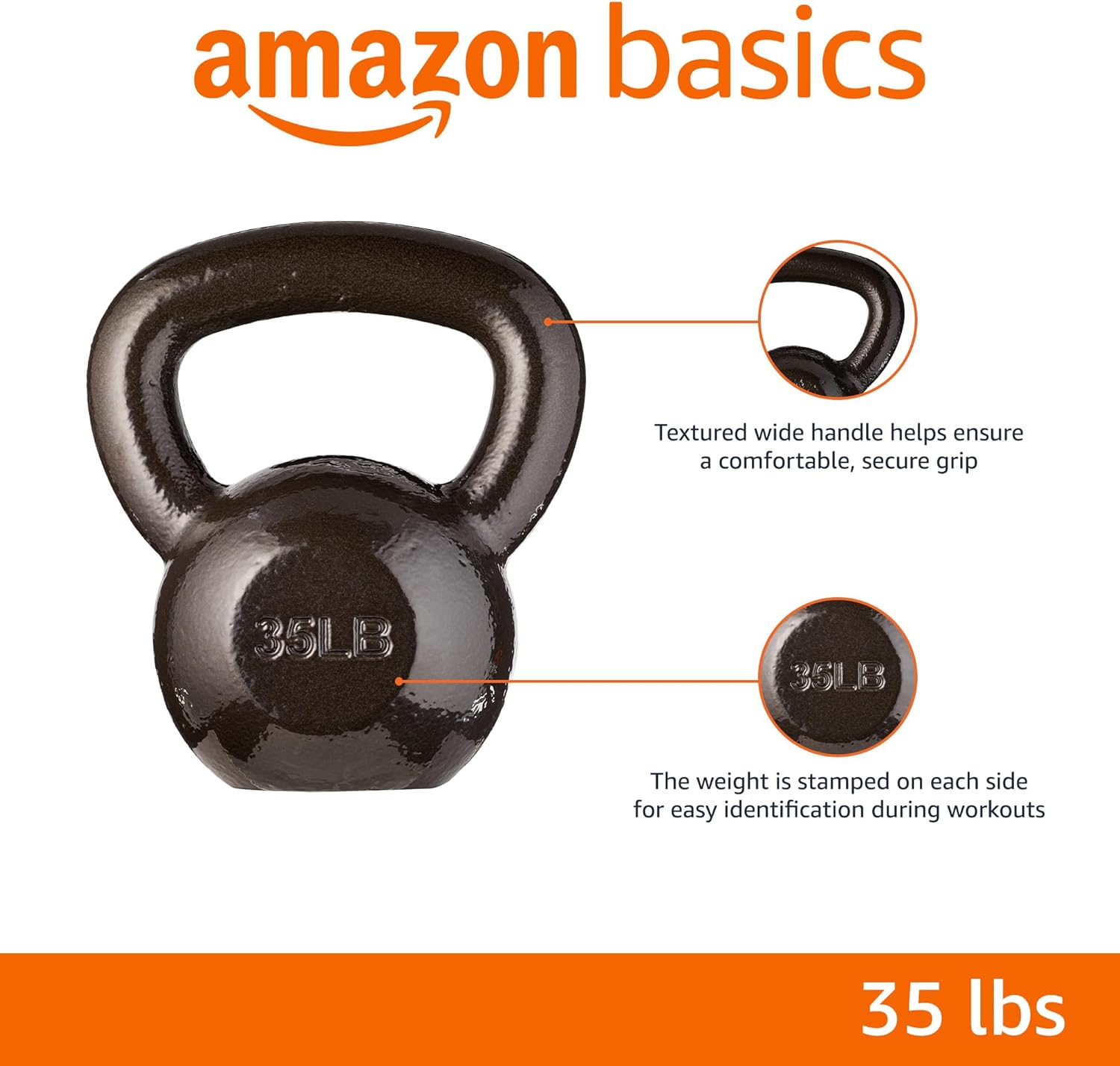
Cast iron is the default kettlebell material for a reason: it’s dense, dimensionally consistent, and effectively age-proof under normal training conditions. A single-piece cast iron bell has no seams that can crack, no coating that can peel under load, and no filler that can shift. BarBend’s 2025 Best Kettlebells buying guide notes that competition-grade and serious training kettlebells are almost universally cast iron or steel — the material’s density allows heavier weights to stay compact enough to handle correctly.
What owners consistently report: Cast iron bells with minimal finishing — sometimes called “raw” or “bare” iron — develop a light surface rust if stored in a humid garage and not wiped down after use. That’s real maintenance you should plan for. Owners who buy quality bare-iron bells and keep them in climate-controlled spaces report zero surface issues over years of daily use.
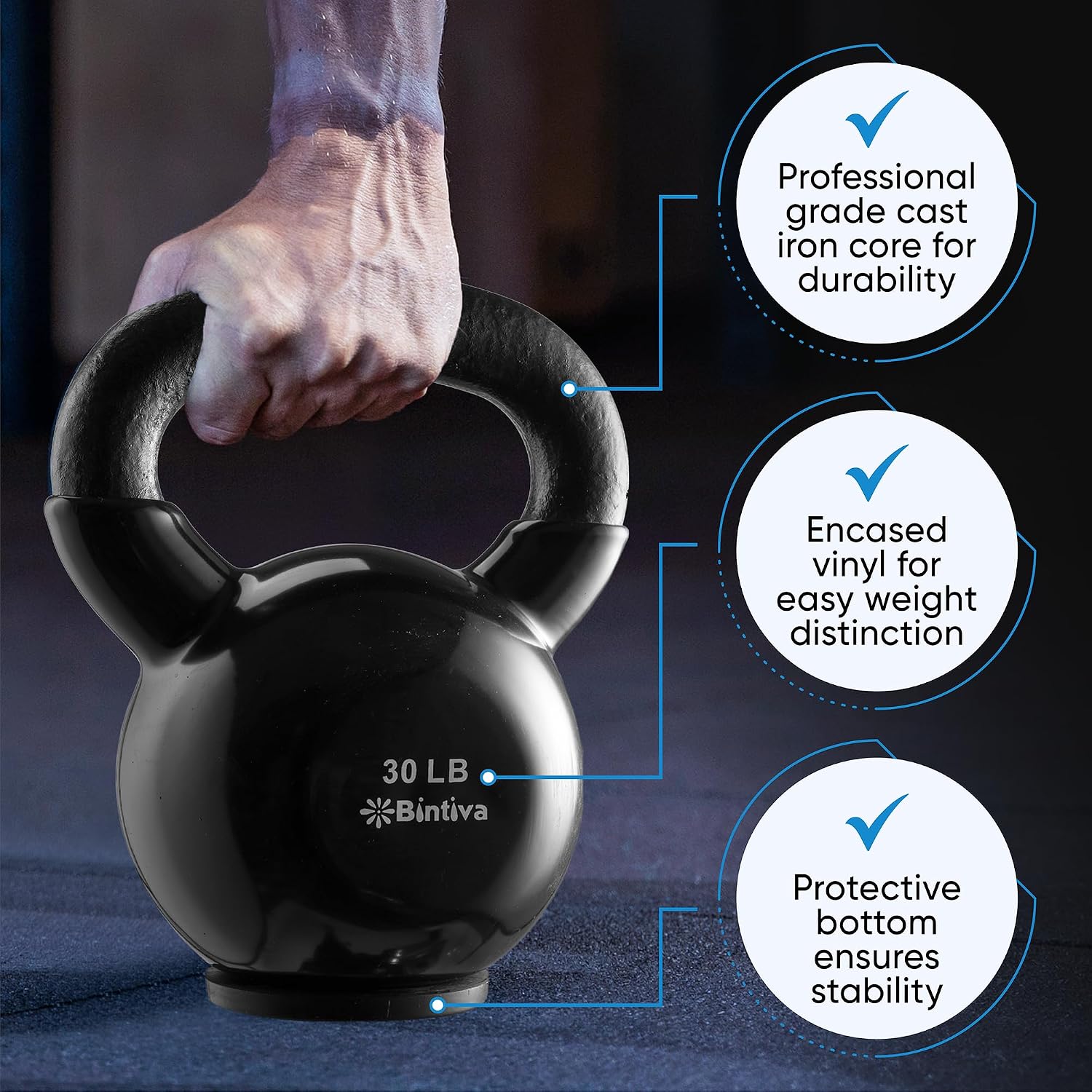
The plastic-coating cautionary tale. A documented failure mode on entry-level bells is thin vinyl or plastic over-coating that cracks at the weld point between handle and bell body. In some cases, moisture trapped under the coating causes the plastic to split open. The core bell underneath is typically fine — but you’re now training with a sharp plastic edge. This is the core argument for skipping vinyl-coated iron entirely and choosing either bare iron or a quality powder coat from the start.
Floor risk: Cast iron on hardwood is an unforgiving combination. A bell set down carelessly — especially during a dropped swing — will dent or gouge unfinished hardwood. Owners who train on rubber matting report no floor damage. ACE Fitness, in their Kettlebell Training exercise science overview, specifically recommends a rubber-floored surface for swing work for exactly this reason.
The Three Main Coating Categories: How They Compare
The coating on a kettlebell affects rust resistance, grip texture, floor safety, and long-term durability. The three categories most home gym owners choose between are powder coat, vinyl, and neoprene — and they serve meaningfully different needs.
Powder Coat: The Practical Upgrade Worth the Small Premium
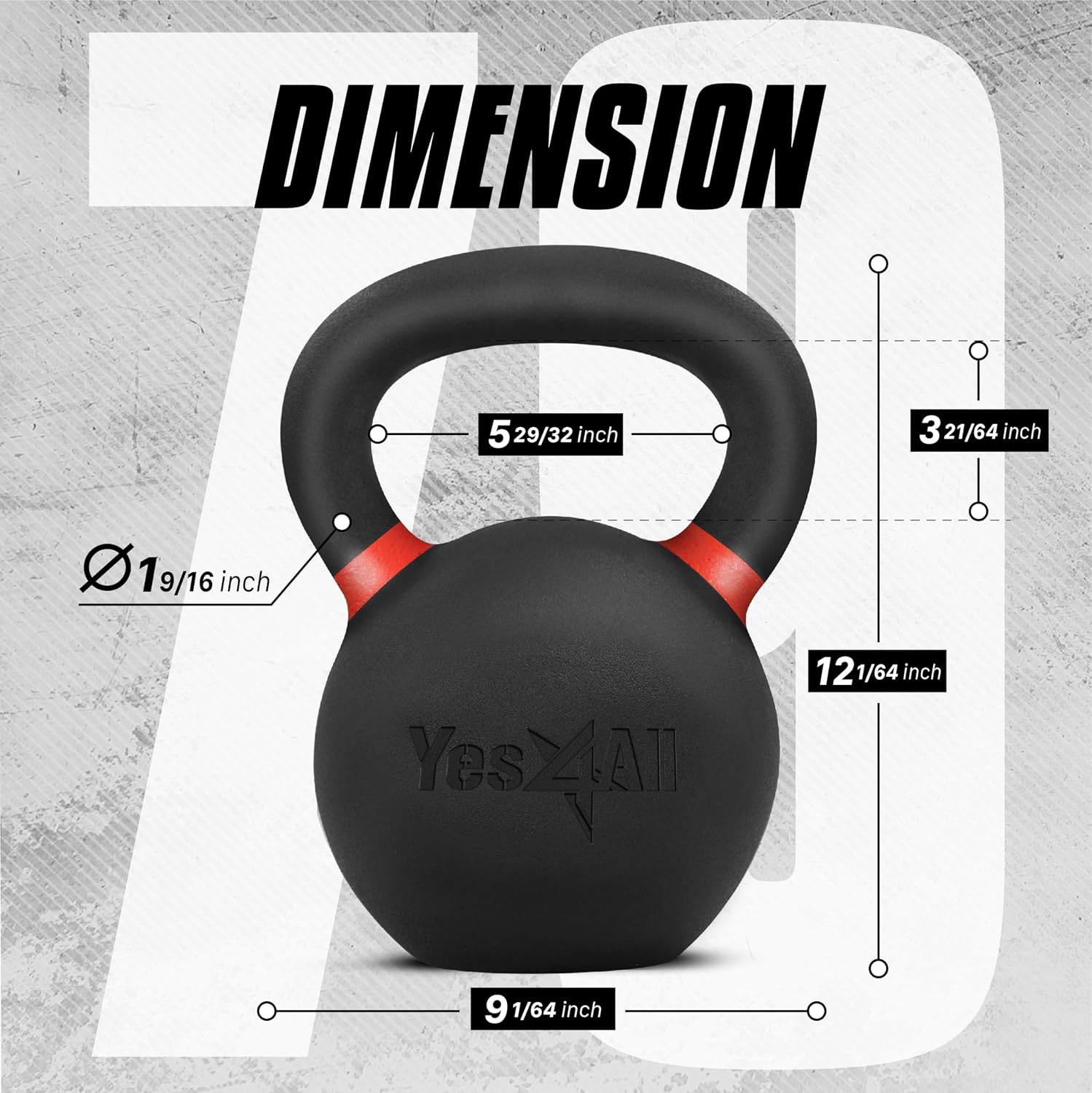
Powder coating is a dry finishing process — electrostatically applied powder baked onto the iron surface — that creates a matte, slightly textured layer. It resists rust, adds grip, and eliminates the bare-metal sheen that makes some buyers uncomfortable. It’s the standard finish on most mid-market and premium kettlebells sold through serious fitness retailers.
Why surface roughness varies across a product line. A consistent quality-control pattern emerges across owner reports: heavier bells — typically 35 lbs and up — come out of the finishing process noticeably rougher than lighter bells in the same product line. This isn’t a defect that affects function, but it does matter for high-rep ballistic work like cleans and snatches, where the bell rotates against the back of your wrist. If you’re buying a 44 lb or 53 lb bell for ballistic training, check aggregated reviews specifically at that weight rather than trusting the rating for the 26 lb version.
Wirecutter’s Best Kettlebells review, updated in 2025, notes that powder-coat finish consistency is one of the primary reasons premium brands command a price premium over house-brand options — their quality-control processes catch roughness variance before bells ship.
Who this is for: Anyone building a permanent home gym who wants a bell that will last a decade of serious training. Powder-coated cast iron from a brand with consistent finishing is the highest-value combination for serious use.
Yes4All
$154.99
In stock on Amazon
Check price on AmazonVinyl Coating: Budget-Friendly With a Known Failure Mode
Vinyl is a harder plastic shell molded over an iron core. It’s inexpensive to apply and easy to color-code by weight — useful in studio settings where you need to grab the right bell fast. The failure mode, documented across multiple owner reviews of budget vinyl-coated bells, is cracking: the plastic develops hairline fractures at stress points, particularly around the handle base where impact loads concentrate. Once cracked, moisture intrudes and the coating progressively peels.
For home gym use with a single owner who handles bells carefully, a vinyl bell can last years. For higher-traffic use — group training, client sessions — the cracking timeline accelerates significantly. ConsumerReports’ home gym equipment durability methodology notes that coatings applied as rigid shells over iron weights are more prone to stress fractures at high-load contact points than flexible alternatives, which is exactly the vinyl failure mode owners describe.
Who this is for: True beginners buying a first bell on a tight budget who will handle it carefully and understand the coating may not outlast the bell itself. Not recommended for ballistic training or multi-user environments.
Amazon
$51.99
In stock on Amazon
Check price on AmazonNeoprene Coating: The Color-Coded Convenience Option
Neoprene is the softer, rubberized coating most associated with color-coded home gym sets. Owners consistently praise the color-coding system for making weight selection fast and intuitive — a real convenience in circuit training. The recurring complaint: the price-per-pound is high relative to powder-coated iron. A neoprene-coated 20 lb bell often costs more than a powder-coated 26 lb bell of equal or better construction quality.
ConsumerReports’ home gym equipment durability methodology notes that neoprene coatings on iron weights tend to outlast vinyl significantly under repeated impact — they deform rather than crack. That’s meaningful if the bells will see daily use in a small-group or personal training environment. The tradeoff is cost: you’re paying a premium for the coating and color system, not for training performance improvements.
Who this is for: Trainers or home gym owners for whom fast weight identification matters more than cost-per-pound. Neoprene makes sense as a studio convenience tool. It’s a harder sell purely as a training implement when powder-coated iron is available at lower cost.
Kettlebell
$318.24
In stock on Amazon
Check price on AmazonConcrete and Soft Kettlebells: The Floor-Friendly Alternatives
Concrete-Fill (HDPE Shell) Bells
Some manufacturers sell kettlebell designs that use a high-density polyethylene (HDPE) plastic shell filled with concrete — the goal being a floor-safe, apartment-friendly bell that won’t destroy hardwood if set down hard. Owners who’ve used these in wood-floor apartments consistently validate the floor-safety claim. The bell’s plastic exterior distributes impact differently than bare iron, and the acoustic profile — how loud the thud is — is noticeably quieter, which matters in second-floor apartments or shared buildings.
The structural vulnerability to know about: A meaningful pattern in owner reviews of concrete-fill designs is base damage in shipping — specifically the storage base or the bottom flat section of the shell arriving cracked or structurally compromised. The fill material is heavy relative to the shell’s structural rigidity, and shipping impact stresses the HDPE in ways that all-iron bells don’t experience. If you buy a concrete-fill kettlebell, inspect it immediately on delivery and document any damage before your return window closes.
Durability ceiling: Concrete-fill bells are not a direct substitute for cast iron in heavy training. They hold up well for light-to-moderate use — goblet squats, light swings, deadlifts — but develop structural fatigue faster under high-rep ballistic work at heavier weights.
Amazon
$51.99
In stock on Amazon
Check price on AmazonSoft Kettlebells (Fabric Shell, Sand or Rubber Fill)
Soft kettlebells — using fabric outer shells filled with sand or granulated rubber — are a genuinely different category. Owners describe leaving them on furniture without concern, training in carpeted rooms without mats, and using them in hotel rooms and small apartments where the risk of a dropped iron bell is a dealbreaker.
The onboarding advantage. Personal trainers working with beginner clients in home environments report that clients who feel intimidated by the look and weight of iron bells approach soft bells differently — the visual softness reduces hesitation enough to lower the psychological barrier for first-time exercisers. For trainers running beginner sessions in home environments, a set of soft bells earns its place as a transition tool.
Weight accuracy over time: Sand-fill designs can compact or shift unevenly over months of use, and there’s no practical way to verify the weight without a scale. Rubber-granule fill designs appear more stable based on owner reports, but neither category should be treated as precision-calibrated. If exact loading matters for your program, soft bells are not the right tool.
Amazon
$51.99
In stock on Amazon
Check price on AmazonComparison at a Glance
| Material/Coating | Rust resistance | Floor risk (bare) | Grip texture | Best use case |
|---|---|---|---|---|
| Bare cast iron | Low (wipe required) | High | Smooth to light | Permanent gym, serious training |
| Powder-coated iron | High | High | Medium–high | Best all-around for home gyms |
| Vinyl-coated iron | Medium | Medium | Smooth | Budget entry, careful single user |
| Neoprene-coated iron | High | Low–medium | Smooth | Color-coded studio or home sets |
| Concrete-fill (HDPE shell) | N/A | Low | N/A | Apartments, hardwood floors |
| Soft (fabric/sand or rubber fill) | N/A | Very low | N/A | Beginners, carpeted spaces |
Amazon
$51.99
In stock on Amazon
Check price on AmazonYes4All
$154.99
In stock on Amazon
Check price on AmazonKettlebell
$318.24
In stock on Amazon
Check price on AmazonFrequently Asked Questions
Will a cast iron kettlebell scratch or dent hardwood floors? Yes — cast iron set down without control on bare hardwood will dent it. Even a careful set-down creates point-load pressure that hardwood can’t always absorb. A 3/8-inch rubber mat under your training area eliminates this risk entirely. If mats aren’t an option, a concrete-fill or soft bell is the honest recommendation.
What is the difference between vinyl-coated and neoprene-coated kettlebells? Vinyl is a harder plastic applied in a shell mold; neoprene is a softer synthetic rubber. Vinyl cracks at stress points over time, especially with heavy use. Neoprene deforms rather than cracks, making it more durable under impact. Neoprene bells typically cost more per pound than equivalent vinyl or powder-coated options.
Are concrete kettlebells as durable as cast iron for heavy use? No — not for high-rep ballistic training at heavier weights. Concrete-fill bells serve a specific use case (floor safety, quiet use, apartment environments) very well. For heavy swings, cleans, and snatches programmed at high frequency, cast iron or powder-coated iron is the right material.
Do soft kettlebells hold their weight accurately over time? Sand-fill designs can compact or shift, leading to gradual weight drift. Rubber-granule fill designs perform better on this dimension. Neither should be relied on for precision loading. They’re excellent onboarding and convenience tools, not precision training implements.
Why do some powder-coated kettlebells feel rougher than others from the same brand? Powder coating thickness and texture vary based on how the finish is applied and cured. At heavier weights, manufacturers sometimes apply a thicker coat for corrosion protection, which reads as a rougher surface. Wirecutter’s Best Kettlebells review identifies this as a quality-control variance worth checking weight-specific reviews for before buying heavier bells in a line.
Can I use soft kettlebells for swings and ballistic movements? Slow controlled movements — goblet squats, deadlifts, presses, carries — are the appropriate use case for soft bells. The shell construction and fill material aren’t designed for the centrifugal loads of ballistic swings, and inconsistent fill distribution affects the bell’s arc. For swings and cleans, use iron.
The Decision Framework
If you’re training on hardwood or carpet and can’t use rubber mats: concrete-fill or soft bells solve your floor problem directly. Accept the durability tradeoff.
If you’re a personal trainer onboarding nervous beginners in home environments: a set of soft bells earns its cost as a psychological onboarding tool. They’re not a replacement for iron long-term, but they remove the barrier to the first session.
If you want one bell or a small set that will last a decade of serious training: powder-coated cast iron from a brand with consistent finishing — check weight-specific reviews, not just the overall product rating. Skip vinyl-coated iron entirely; the cracking failure mode is well-documented and avoidable.
If color-coding and visual organization matter more than cost-per-pound: neoprene sets serve this need. Go in knowing the price premium is for the coating and color system, not training performance.
If you’re building a permanent home gym on a real budget: bare cast iron with a rubber mat investment is the highest-value combination available. The mat protects the floor; the bare iron does the work for as long as you want to use it. As BarBend’s 2025 Best Kettlebells buying guide reinforces, bare and powder-coated cast iron remain the standard for serious training precisely because nothing about the format needs improving.