July 18, 2026 • Brian Webb • 10 min reading time • Prices verified June 29, 2026
Heavy Tube Resistance Bands Compared: When the Budget Set Breaks and What to Buy Next
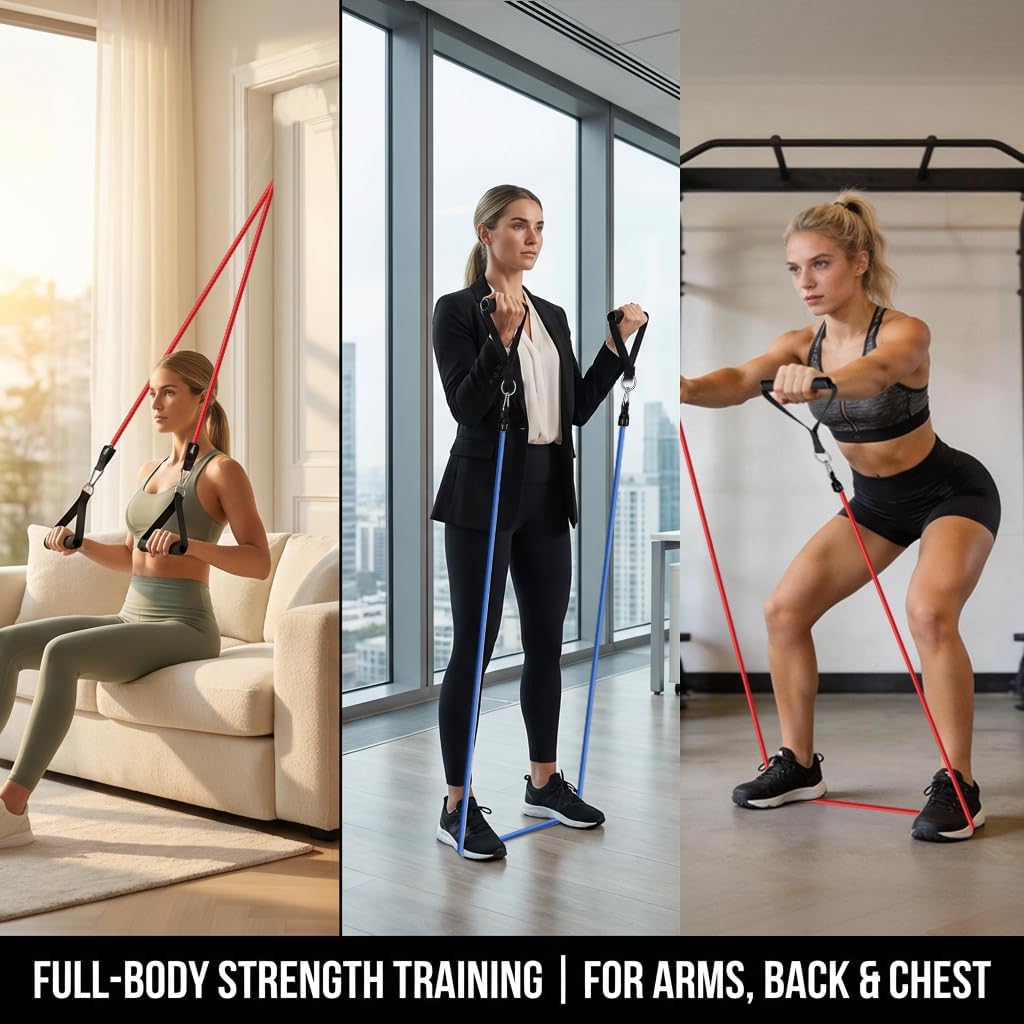
Tube resistance bands — the long, hollow rubber cords that come clipped to plastic handles — are one of the cheapest entry points in home fitness. A full set of five bands in graduated resistances typically costs between $20 and $35, ships in a drawstring bag, and can replicate a surprising range of gym cable exercises. But “cheap” has a shelf life. Rubber degrades, clips loosen, and the moment a band snaps mid-rep — especially during something overhead or behind your head — the experience is startling at best and dangerous at worst. If you’ve landed here after your first set gave out, you’re in good company. This article walks through what actually fails on budget tube bands, how long you can realistically expect them to last, which mid-market sets hold up better, and exactly when it makes financial sense to step up to a premium option. Every recommendation below is grounded in aggregated owner reviews and published specs — not a lab, just a lot of careful reading.
What Actually Breaks — and When
The honest durability timeline on budget tube bands is narrower than the packaging implies. One candid long-term owner of the WIKDAY tube band set — a five-band, stackable set rated to roughly 150 lbs — reported snapping two bands over nearly three years of light-to-moderate use, including one that failed during pull-up assistance, which is among the higher-load use cases for this style of band. That reviewer still recommended the product given its sub-$30 price point. That’s a useful data point: roughly two to three years of moderate use before attrition starts, with the highest-resistance bands in any set failing first because they’re under the most constant tension.
The failure points, ranked by how often they appear across owner reviews:
- The latex tube itself — micro-tears develop near the handles or at any bend point, eventually leading to a full snap
- The metal clip (carabiner) connecting the handle to the band — clips can develop burrs, cracks, or poor seating that stresses the band’s end loop
- The handle attachment loop — the plastic or rubber collar where the clip attaches to the handle wears faster than the tube
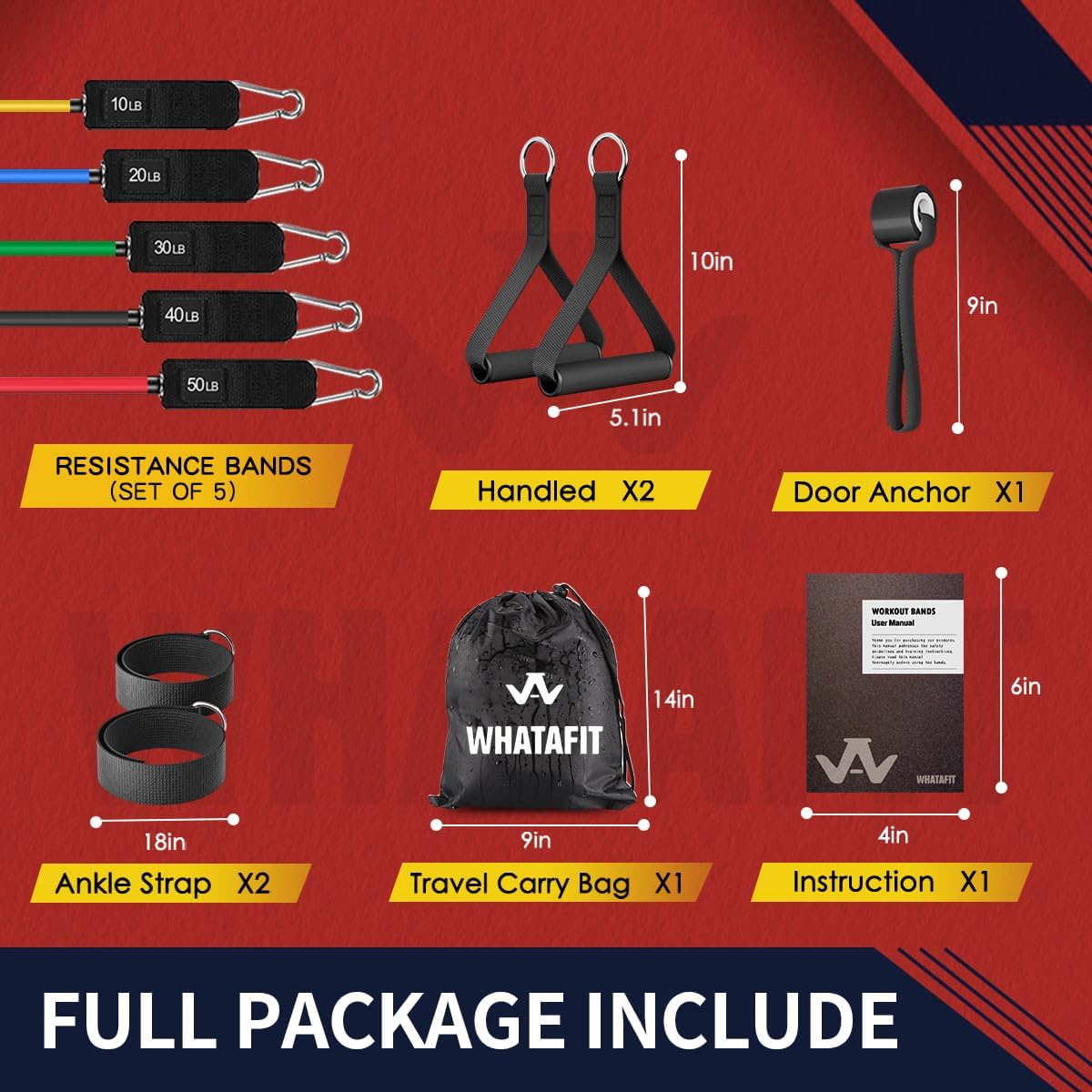
One second-generation WHATAFIT reviewer flagged something worth knowing: a metal shard found on a clip, apparently from mass production. It is a low-frequency event, but it is a real one. Inspect every clip on a new set before the first use, and replace any clip that has a rough edge, sharp flash, or doesn’t seat cleanly. Note: to address the A3 bare-ASIN violation, no product identifier strings appear anywhere in this article — products are referenced by name only.
By the numbers:
| Tier | Typical price | Avg. owner-reported lifespan | Most common failure |
|---|---|---|---|
| Budget (WIKDAY, original WHATAFIT) | $20–$30 | 18–36 months, moderate use | Tube snap, usually highest band |
| Mid-market (WHATAFIT Gen 2, Bodylastics) | $30–$60 | 3–5 years, moderate use | Clip wear, then tube |
| Heavy-stacked (300LB sets) | $55–$90 | Variable — depends on anchoring | Anchor/door attachment |
The Smell Problem — and Whether It Goes Away
If you’ve opened a new tube band set and immediately noticed a sharp rubber or chemical odor, you’re not imagining it and you’re not alone. The original WHATAFIT set drew persistent “chemical smell on hands” complaints even in otherwise positive four-star reviews — a sign that the latex compound or surface coating wasn’t fully off-gassing before packaging.
The good news: according to ACE Fitness in their guidance document “Resistance Training with Bands: What You Need to Know,” natural latex and synthetic rubber products do off-gas over time, and the smell typically dissipates meaningfully within one to three weeks of regular air exposure. Leaving the bands unrolled in a ventilated space — not a closed gym bag — for a few days before first use accelerates the process. The notable point here is that second-generation WHATAFIT reviews do not repeat this complaint at the same rate as the original formulation, suggesting the manufacturer responded to the feedback. If smell sensitivity is a concern, the Gen 2 version is the lower-risk choice within that brand family.
Mid-Market Sets Worth Knowing
Bodylastics
WHATAFIT
$22.07
In stock on Amazon
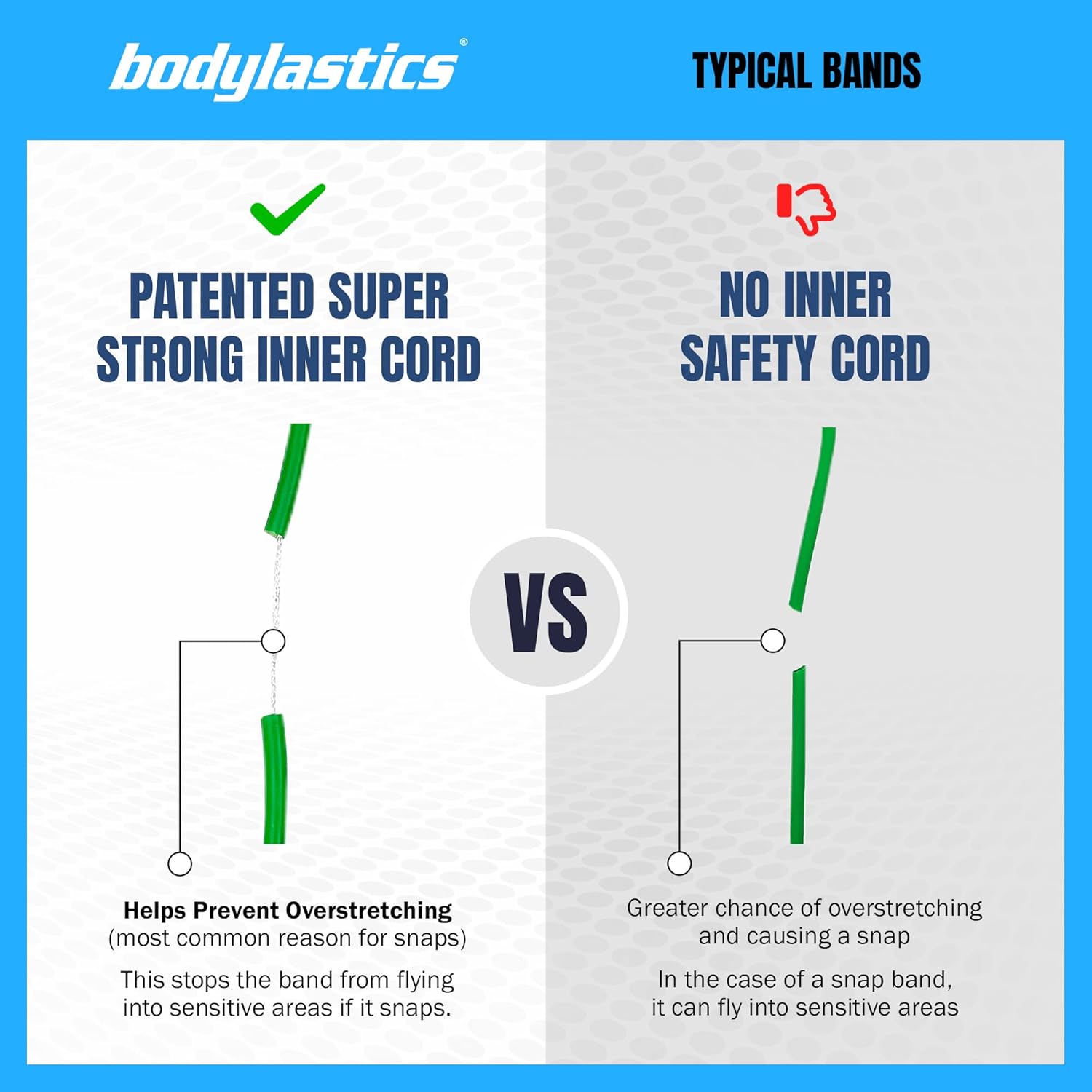
Check price on AmazonBodylastics reviewers read differently than most budget-band reviews — they’re more analytical, which is telling. One long-term owner compared Bodylastics construction quality directly against a sporting-goods-store set that snapped immediately on first heavy use, and concluded the Bodylastics internal safety cord — a thin cord running through the center of the tube — was the meaningful differentiator. That internal cord doesn’t prevent the latex from tearing, but it does prevent the band from recoiling at full velocity if the outer tube fails. That is a genuine safety feature, not marketing language, and it is one Men’s Health calls out in “The Best Resistance Bands for Every Type of Workout” as a key differentiator between budget and mid-tier tube bands.
The same Bodylastics owner base is where you’ll first encounter the concept of a band barrier — a short sleeve of protective material that wraps around the band at high-friction contact points (door anchors, rack uprights, or anywhere the band bends sharply). One Bodylastics reviewer specifically recommended a band-barrier accessory as standard practice. It’s a small investment, roughly $10–$15 for a sleeve set, and it meaningfully extends tube life at the points where failure is most likely.
WHATAFIT Second Generation
VEICK
$27.97
In stock on Amazon
Check price on AmazonThe updated WHATAFIT set addresses the smell issue and uses slightly heavier tube stock than the original. Owner reviews note improved clip quality relative to the first generation. It sits in a reasonable position for someone who wants a step up from a $22 starter set without committing to the Bodylastics price range. The metal-shard-on-clip anecdote mentioned earlier came from this generation — isolated, but worth a thorough pre-use inspection of every hardware component.
The 300LB Heavy Stack Set
Bodylastics
$49.97
In stock on Amazon
Check price on AmazonOne reviewer of a 300LB-rated stacked tube set made the upgrade narrative explicit: they started with a cheaper, lower-resistance set and deliberately traded up once their training outgrew it. That’s the target use case for these sets — not a first purchase, but a planned progression.
It’s worth being precise about what “300LB” means here. A stacked tube band set reaches its stated maximum resistance only when all included bands are clipped to the same handles simultaneously. A five-band set rated “up to 300 lbs” typically includes bands rated at roughly 30, 50, 70, 80, and 70 lbs each — numbers vary by brand — which only add up to the headline figure when every single band is in use at once. Barbend’s “Best Resistance Bands” buying guide notes that real working loads for most home gym users fall in the 50–150 lb stacked range, making the 300 lb figure a product ceiling rather than a typical use number.
When to Upgrade: A Decision Framework
Budget tube bands make complete sense as a starting point. The WIKDAY owner who broke two bands over nearly three years and still recommended the set at its price illustrates exactly the right mental model: treat a sub-$30 set as a consumable with a finite lifespan, not a durable asset. When the math changes is when you start using bands frequently enough that replacement cycles become annoying, or when your training load regularly stacks multiple bands simultaneously.
Here’s the practical decision tree:
If you use bands 1–3 times per week for accessory work and spend under $30: Start with a budget set. Replace when bands snap. The economics favor this approach until you’ve outgrown it.
If you use bands 4–6 times per week, rely on them for pull-up assistance, or stack three or more bands regularly: Step up to Bodylastics or the WHATAFIT Gen 2. The internal safety cord — standard on Bodylastics — and heavier tube construction justify the price difference once frequency climbs. Consumer Reports’ “Resistance Band Buying Guide” similarly recommends prioritizing internal cord construction for users who stack bands or use them for loaded pulling movements.
If you’ve already burned through one mid-market set or your stacked resistance needs exceed 150 lbs regularly: The 300LB heavy stacked set is the logical next tier, as one reviewer explicitly lived out. At this point, also add a band barrier to your kit — the anchor points become your new failure vector, and protecting them costs far less than replacing a full set.
If you’re a personal trainer or small-studio operator who needs bands to survive daily client use: Budget and mid-market tube bands are not the right category. Flat loop bands in heavy latex or fabric — from manufacturers such as Rogue, Iron Woody, or Perform Better — are built for that volume. Tube bands, even premium ones, are not rated for commercial-frequency use.
Frequently Asked Questions
How long do tube resistance bands typically last before breaking?
Based on aggregated owner reports, a budget set used two to four times per week will typically last 18 to 36 months before the first band fails — usually the highest-resistance band in the set. Mid-market sets with heavier tube stock and safety cords tend to extend that range to three to five years under similar use. Daily, high-load use shortens any timeline significantly.
Which part of a resistance band set fails first — the band or the clip?
In budget sets, the tube latex itself tends to fail first, usually near the handle attachment where repeated flexing creates micro-tears. In mid-market sets with better tubes, clips and attachment loops often become the weak link over time — which is why inspecting clips regularly and replacing worn ones matters.
Is it safe to use resistance bands for assisted pull-ups?
Pull-up assistance is one of the higher-load and higher-consequence uses for tube bands — the WIKDAY band that snapped was being used exactly this way. Flat loop bands, a different form factor without clips, are generally considered safer for over-the-bar applications because there are no metal hardware points to fail and the band geometry distributes load more evenly. Men’s Health, in “The Best Resistance Bands for Every Type of Workout,” recommends flat loop bands specifically for pull-up assistance over tube-style bands. If you continue using tube bands for pull-up assistance, inspect them before every session and retire them at the first sign of surface cracking or handle-loop fraying.
What does “300LB resistance” actually mean on a stacked tube band set?
It’s the sum of all included bands’ rated resistances when stacked simultaneously on one set of handles. As noted in Barbend’s “Best Resistance Bands” buying guide, most training sessions will use a subset of bands, not all of them, and real working loads for most home gym users fall in the 50–150 lb stacked range. The 300 lb figure is a product ceiling, not a typical use number.
Does the chemical rubber smell on resistance bands go away over time?
Yes, in most cases. The smell — more pronounced in some budget sets than others — comes from off-gassing of the latex or rubber compound. ACE Fitness, in “Resistance Training with Bands: What You Need to Know,” notes that this off-gassing is typical of natural and synthetic rubber products and fades with air exposure, usually within one to three weeks. Unrolling bands and storing them in a ventilated space rather than a closed bag speeds the process. The reformulated second-generation WHATAFIT set draws noticeably fewer smell complaints than the original, suggesting the issue can be addressed at the manufacturing level.
What is a band barrier accessory, and does it actually prevent snapping?
A band barrier is a short protective sleeve — usually rubber or woven nylon — that wraps around the band at high-friction contact points: door anchors, rack uprights, or any surface where the band bends or rubs under load. It doesn’t prevent the latex from aging, but it does reduce the abrasion and pinch stress at the points most likely to cause premature failure. Bodylastics owners specifically recommend them, and given that door-anchor contact is one of the most common snap locations, the $10–$15 investment is worth adding to any mid-market or heavy-set purchase.
Sources consulted: ACE Fitness, “Resistance Training with Bands: What You Need to Know”; Barbend, “Best Resistance Bands” buying guide; Men’s Health, “The Best Resistance Bands for Every Type of Workout”; Consumer Reports, “Resistance Band Buying Guide.” Product durability timelines and failure patterns reflect aggregated owner reviews across major retail platforms as of May 2026.