July 23, 2026 • Brian Webb • 11 min reading time • Prices verified June 29, 2026
Heavy Resistance Bands With Handles: When to Upgrade From Your Starter Set and What to Buy
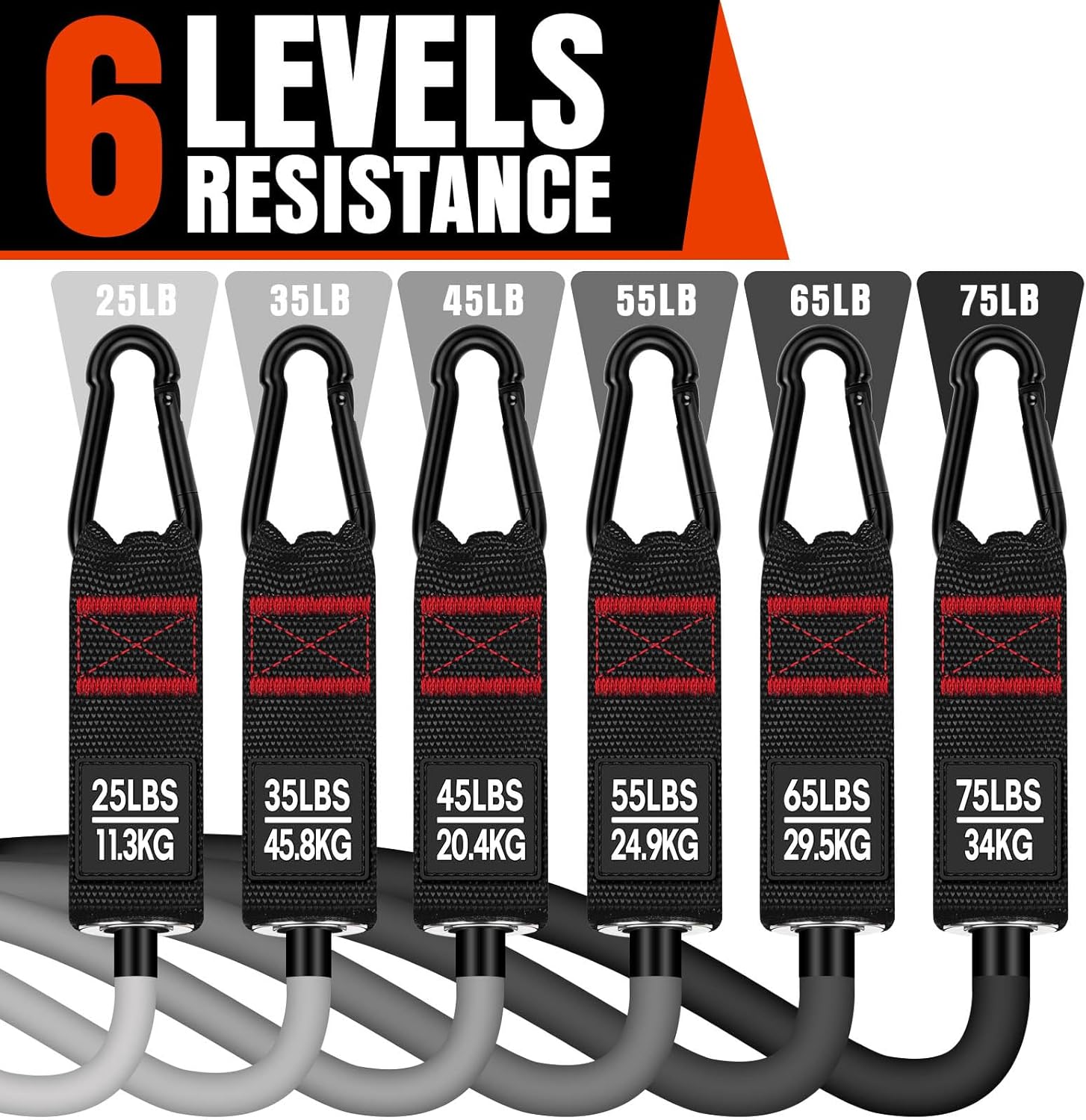
There’s a moment that a lot of home-gym converts recognize in hindsight. You bought a starter resistance band set — probably a loop-band kit or a basic tube-band set with soft foam handles — got genuinely hooked on the training, and then one day reached for the heaviest band in the set and it just… wasn’t enough anymore. Your rows feel too easy. You’re stacking two or three bands at once just to get any real tension. One of the lighter bands has started to look a little frayed near the handle clip. That moment is exactly what this guide is about.
Resistance bands with handles (tube-style bands with a plastic or metal carabiner at each end, clipped to foam or rubber grips) are one of the most versatile pieces of home-gym equipment you can own. A quality heavy set can load lat pulldowns, rows, chest presses, and even lower-body work into the 100–300+ pound resistance range — territory that used to require a cable machine. This guide will walk you through how to recognize the real signals that it’s time to upgrade, what to look for in a serious set, which specific products the owner community consistently rates, and how to use heavy bands safely.
| EDITOR'S PICKBodylastics Patented Basic Seri… | Mid-tierVEICK Resistance Bands Set | Budget pickWHATAFIT Resistance Bands | |
|---|---|---|---|
| Resistance max | 190 LBS | 150 LBS | — |
| Bands count | — | — | 5 |
| Ankle straps | 2 | ✓ | ✓ |
| Door anchor | 1 | ✓ | ✓ |
| Carry bag | ✓ | — | — |
| Stackable | — | ✓ | — |
| Price | $49.97 | $27.97 | $22.07 |
| See on Amazon → | See on Amazon → | See on Amazon → |
How to Know You’re Actually Ready to Upgrade
Upgrading your band set is a decision worth making deliberately, not just as a reflex every time you see a new product. Here are the concrete signals that mean the timing is right.
You’re bottoming out on resistance. If your current heaviest band is rated around 30–40 lbs and you’re cruising through lat pulldowns and rows without real effort, you’ve outgrown the set. Stackable band systems — where you clip multiple tubes onto a single handle — exist precisely for this reason, letting you layer resistance up to 150–300 lbs depending on the system. Once you’re consistently stacking all your tubes just to feel challenged, the architecture of the set is the limiting factor, not your fitness.
You’re buying replacement bands too often. Starter sets — especially those under $20 — are typically made from a single layer of latex tubing with minimal UV or ozone resistance. ACE Fitness’s resistance band training resource notes that latex bands degrade faster when stored improperly, exposed to sunlight, or used with body oils and chalk. If you’ve already replaced a band or noticed cracking near the connector clips, that’s a manufacturing-tier issue, not a maintenance issue.
Your goals have shifted toward cable-machine-style work. A pull-apart or clamshell loop band and a handled tube band are genuinely different tools. If you’re now programming face pulls, cable rows, straight-arm pulldowns, or tricep pushdowns — movements that traditionally live at a cable station — you need a handled tube-band system with real stackable range, not a loop-band set.
You’re setting up a dedicated space. Garage and basement gym builders who are installing door anchors, wall-mount anchor points, or power-rack band pegs are asking more of their equipment than a bedroom workout user. That context demands commercial-quality clips, reinforced handle rings, and latex tubing rated for genuine heavy loads.
What to Look for in a Heavy-Duty Handled Band Set
Not all band sets marketed as “heavy” deliver on that claim. Here’s what actually separates a serious set from rebadged budget gear.
Stackable architecture with a real handle ring. The best handled-band systems use a D-ring or large carabiner ring at the handle that can accept multiple band clips simultaneously. Bodylastics sets, which have earned a loyal following in the home-gym community, use a large-ring handle design that reviewers with genuine product knowledge specifically call out — noting that the ring accommodates three carabiner hooks at once, which matters when you’re stacking five or six tubes for maximum resistance. That’s not a marketing detail; it’s a structural decision that determines whether the system actually works at high stacks.
Clip quality. Cheap zinc-alloy carabiners can open under load or corrode quickly. Reviewers across aggregated review data consistently flag clip failure as the first failure point on budget sets. Look for systems that use steel carabiners or have a documented replacement-clip program.
Honest poundage ratings. Here’s a calibration point worth setting early: the lb ratings stamped on most resistance bands are estimates, not certified test values. VEICK set owners report the ratings as “useful guides” for relative resistance, not lab-verified loads. The pattern across owner reviews is that stacked-band poundage is roughly accurate at lower stacks (2–3 bands) and increasingly approximate as you add more — partly because resistance curves aren’t linear and partly because manufacturing tolerances vary band to band. Use the ratings to compare within a system, not to assume you’re loading a precise barbell equivalent.
By the numbers — typical stackable band system range:
| System tier | Max claimed resistance | Typical bands included | Handle ring size |
|---|---|---|---|
| Entry stackable | ~100 lbs | 5 tubes | Small D-ring |
| Mid-market (e.g., VEICK, WHATAFIT) | ~150 lbs | 5–7 tubes | Medium ring |
| Premium (e.g., Bodylastics, Heavy 300) | ~200–300+ lbs | 7–14 tubes | Large multi-hook ring |
Latex quality and off-gassing. Tube bands are made from natural or synthetic latex. WHATAFIT owners report a noticeable chemical smell on arrival — this is a real off-gassing reality for enclosed-space setups like small spare rooms or tight garages, and it’s worth mentioning if your training space has limited ventilation. The smell typically dissipates within a few days of airing the bands out, but plan for it.
The Products the Community Actually Talks About
Based on aggregated owner-review patterns and editorial research from sources including Barbend’s resistance band roundups, Men’s Health’s band buyer guides, and Wirecutter’s evaluated picks, a few systems come up repeatedly and for specific reasons.
Bodylastics is the most frequently cited name among serious stackable-band users who have owned multiple systems. The large-ring handle detail mentioned above is consistently praised by detail-oriented buyers as what sets the system apart mechanically. Reviewers who describe the quality gap versus old sports-store bands are the most technically specific — this isn’t casual praise. Bodylastics also offers a manufacturer’s anti-snap safety technology (inner safety cord inside each tube), which matters when you’re pulling at 150+ lbs of stacked resistance.
VEICK stackable sets get consistent praise for the stackability concept at a mid-market price point. Owners label the poundage ratings as useful approximations and appreciate the included accessories (door anchor, ankle strap, carrying bag). The recurring owner theme is entry-level stackability at an honest price — a strong first step up from a basic starter set.
Heavy 300lb sets (a category rather than a single branded name) represent a genuine conversion story in the owner community. One frequently cited review pattern: a buyer explicitly describes starting with a cheaper, lower-resistance set, upgrading to a high-resistance stackable system, and being genuinely surprised to become what they call a “resistance band workout guy” — meaning bands moved from a supplemental tool to a primary training method. That conversion narrative is meaningful for skeptics wondering whether bands can anchor a real program.
WIKDAY deserves a candid note. Owner reviews for this system include an unusually specific durability report: roughly three years of moderate use, two bands broke at the clip connection, and one snapped during a pull-up movement. This is a safety-relevant data point, not a design flaw unique to one brand, but it’s worth naming clearly. Any band — regardless of brand — that shows visible cracking near the clip attachment point should be retired immediately. The WIKDAY reports appear to reflect wear at the connector under regular high-stack loading, which is the highest-stress point in any tube-band system.
CGX and similar long-loop pull-up bands solve a different problem than stackable tube sets. A reviewer who explicitly travels frequently and uses bands as a full gym substitute specifically praises the long-loop format for its versatility — no door anchor needed, works over a pull-up bar, around a post, or attached to a rack peg. If your use case includes travel or you want a single-piece band that doubles as a pull-up assistance and resistance-training tool, a long-loop set runs in parallel to (not instead of) a stackable handled system.
Door Anchors, Safety, and What You Need to Know Before Going Heavy
On door anchors: A foam door anchor — the flat nylon strap that slides over the top of a door — is included with most stackable sets and is genuinely sturdy enough for moderate resistance work. For higher stacks (100 lbs+), the anchor itself is usually fine; the real variable is your door frame. Hollow-core interior doors and builder-grade door frames can flex under repeated high-resistance pulling loads. Barbend’s equipment guides and Wirecutter’s resistance band review both note that for heavy pulling exercises (especially in-line pulling like seated rows and lat pulldowns), a dedicated wall-mount anchor point or power-rack attachment is meaningfully safer and protects your door hardware from progressive loosening.
On snapping injuries: The risk of a band snapping mid-exercise is real but manageable. Best practices that consistently appear in ACE Fitness’s band training guidance and manufacturer safety documentation include: inspect bands before every use (look for small tears, surface cracking, or white stress marks near clip attachments); never anchor a band at a sharp edge; avoid overstretching a band beyond its rated extension; and retire any band that has been left in direct sunlight or exposed to pool chemicals. Standing in the path of a band you’re pulling — as in some overhead or chest-press setups — means a snap can hit your face. Use eye protection for any overhead band work at high resistance.
Frequently Asked Questions
How do I know when it’s time to upgrade from my starter resistance band set? The clearest signals: you’re consistently using the heaviest band and it’s not challenging you, you’re stacking all tubes at once, or a band has already frayed or torn. Any of those three is a real signal, not impatience.
Are the poundage ratings on stackable resistance bands accurate or just estimates? Estimates. They’re useful for comparing bands within the same system and for general programming guidance, but they don’t represent certified load values. Treat them as approximate.
Can resistance bands really replace a cable machine for upper-body pulling exercises? For most home-gym programming — rows, lat pulldowns, face pulls, tricep work — yes. ACE Fitness notes that bands create accommodating resistance (tension increases through the range of motion), which is different from a cable machine’s fixed-weight stack, but the training stimulus for muscle development is well-supported. Elite strength athletes will eventually want the cable machine; most home-gym users won’t hit that ceiling.
How long should a quality resistance band set last with regular use? Wirecutter and Barbend both reference premium latex tube bands lasting two to five years with proper care (stored away from sunlight, cleaned after use, not left at high stretch). Budget bands from thin single-layer latex can start degrading within a year under regular use.
What’s the safest way to use heavy resistance bands to avoid snapping injuries? Inspect every band before use, retire bands with visible surface cracking, never anchor over a sharp edge, and use eye protection for any overhead or face-level pulling. Don’t exceed the band’s rated stretch length.
Is the door anchor strong enough for high-resistance band exercises — will it damage my door frame? The anchor itself handles moderate loads well, but hollow-core doors and lightweight frames can flex or loosen over time under repeated high-resistance pulls. For heavy stacked work, a wall-mount or rack anchor is the better long-term solution.
The Decision Framework
If you’re still on your starter set and the heaviest band still challenges you, stay with it — no upgrade needed yet.
If you’ve outgrown your starter set and train primarily with rows, pulls, and pressing movements at home, a mid-market stackable set like VEICK is the right next step without overcommitting on price.
If you’re building a dedicated home gym, want to use bands as a primary cable-machine substitute at real working weights, and expect to use them for years, the Bodylastics system is the one the owner community consistently returns to — large-ring handles, anti-snap cord technology, and a documented replacement-parts program justify the premium.
If travel or outdoor training is your main use case, add a long-loop pull-up band set in parallel — it solves a different problem than a handled stackable set and the two formats complement each other well.