August 21, 2026 • Brian Webb • 9 min reading time • Prices verified June 29, 2026
Foam Roller First-Timer Guide: How to Choose Density When You Have No Idea Where to Start
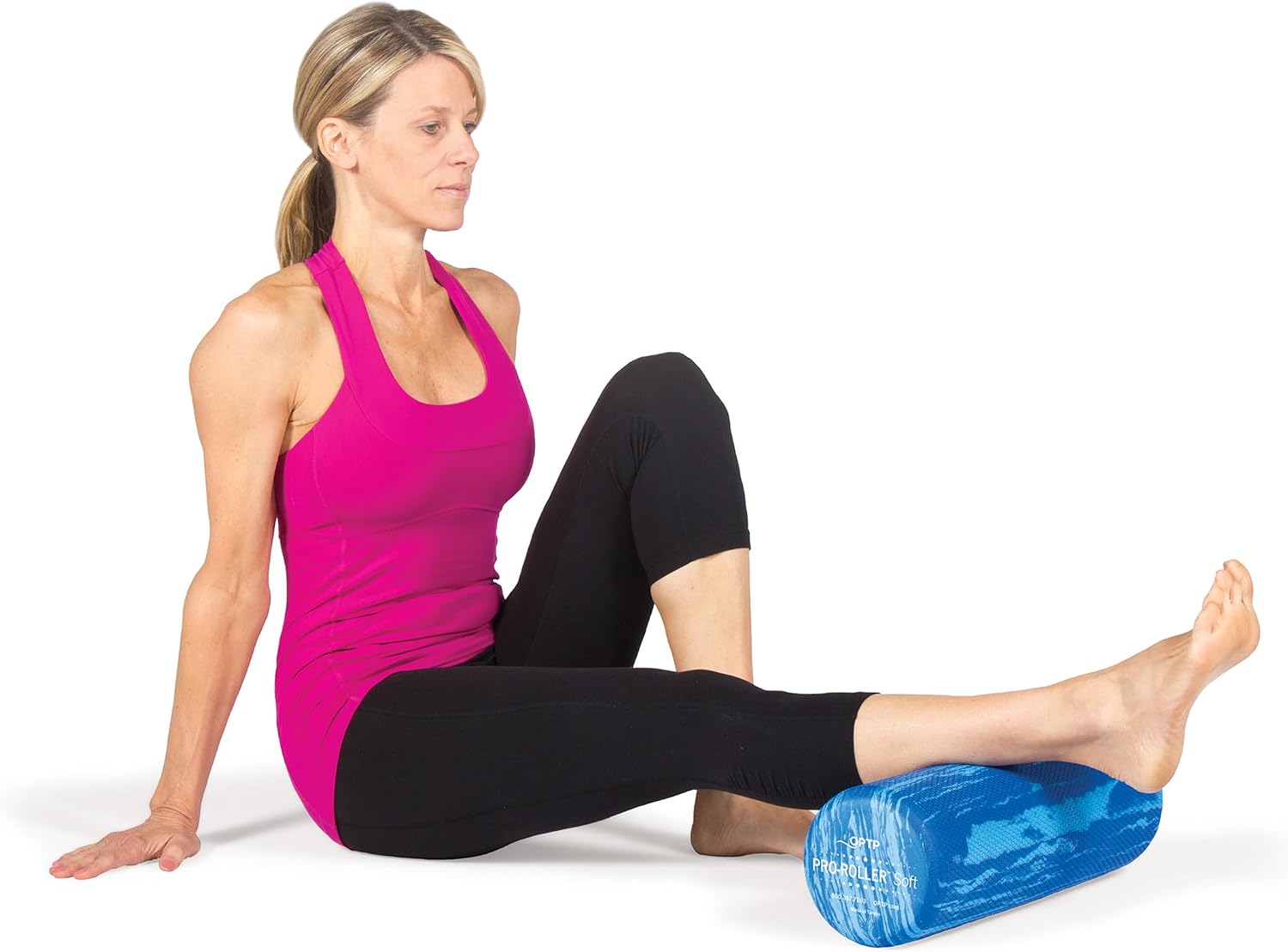
A foam roller is exactly what it sounds like: a cylinder of dense or semi-dense foam you lie on, sit on, or press your muscles against to work out tightness. The basic idea — rolling your body weight slowly across a sore or stiff muscle group — is a form of self-myofascial release (SMR for short, meaning you’re applying gentle pressure to the connective tissue that wraps your muscles to help them relax and move more freely). It takes about two minutes to learn the basic motion and costs somewhere between fifteen and sixty dollars, depending on what you buy. The catch? Foam rollers come in wildly different firmness levels, and buying the wrong density is, by far, the most common first-timer mistake. Buy too firm and you may stop using it entirely within a week. Buy too soft and you might feel like you’re getting nothing done. This guide walks you through exactly how to pick the right starting density — and what to expect as your body adapts.
| EDITOR'S PICKTriggerPoint Grid 2.0 Foam Roll… | Mid-tierTriggerPoint Grid 1.0 Foam Roll… | Budget pickAmazon Basics High Density Foam… | |
|---|---|---|---|
| Length | 26" | 13" | 24" |
| Core type | Hollow | — | — |
| Density | Multi | Multi | High |
| Weight capacity | 500 lbs | — | — |
| Color | Black | — | Black |
| Price | $74.99 | $29.99 | $16.99 |
| See on Amazon → | See on Amazon → | See on Amazon → |
Why Density Is the One Decision That Actually Matters
Most first-timers shop by shape or price. Density — how firm or soft the foam is — is the spec that determines whether rolling feels therapeutic or genuinely brutal.
Foam rollers exist on a spectrum from very soft (think pool noodle resistance) to very hard (close to a solid PVC pipe). Manufacturers typically label these as soft, medium, and high-density. Within each category, there’s also the surface question: smooth versus textured (also called grid or multi-zone). More on surfaces in a moment.
Here’s the pattern that researchers and physical therapists keep coming back to: people who start on a roller that’s too firm often experience so much discomfort that they conclude foam rolling just doesn’t work for them — and they stop. ACE Fitness notes in their overview of myofascial release techniques that appropriate pressure is essential; too much force on unprepared tissue can trigger a protective muscle contraction that works against the intended effect. In other words, pain isn’t the goal, and it isn’t a sign you’re doing it right.
The opposite problem is real too. A roller so soft it collapses under your body weight gives almost no resistance, which means you’re getting very little mechanical input into the muscle tissue. Harvard Health Publishing’s overview of foam rolling notes that the self-applied pressure needs to be meaningful enough to create a sustained response in the fascia — a featherweight roller won’t deliver that.
The sweet spot is almost always medium density for beginners. That one decision — medium before anything else — solves the majority of first-timer problems before they start.
The Density Spectrum, Mapped to Real Body Types and Pain Tolerances
Here’s a practical way to think about the three main density tiers:
Soft-density rollers (examples include the OPTP Pro-Roller Soft and the TriggerPoint CORE) are genuinely useful — they’re not just “for people in pain.” Owner feedback aggregated from long-run reviews consistently shows that post-surgical patients, people managing fibromyalgia, and older adults with significant muscle sensitivity return to soft rollers specifically because they can tolerate a full rolling session without triggering discomfort. Wirecutter’s foam roller buying guide notes that the OPTP soft-density option earns particularly strong marks from users in physical therapy contexts and from people who tried firmer rollers first and abandoned them. These aren’t consolation prizes — they’re a legitimate starting point if you already know you have a low pain threshold, hypersensitive tissue, or a recent injury.
Medium-density rollers (the 321 Strong Full Body Foam Roller is a frequently cited example here) hit the widest range of users well. Across aggregated reviews, the consistent pattern is that the textured surface on options like the 321 Strong looks aggressive but rolls out more evenly than expected, distributing pressure rather than concentrating it. If you’re a healthy adult who’s never rolled before and has no known injury, start here.
High-density rollers (the Amazon Basics High-Density Round Foam Roller is a common entry-level example; TriggerPoint Grid 2.0 is the widely reviewed premium option in this tier) are best for people who have been rolling regularly for several months, have built up tissue tolerance, and feel like they’re not getting enough from a medium-density roller. Reviewers who’ve moved up to the Grid 2.0 specifically describe the upgrade as something they worked toward — not something they started on.
By the Numbers
| Density | Best for | Expected sensation |
|---|---|---|
| Soft | Post-injury, high sensitivity, first week ever | Noticeable pressure, no sharp pain |
| Medium | Most beginners, 0–6 months of rolling | Moderate discomfort in tight spots, manageable |
| High | 6+ months rolling, tolerance built up | Intense, targeted, may feel like a deep-tissue session |
Smooth vs. Textured Surfaces: What the Grid Actually Does
Once you’ve settled on density, the surface texture question comes up immediately. Smooth rollers apply even, distributed pressure across whatever muscle group you’re working. Textured or grid-pattern rollers have raised channels, bumps, or ridges designed to vary the pressure point-to-point as you roll, which some users describe as more closely mimicking the feel of a therapist’s fingers working into a muscle.
Barbend’s foam roller buying guide notes that textured designs like the TriggerPoint Grid series are frequently recommended by physical therapists specifically because the varied surface channels blood flow more actively during the rolling motion. That said, texture amplifies perceived intensity — a textured medium-density roller will feel firmer than a smooth medium-density roller at the same actual foam hardness. If you’re already unsure about pain tolerance, smooth is the more conservative starting choice. If you’re comfortable with mild discomfort and want more stimulation, a medium-density textured roller (like the 321 Strong) is the most common “I’d buy this again” pick in that tier.
One detail many first-timers miss: surface texture has no meaningful effect on durability. What affects durability is foam density and construction quality — covered in the FAQ below.
Pre-Workout vs. Post-Workout: You Can Do Both
A common assumption is that foam rolling is a recovery tool — something you do after a workout to reduce soreness. That’s accurate but incomplete. High-density roller owners in particular report using their rollers pre-workout as a warm-up tool, rolling through the major muscle groups they’re about to load to increase blood flow and improve range of motion before they start lifting or training.
ACE Fitness’s myofascial release overview supports this, noting that pre-workout rolling sessions of 30–90 seconds per muscle group can improve tissue extensibility before loading — essentially helping the muscle move through a fuller range during the actual workout. This is distinct from stretching; you’re not lengthening the muscle, you’re increasing blood flow and reducing stiffness in the surrounding fascia.
For first-timers, post-workout is the easier place to start because your muscles are already warm and receptive. Once you have a basic rolling routine, adding a 5-minute pre-workout pass through problem areas (usually hips, quads, and upper back for most home-gym athletes) is a low-cost way to get more out of both the rolling and the training session that follows.
Frequently Asked Questions
Is a soft foam roller actually effective, or is it just for people in pain?
Soft rollers are genuinely effective — they apply real mechanical pressure to muscle tissue and connective fascia, just at a lower intensity than medium or high-density options. The “only for pain patients” perception comes from the way soft rollers are marketed, but owner reviews across platforms consistently show healthy users who prefer the softer feel, including experienced athletes who simply find they get a better tissue response at lower pressure. If a soft roller is what lets you roll consistently instead of avoiding it, it’s the most effective roller for you.
Should I start soft and work up to firm, or just buy medium?
For the majority of first-timers with no known injury or sensitivity, buying medium and staying there is the better call. The “start soft, upgrade to firm” path makes sense if you have a specific reason to expect sensitivity — post-surgical recovery, fibromyalgia, significant body-weight pressure on joints. Otherwise, starting medium saves you the cost and inconvenience of two purchases. If medium feels comfortable after a few weeks, you have no particular reason to go firmer.
What does a textured or grid surface actually do differently from a smooth roller?
A textured surface creates variable pressure as you roll — the ridges and channels alternate between higher and lower contact points — which some users find mimics manual therapy more closely than a flat surface does. In practical terms, it creates a more intense sensation than a smooth roller of identical density. The mechanical benefit is similar; the feel is noticeably different. Start smooth if you’re uncertain about pain tolerance; start textured if you want more stimulation and can handle it.
Can I use a foam roller before a workout, not just after?
Yes, and there’s good evidence to support it. A short pre-workout roll (30–90 seconds per muscle group) helps reduce tissue stiffness and improve range of motion before you load the muscle. It’s not a replacement for a dynamic warm-up, but it complements one well. Amazon Basics high-density roller owners in long-run reviews specifically describe integrating rolling into their pre-workout warm-up as a key reason they use the roller daily rather than occasionally.
How long does a quality foam roller last before it loses firmness?
This is a first-timer blind spot worth flagging: foam rollers do lose density over time. Even well-reviewed premium rollers have owners reporting measurable softening within 12–18 months of regular use. Wirecutter’s buying guide notes that high-density options tend to maintain their structure longer than mid-density foam under equivalent use. A roller that’s used daily will compress faster than one used three times a week. Budget rollers in the sub-$15 range often show noticeable deformation within 6 months. If longevity matters to you, the density and construction quality of your starting pick are more important than price alone.
Is a foam roller set with balls and a stick worth it versus buying a roller alone?
For most first-timers, no — at least not at the start. Lacrosse-style massage balls and rolling sticks target different anatomy (balls for small, isolated areas like feet and glutes; sticks for quads and calves without getting on the floor), and learning to use them effectively takes practice. Starting with a single quality full-length roller and building a consistent habit is more valuable than owning a full kit you rotate between inconsistently. Once you have a rolling routine and start noticing which areas a 6-inch cylinder can’t reach well, that’s the right time to add a ball or stick.
The decision in one line: If you have no injury history and don’t know your pain tolerance yet, buy a medium-density roller — smooth or lightly textured — and use it consistently for 30 days before deciding whether to go softer or firmer. That single choice eliminates the most common reason first-timers give up on rolling before it has a chance to work.