August 7, 2026 • Brian Webb • 12 min reading time • Prices verified June 29, 2026
Resistance Bands That Don't Roll Up: Fabric vs. Latex for Leg and Glute Work
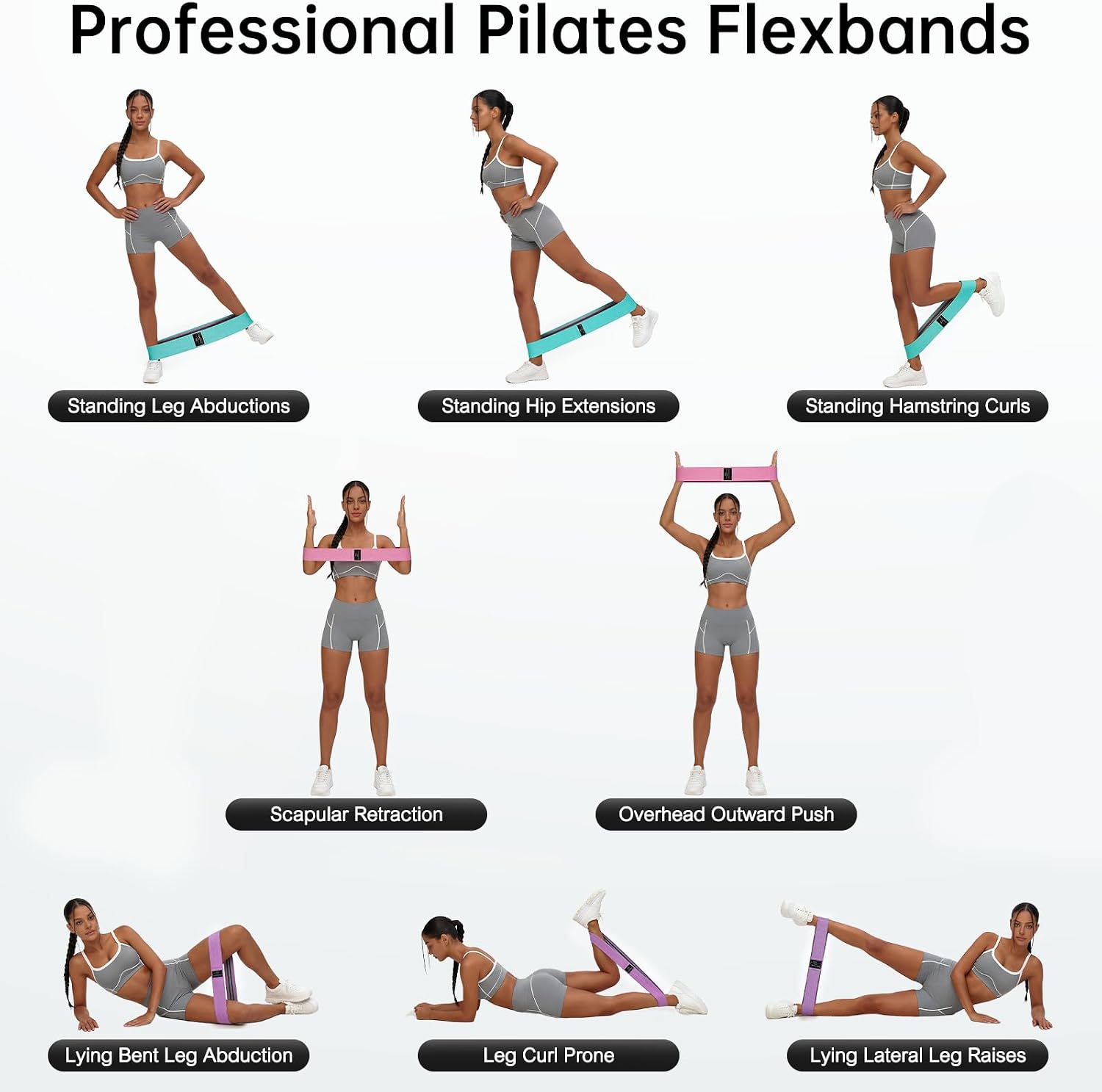
Resistance bands — stretchy loops made of either woven fabric or latex rubber — are one of the most affordable ways to add meaningful challenge to leg and glute exercises at home. You wear them just above your knees or around your ankles, and the tension they create as you move forces your muscles to work harder. The problem most people hit quickly: the band won’t stay where you put it. It creeps down your thighs during squats, rolls into a tight cord that digs into your skin, or bunches up uncomfortably during glute bridges — a move where you lie on your back, plant your feet on the floor, and press your hips toward the ceiling. This isn’t a beginner mistake — it’s a material problem. Fabric bands and latex bands behave very differently on skin and on clothing, and choosing the wrong one means you spend half your workout readjusting instead of training.
This article breaks down exactly why rolling happens, what separates fabric from latex in real-world use, which band types have earned strong owner consensus for staying put, and how to decide which type — or both — belongs in your home setup.
Why Resistance Bands Roll Up (and Why It’s Not Your Fault)
When a band rolls, it’s almost always caused by one of three things: material, width, or surface friction.
Latex loop bands — the thin, flat rubber loops often sold in sets of five — are typically 10–13 mm wide and smooth on both surfaces. Under load, a narrow latex band concentrates all its tension along a thin strip. Physics does the rest: the band wants to find the path of least resistance, and on a curved surface like a thigh, that means twisting and rolling toward the narrowest point it can occupy. The result is a tight, uncomfortable cord of rubber that’s no longer doing much training work and is actively irritating skin.
Width matters more than most buyers realize. A band that’s 30–35 mm wide — a little over an inch — distributes the same tension across a much larger contact area, so it’s far less likely to curl inward. Fabric bands are almost always built in this wider format — typically 2 to 3 inches — which is why the category generally solves the rolling problem before it starts.
Friction is the second variable. Smooth latex on bare skin or slick athletic leggings has almost no grip — the band slides freely in any direction. Many fabric bands now include a silicone grip strip sewn into the interior face of the band, which mechanically anchors it to fabric or skin and resists the lateral creep that precedes rolling. That small design detail is the single most important spec to look for if rolling has been a problem for you.
The American Council on Exercise, in their resistance band training guide published at acefitness.org, notes that proper band positioning is essential to effective glute and hip activation — which is exactly why a band that migrates even two inches from its starting point can eliminate the training stimulus you set it up to provide.
Fabric vs. Latex: A Direct Comparison
The two band types differ in enough ways that a side-by-side breakdown is the clearest way to evaluate them. The sections below cover the three purchase tiers most buyers encounter: budget latex sets, mid-range fabric options, and more durable premium fabric builds.
Budget Tier: Latex Loop Band Sets
Thin latex loop bands are the most common entry point for first-time buyers. Sets of five bands at graduated resistance levels are widely available at low price points, and their main advantages are real: they fold down to almost nothing, weigh next to nothing, and cost less per set than most fabric alternatives. For upper-body exercises — shoulder warmups, pull-apart drills, light resistance work where the band sits against your palms or wrists — rolling is rarely a problem and latex loops perform adequately.
The failure case is consistent and well-documented. On lower-body movements — squats, glute bridges, lateral band walks, clamshells — narrow latex bands on a curved thigh surface tend to roll toward the narrowest point they can occupy. The New York Times Wirecutter resistance band guide acknowledges that latex loop bands work best when the specific exercise keeps the band relatively stationary, which is a real constraint during dynamic leg and hip training.
Latex also has a documented durability limitation. As noted in both the New York Times Wirecutter resistance band guide and the SELF magazine best-resistance-bands roundup, latex degrades when exposed to sweat, skin oils, and UV light over time, which is why latex bands in regular use often need replacement sooner than fabric equivalents. For occasional or travel use, that degradation timeline is acceptable. For daily home training, it’s a recurring cost worth factoring in.
Best for: travelers, upper-body warmup work, first-time buyers testing whether band training suits them before investing more.
Not recommended for: anyone whose primary goal is glute bridges, squats, or hip abduction drills — the rolling problem is structural, not fixable with positioning.
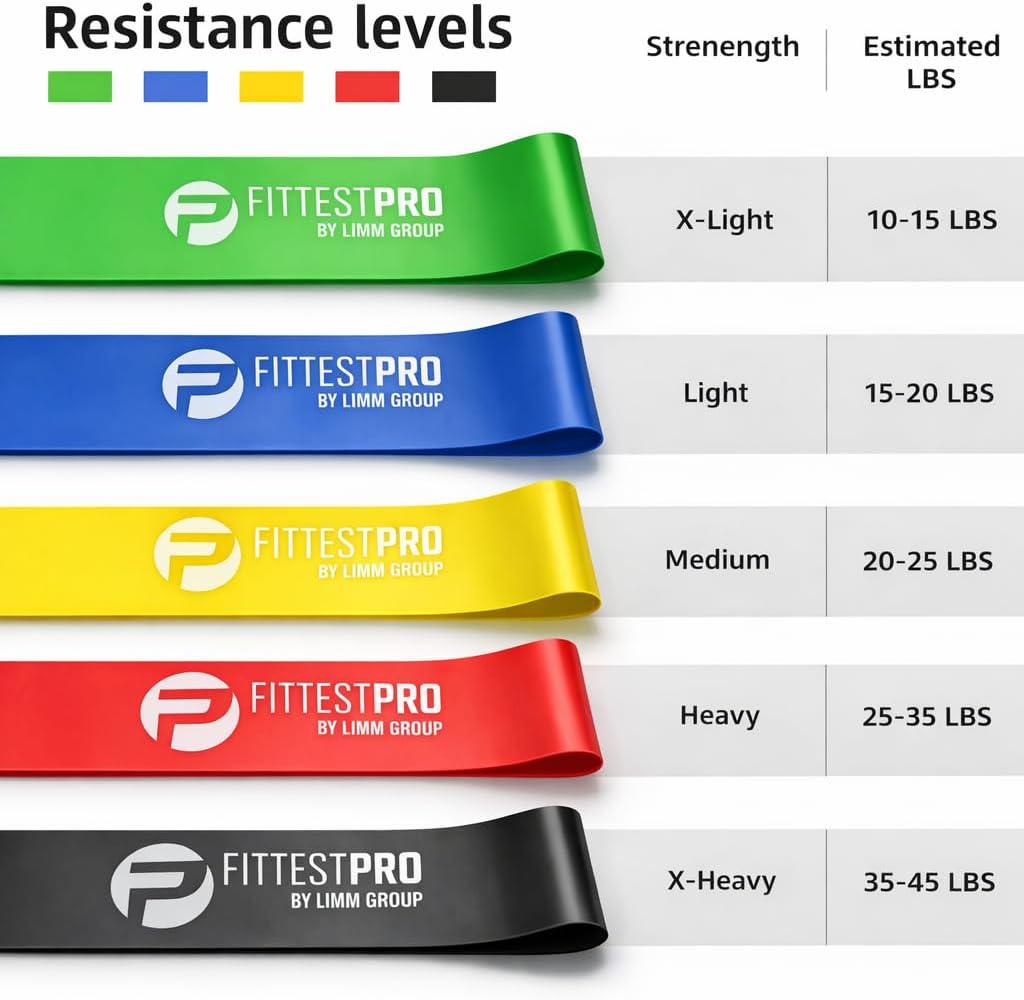
Fittest
$8.99
In stock on Amazon
Check price on AmazonMid-Range Tier: Standard Fabric Bands with Grip Lining
Wide fabric bands with interior silicone grip strips represent the practical solution to the rolling problem for the majority of home-gym users. The width — typically 2 to 3 inches — distributes tension across a much larger contact area than any latex loop, and the grip lining anchors the band against clothing or skin mechanically rather than relying on friction alone.
Owner consensus on this category is specific and repeatable: across hundreds of reviews for popular fabric band options, reviewers consistently cite the interior grip strip and structured width as the reasons these bands behave differently from rubber alternatives. Multiple owners explicitly describe switching to fabric after rubber bands rolled and pinched skin during glute bridges and squats. That pattern — owners arriving from latex, citing the same problem, finding the same solution — is the kind of signal that reflects genuine real-world performance rather than marketing.
The Barbend resistance band editorial, published at barbend.com, and the Men’s Health best resistance bands roundup at menshealth.com both identify fabric bands as the preferred choice for lower-body-focused training, with the grip lining called out as the spec that separates effective fabric bands from cheaper fabric options that skip it. Fabric bands with no grip lining can still roll — the lining is not a given across all fabric products and is worth verifying before purchase.
Fabric bands also hold their resistance more consistently through months of regular use. They tolerate repeated washing, sweat exposure, and daily handling better than latex equivalents, which means the upfront cost premium over a basic latex set is often recovered in extended lifespan.
Best for: home-gym users whose training centers on glute and hip work; anyone who has already tried latex bands and experienced rolling or pinching; buyers who want a band they can wash and use daily without degradation.
Not ideal for: packing into a small carry-on or jacket pocket — fabric bands are stiffer and bulkier than latex by design.
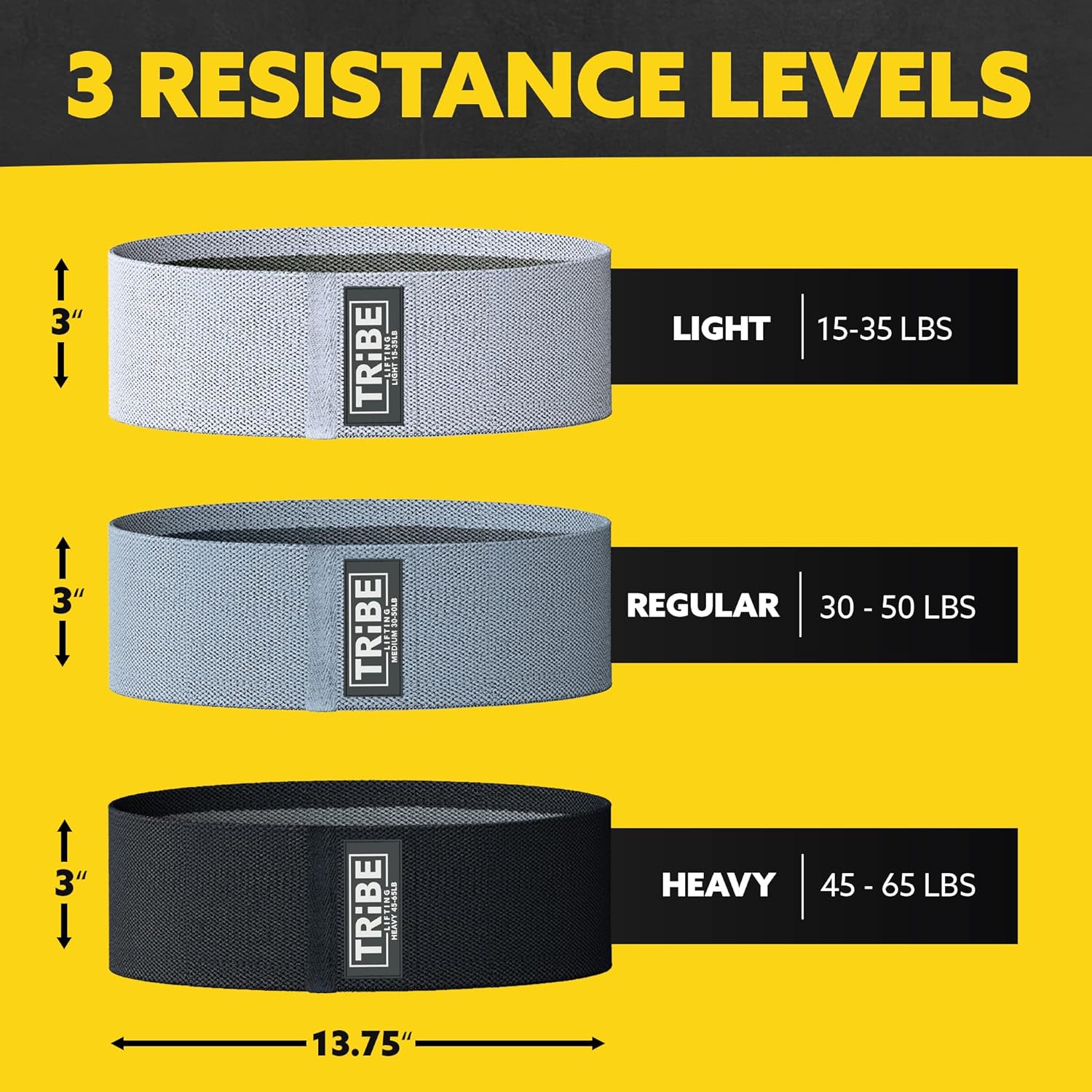
Tribe
$19.97
In stock on Amazon
Check price on AmazonPremium Tier: Heavy-Duty Fabric Bands for Progressive Overload
For buyers who have moved past entry-level resistance and want to use bands as a meaningful progressive overload tool — not just a warmup accessory — the relevant question is whether a fabric band can deliver sufficient resistance at the top end of the range. Most standard fabric loop bands top out around 35–40 pounds of resistance. Premium fabric bands built with thicker material and denser weave construction extend that range meaningfully, which matters if you’re adding bands to weighted squats or using them to increase hip abduction load beyond what lighter bands provide.
The tradeoff at this tier is that very heavy fabric bands require more effort to put on and take off, particularly for users with larger thighs. The grip lining that prevents rolling during a set also means the band grips firmly during donning — not a problem in practice but worth knowing. For studio trainers outfitting a client kit, heavy fabric bands with grip linings reduce mid-session interruptions, which matters when running someone through a circuit without stopping to reposition equipment every set.
The Men’s Health resistance band roundup at menshealth.com notes that resistance band weight ratings are not standardized across the industry — a brand’s “extra heavy” can correspond to another brand’s “medium.” When evaluating premium fabric bands, look for the actual resistance range in pounds if the manufacturer publishes it, and treat labels like “extra heavy” as relative within a single brand’s lineup only. The SELF magazine resistance band guide makes the same point explicitly: without a testing standard, label comparisons across brands are unreliable.
Best for: users who have outgrown lighter bands and want fabric construction with higher resistance ceilings; small studio operators who need durable equipment that stays positioned under client use.
Not ideal for: beginners who haven’t yet established which resistance level suits them — start at mid-range and add heavier bands once you’ve identified your working load.
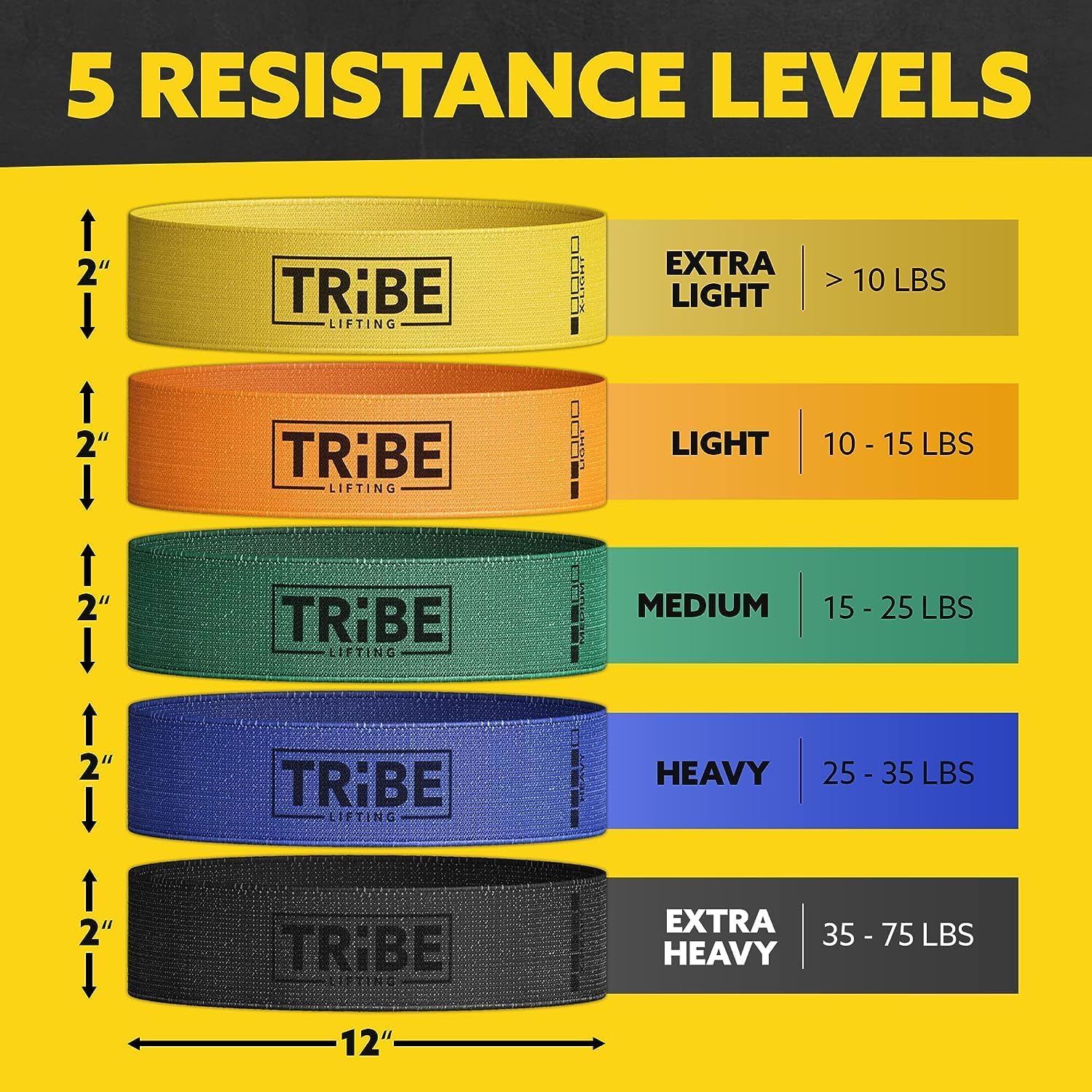
Tribe
$19.97
In stock on Amazon
Check price on AmazonHow to Decide: A Clear Decision Framework
If your main goal is glute bridges, squats, and hip work at home: fabric bands with interior grip lining are the clear choice. The width and friction solve the rolling problem at the source. The mid-range category has the most owner consensus specifically for this use case.
If you travel frequently and need something that fits in a jacket pocket: a latex set makes sense as a travel option. Accept that you may need to reposition the band during leg work, or limit band use on the road to upper-body exercises where rolling is less of an issue.
If you’re recovering from an injury and your physical therapist prescribed banded exercises: either material works for standard PT protocols. Fabric bands are generally more comfortable for extended sessions and for patients with sensitive skin. The American Council on Exercise resistance band training guide at acefitness.org covers both loop band types as appropriate for rehab and activation work. Fabric bands are particularly well-suited to slow, controlled movements common in rehab because they stay positioned during holds.
If you want versatility for both lower and upper body: buy one fabric band set for leg work and one compact latex set for upper-body warmups and travel. The combined cost is modest enough that owning both types is often the most practical answer rather than trying to force one material to do everything.
Frequently Asked Questions
Why do resistance bands roll up during squats? It’s almost always a combination of narrow width and low surface friction. A narrow latex band concentrates tension along a thin strip on a curved surface — it rolls because that’s the path of least resistance. Wider bands, especially fabric ones with interior grip strips, distribute tension across a larger area and have the friction needed to stay anchored.
Does the grip lining inside fabric bands wear out over time? Owners who report on long-term use generally note that the silicone grip strips outlast the fabric itself. Washing fabric bands in cold water and air drying them extends their lifespan considerably. The grip lining tends to hold up through repeated washing and regular use better than the latex in equivalent rubber bands degrades under sweat and UV exposure.
Are fabric bands good for physical therapy or only for gym workouts? Fabric bands are well-suited to PT use. They’re comfortable against skin for extended holds, they stay positioned during slow controlled movements common in rehab protocols, and they’re easy to clean. Many patients find fabric bands more tolerable than latex precisely because they don’t pinch or roll during the deliberate repetitions that rehab work typically involves.
Can I use fabric loop bands for upper-body exercises or just legs? You can, but they’re less versatile for upper-body work than for leg and glute training. For pull-apart drills or shoulder warmups, a fabric band works fine. For movements requiring a longer, thinner band — like rows or bicep curls from a door anchor — a traditional tube-style resistance band is a better tool. Fabric loop bands are purpose-built for hip and leg work.
What does “extra heavy” actually mean in resistance band weight ratings? It means almost nothing standardized. There is no industry-wide testing standard for resistance band weight ratings. The SELF magazine resistance band guide notes this inconsistency explicitly: without a shared testing framework, label comparisons across brands are unreliable. When comparing bands, look for the actual resistance range in pounds if the manufacturer publishes it, and treat labels like “light,” “medium,” and “heavy” as relative within a single brand’s lineup only.
Is it worth buying both fabric and latex bands, or should I just pick one? For most home-gym users, buying one fabric set for lower-body work and a compact latex set for travel and upper-body warmups is a reasonable split — the combined cost is still very low compared to almost any other fitness equipment. If you can only buy one type, buy fabric if lower-body training is your primary goal. Buy latex only if portability is the non-negotiable priority and you’re willing to manage the rolling issue through exercise selection.
The rolling and pinching problem that frustrates so many band users isn’t something to train around — it’s something to buy around. Fabric bands with interior grip strips exist specifically because the latex loop format has a documented positioning failure mode on lower-body exercises. If you’ve been adjusting your band every few reps, that’s not a technique problem. It’s a hardware problem with a straightforward solution.