July 21, 2026 • Brian Webb • 9 min reading time • Prices verified June 29, 2026
Fabric Resistance Bands for Legs and Glutes: Why Cloth Beats Latex for Lower-Body Work at Home
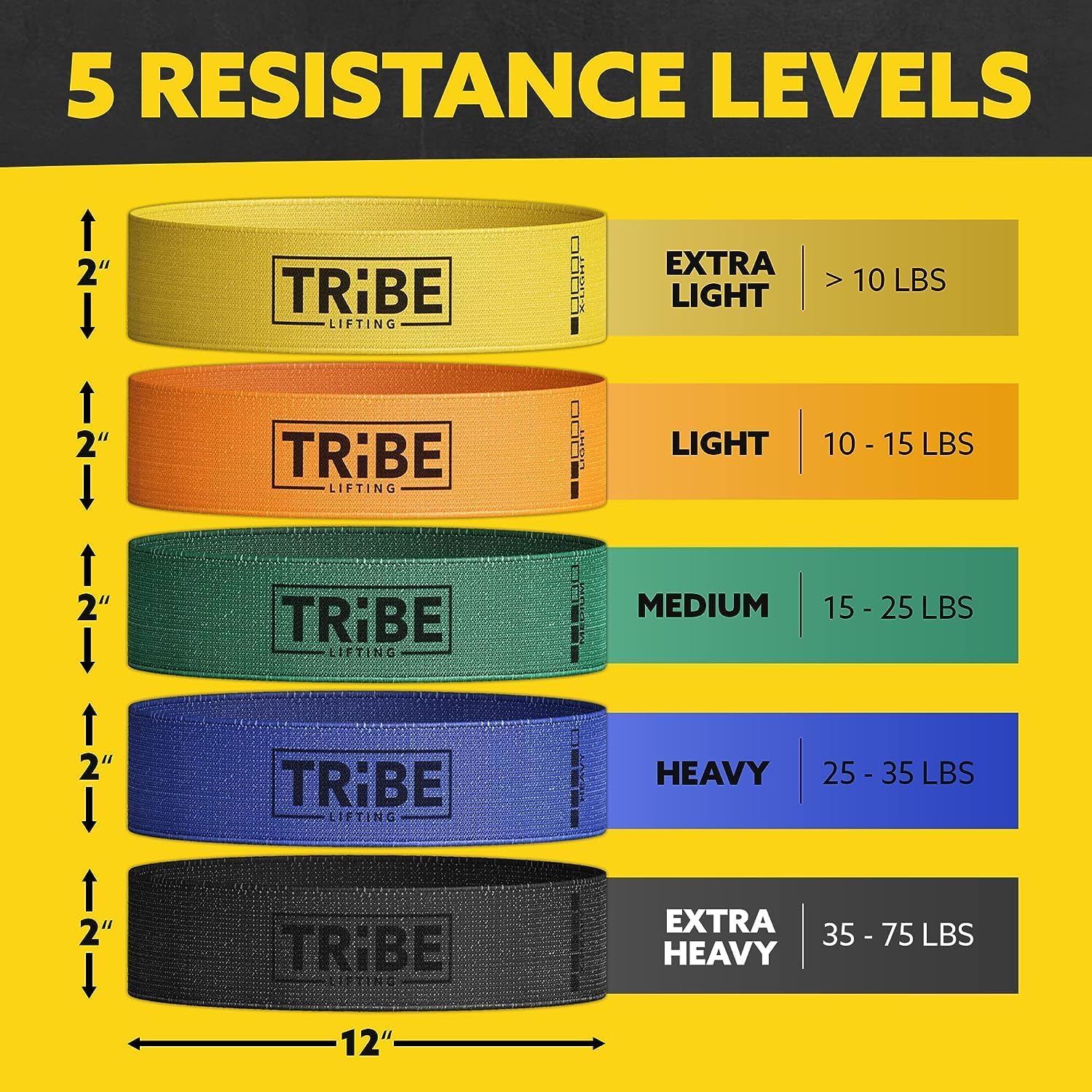
If you have ever tried to do a side-lying clamshell or a banded squat walk with a thin rubber loop around your thighs, you already know the problem: the band rolls up into a skinny cord, digs into your skin, and spends more time sliding down toward your knees than actually working your muscles. That sliding and bunching is not a technique problem — it is a material problem. Resistance bands (stretchy loops you place around your legs to add difficulty to bodyweight exercises) come in two main types: latex (smooth rubber) and fabric (woven cloth, sometimes called “booty bands” or “hip bands”). For lower-body work specifically — glute bridges, squats, donkey kicks, lateral walks — fabric bands solve nearly every frustration that latex creates. This guide explains exactly why, shows you what to look for when shopping, and gives you a clear decision framework so you buy the right set the first time.
Why Fabric Bands Outperform Latex for Lower-Body Training
The core difference is friction. Latex is smooth, and smooth materials slide against skin and athletic fabric alike. Fabric bands are woven — the weave grips your skin or leggings the same way a yoga mat grips the floor. That grip does two things: it keeps the band anchored in position through every rep, and it spreads the resistance across a wider surface area (typically two to four inches wide versus half an inch to one inch for a standard thin latex loop), which means no pressure-point digging.
Reviewers at Barbend consistently flag this distinction in their resistance-band roundups, noting that fabric bands “stay put during dynamic movements” in a way that thin latex loops simply do not — especially on exercises like the lateral band walk, where the band is constantly being pulled in multiple directions at once.
There is also a durability argument. The American Council on Exercise’s overview of resistance band training notes that bands should be inspected regularly for nicks and tears — a maintenance step that matters far more with latex, which can develop micro-tears that eventually snap under load. Fabric bands are reinforced with elastic threading woven through the cloth, so they do not tear the same way; reviewers across multiple long-run owner reports describe fabric sets lasting two to three years of daily training before showing meaningful wear, versus latex loops that frequently need replacing inside six to twelve months of hard use.
Finally, comfort at room temperature matters more than it sounds. Latex feels tacky and cold in a chilly garage gym, and it can cause skin reactions in people with latex sensitivities. Fabric feels neutral regardless of ambient temperature — a small quality-of-life detail that adds up across thousands of morning sessions.
What the Numbers Actually Mean: Resistance Levels Explained
Fabric bands are sold in resistance levels, almost always labeled Light, Medium, Heavy, and X-Heavy (some brands add a fifth “Hip Circle” or “Extra Resistance” tier). The problem is that those labels are not standardized — a “Heavy” band from one brand might match a “Medium” from another. What you actually want to look at is the stated peak resistance in pounds or kilograms, which reputable brands list on their spec sheets.
By the numbers — typical fabric band resistance ranges (published specs, mid-market brands, 2026):
| Label | Approximate Peak Resistance |
|---|---|
| Light | 15–25 lb |
| Medium | 25–40 lb |
| Heavy | 40–60 lb |
| X-Heavy | 60–90 lb |
For most beginners, a three-band set covering roughly that Light-to-Heavy range is the right starting point. You will use the light band for activation work (clamshells, side-lying leg raises), the medium for bodyweight squats and bridges, and the heavy for stronger glute exercises as you progress. Buying a set rather than individual bands is almost always better value — and gives you the ability to match resistance to the specific exercise on any given day.
How to Choose the Right Fabric Band Set
Here is the decision framework, built around what owners and reviewers consistently report across aggregated reviews.
If you are a true beginner — you have never used resistance bands, you are not sure how strong you are, and you are starting from a couch-to-fitness baseline — look for a three-piece set in the $12–$25 range with clearly labeled light, medium, and heavy options. At this price tier, the weave quality varies, but you are buying a learning tool, not a lifetime piece of equipment. Reviewers at Self.com note that entry-level fabric sets are widely available and serve beginners well for the first six to twelve months before most people want to step up in quality.
If you are a mid-market buyer — you have been training for three to twelve months, you know which exercises you want to use bands for, and you want something that will last — this is where quality separation becomes meaningful. In the $25–$55 range (for a three-to-five piece set), look for:
- Double-layer or triple-layer construction. Single-layer bands lose elasticity faster. Brands like Undersun and Peach Bands publish their layer counts; reviewers at Wirecutter’s resistance band guide specifically call out multi-layer construction as a key durability indicator.
- Silicone grip strips on the interior. These are small lines or dots of silicone sewn or printed onto the inside face of the band. They dramatically reduce roll-up during lateral movements. This feature separates mid-market bands from budget ones more reliably than any other single detail.
- Reinforced stitching at the seam. The seam where the band forms a loop is the highest-stress point. Flat-lock or double-stitched seams hold far longer than single-stitch construction.
If you are a serious home-gym builder — you are already investing in quality iron, your training is structured and progressive, and you want a band set that matches the durability of the rest of your equipment — look at premium options in the $55–$120 range. At this tier, brands like Rogue Fitness and Perform Better offer fabric hip circles rated for significantly higher peak resistance, with commercial-grade construction designed to hold up in studio environments. These are not “better for beginners”; they exist because advanced lower-body training (heavily loaded hip thrusts, deficit split squats with band assist, loaded lateral walks) generates more force than budget bands are built to absorb.
The Exercises That Make Fabric Bands Worth Buying
Understanding why fabric bands work better is easier when you think through the specific movements they are designed for. Here are the five exercises where the fabric-over-latex advantage is most pronounced, based on consistent patterns in owner-reported feedback:
1. Banded glute bridge. You lie on your back, place the band around your thighs just above your knees, push your feet into the floor, and drive your hips toward the ceiling. The band adds lateral resistance, forcing your glutes to work harder to keep your knees tracking outward. A latex band rolls to a cord under your body weight; a fabric band stays flat.
2. Lateral band walk. You step side to side with the band around your thighs or ankles, working the hip abductors (the muscles on the outer hip) that are chronically underworked in most people who sit at a desk. This exercise is nearly impossible to perform cleanly with a thin latex loop — it slides with every step. Fabric bands with interior grip strips stay fixed.
3. Banded squat. Adding a fabric band just above the knees during a squat creates external cue pressure: your brain works to push your knees outward against the band’s pull, which activates glute medius and corrects the common “knees caving inward” fault. ACE Fitness’s resistance band training overview specifically references banded squats as an effective tool for reinforcing knee-tracking mechanics.
4. Donkey kick. On all fours, you kick one leg back and up against the band’s resistance. The range of motion here pulls a latex band toward the ankle constantly; fabric construction stays around the mid-thigh without intervention.
5. Clamshell. Lying on your side with hips and knees bent, you rotate the top knee open like a clamshell hinge. This is a classic physical therapy exercise for hip stability. It requires very light resistance — this is your Light band exercise. Fabric construction means you can focus on the muscle contraction instead of constantly repositioning the band.
What to Ignore When You Are Shopping
A few marketing claims on fabric band listings are worth treating skeptically.
“Squat-proof” is a style claim, not a resistance claim. It means the band is opaque during exercise — relevant for leggings, not for bands. It tells you nothing about construction quality.
Bright colors and Instagram aesthetics do not correlate with durability. Owners across multiple review aggregations report that some of the most visually appealing sets (gradient colors, matching carry bags) use single-layer construction that loses resistance within months.
Avoid sets that do not publish peak resistance numbers. If a listing only says “Light / Medium / Heavy” without any force numbers, the manufacturer is not confident enough in their specs to publish them. That is a meaningful signal about quality control.
The Clear Decision Rule
If your lower-body training involves any of the five exercises above — glute bridges, lateral walks, banded squats, donkey kicks, or clamshells — fabric beats latex, every time, for every buyer at every budget. The only scenario where latex loops still make sense for leg work is if you need a very long looped band for assisted pull-ups or full-body mobility work, because fabric bands are not built for that application.
For your first set, spend $15–$25 on a three-piece fabric set to confirm you will use them. If you train with them three or more times a week for two months, step up to a $40–$60 set with silicone grip strips and multi-layer construction — that is the tier where owners consistently report the experience matching the price. If you are building a permanent home gym and want commercial durability, the Rogue or Perform Better hip circle options are worth the premium for the same reason you buy Rogue bars instead of entry-level iron: you buy it once.
The bands are inexpensive. The frustration of rolling latex is free. Fabric solves it.