July 28, 2026 • Brian Webb • 10 min reading time • Prices verified June 29, 2026
Adjustable Kettlebell vs. Fixed Set: The Space-and-Budget Trade-Off Every Home Gym Builder Faces
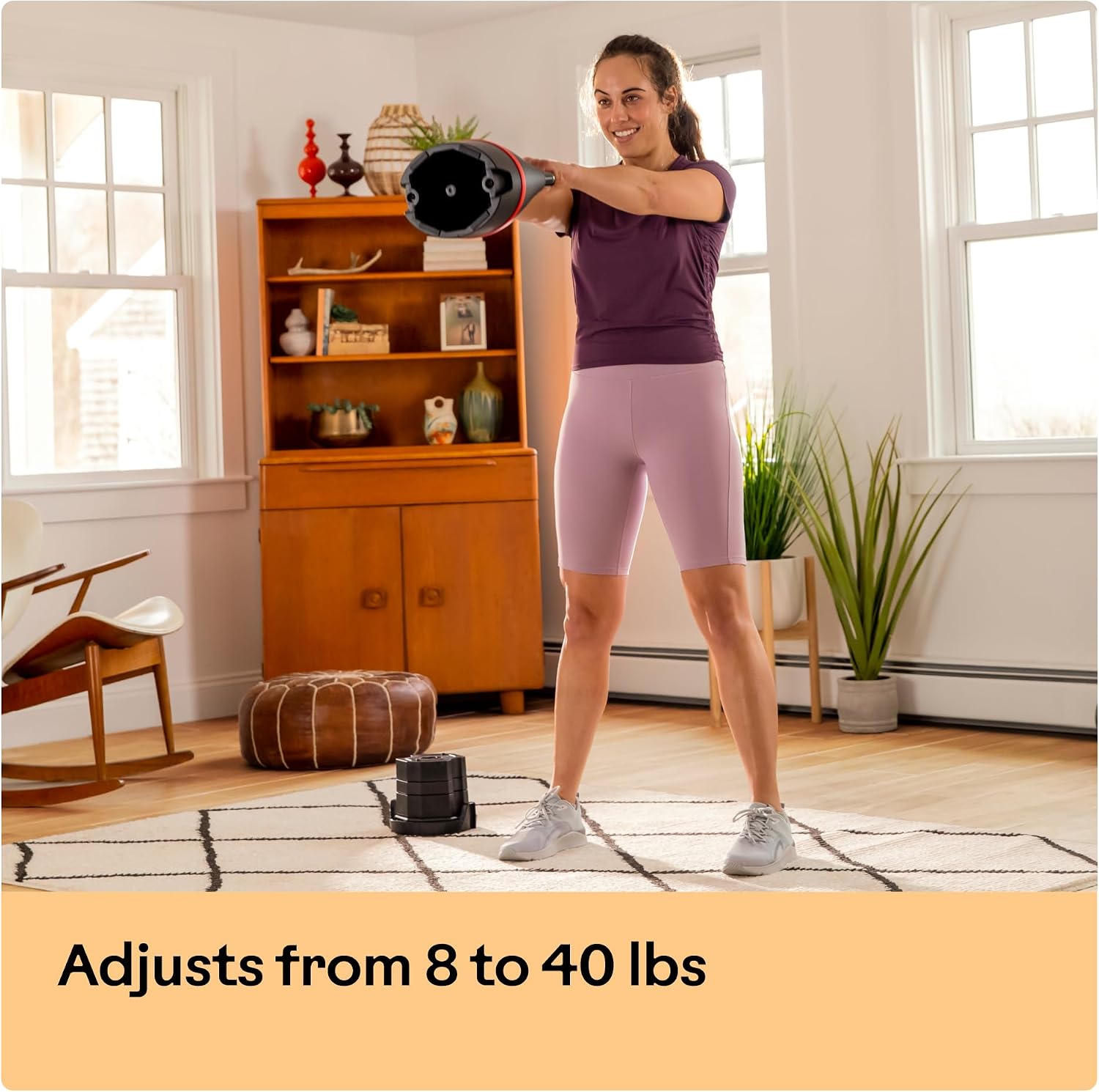
A kettlebell — a cast-iron or steel weight shaped like a cannonball with a handle on top — has become one of the most popular pieces of home-gym equipment because a single one can cover swings, presses, squats, and carries, a near-complete workout in a footprint smaller than a shoebox. The question every home-gym builder eventually lands on is whether to buy one adjustable kettlebell (a single shell that lets you dial the weight up or down by adding or removing internal plates) or to invest in a set of fixed-weight kettlebells in several sizes. Both paths can build serious strength. But they cost different amounts, eat different amounts of floor space, and reward different training styles. This guide breaks down exactly where each option wins so you can stop second-guessing and make the call.
| EDITOR'S PICKBowFlex SelectTech 840 Adjustab… | Mid-tierYes4All Kettlebell Sets | Budget pickApex 20lb Adjustable Cast Iron… | |
|---|---|---|---|
| Type | Adjustable | Fixed set | Adjustable |
| Load range | — | — | Up to 50 lb |
| Plate compatibility | — | — | 1" plates |
| Handle material | — | Cast iron | Cast iron |
| Bottom shape | — | Flat | — |
| Price | $149.00 | $79.39 | $45.59 |
| See on Amazon → | See on Amazon → | See on Amazon → |
What You’re Actually Choosing Between
Before the comparison math, it helps to understand what each format is physically doing.
Fixed kettlebells are the classic version: one piece of iron or steel, one weight, forever. A 24 kg (53 lb) fixed bell is always 24 kg. Its handle diameter, balance, and feel are optimized at manufacture for that exact weight class. Most serious kettlebell training programs — including the foundational frameworks described in ACE Fitness’s kettlebell training overview — are built around the assumption that you own at least two or three fixed bells in different sizes so you can press a lighter weight and swing a heavier one on the same training day.
Adjustable kettlebells work like adjustable dumbbells: a locking mechanism (usually a dial, a pin-and-collar system, or a twist-and-lock sleeve) lets you change the internal plate load. Popular models on the market in 2026 range from roughly 12 lbs up to 40–50 lbs in a single unit. You get multiple weight increments without multiple purchases — in theory.
The gap between theory and practice is where this decision actually lives.
Budget, Space, and Training: A Head-to-Head Breakdown
Most buyers anchor their decision on price alone, then discover six months in that space and training feel matter just as much. The following three subsections examine each dimension separately so the trade-offs are explicit before you spend a dollar.
Budget: What You Actually Pay Across the Training Arc
Entry-level purchasing window
Most intermediate kettlebell programs — the kind covered in Barbend’s “Best Adjustable Kettlebells” buying guide and Garage Strength’s kettlebell programming breakdowns — call for access to at least three weight stops: a light bell for pressing and Turkish get-ups, a medium bell for cleans and rows, and a heavier bell for swings and deadlifts. For most adults that means roughly 12–16 kg (26–35 lb) light, 20–24 kg (44–53 lb) medium, and 28–32 kg (62–70 lb) heavy.
At the entry level, a quality adjustable unit and a budget three-bell fixed set are surprisingly close in price. Budget cast-iron fixed sets in a 16/24/32 kg configuration from mid-market brands typically run $180–$270 in 2026. A single adjustable kettlebell covering the 12–32 kg range via a dial or pin mechanism lands in the $150–$250 window. For someone who genuinely needs multiple weight increments right away and is working with a limited first purchase, the adjustable is the cleaner value at this tier.
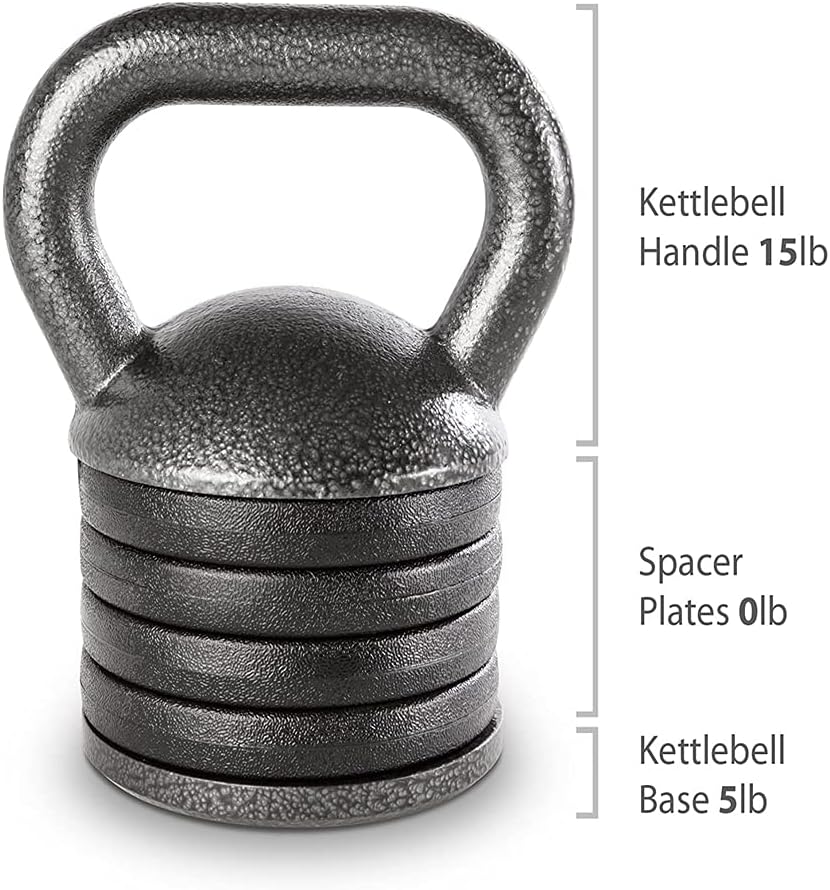
Apex
$45.59
In stock on Amazon
Check price on AmazonMid-market comparison
The calculus shifts in the mid-market. Competition-specification steel fixed bells from established strength brands run $390–$520 for a comparable three-bell set, while premium adjustable units with extended ranges and locking-dial mechanisms land in the $180–$280 range. At this comparison point, the adjustable saves real money — sometimes $200 or more — for a beginner building a first setup. Consumer Reports’ home gym equipment guidance notes that adjustable equipment tends to offer the clearest savings at the point of initial purchase, but the advantage narrows over a multi-year training arc when athletes outgrow the weight ceiling and need to buy additional units anyway.
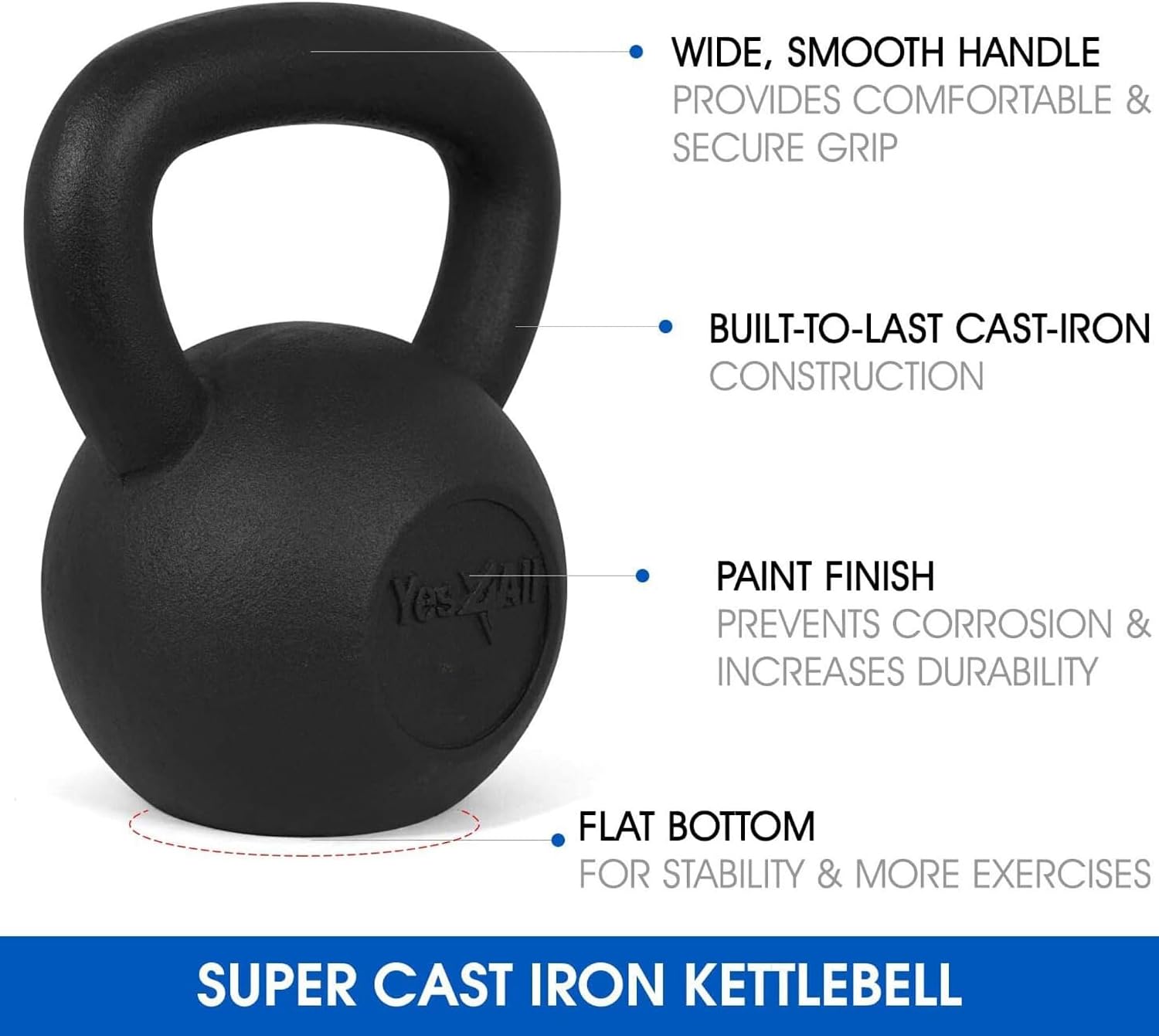
Yes4All
$79.39
In stock on Amazon
Check price on AmazonLong-term scaling costs
The calculus flips entirely when you start scaling. An adjustable kettlebell that maxes at 40 lbs is a ceiling, not an upgrade path. When your swings outgrow that weight, you’re buying a second unit — and now the “one purchase” story has unraveled. Consumer Reports’ home gym equipment reporting consistently flags this pattern: adjustable equipment saves money at the start but can cost more over a multi-year training arc if you out-train the available weight range. Serious athletes targeting 32 kg and above for ballistic work — the range where Garage Strength’s programming frameworks place most intermediate swing progressions — are better served budgeting for fixed bells from the start, purchased individually as training demands them rather than all at once.
BowFlex
$149.00
In stock on Amazon
Check price on AmazonSpace: Where the Adjustable Genuinely Wins — and Where It Doesn’t
One adjustable kettlebell occupies approximately the same floor footprint as one fixed bell. On paper, that’s a dramatic space win over a three- or five-bell fixed set. In practice, the difference is often smaller than people expect — and occasionally reversed.
Three fixed kettlebells stacked on a basic horizontal rack (the kind sold by REP Fitness and Rogue for under $60) occupy roughly 24 inches of wall space and about 12 inches of depth. That’s a compact shelf most garage setups can absorb without rearranging. The visual impression of a “wall of kettlebells” usually refers to sets of six or more, which is a different conversation entirely.
Where the adjustable genuinely earns its keep on space is in three scenarios:
True micro-spaces — a bedroom corner, a 6×8 ft apartment training zone, or a shared room where every square foot matters. One bell on the floor beats a rack every time.
Travel or semi-permanent setups — trainers who move their kit between locations find that a single adjustable unit is dramatically easier to transport than even a two-bell fixed set.
Early-stage garage gyms — when a space is still being built out and floor real estate is genuinely at a premium before the rack, barbell, and mat arrive.
If you already have a dedicated room or garage with 150 or more square feet of usable space, the space argument for adjustable largely disappears. Wirecutter’s “The Best Kettlebells” review notes that the ergonomic bulk of most adjustable mechanisms — the wider handle collar, the locking sleeve — can make the bell feel awkward during ballistic movements like swings and cleans, where a smooth, round fixed bell simply tracks better through the arc of the movement.
Training Feel: The Trade-Offs Nobody Leads With
Budget and space get the headlines. The training experience is where the real differentiation lives, and it tends to surprise people six months into ownership.
Handle geometry and balance
Fixed kettlebells — especially competition-specification bells — are engineered so that handle diameter, window width, and center of gravity stay consistent across weight classes. That consistency is intentional: your technique, wrist rack position, and hand insertion are identical at 16 kg and 32 kg. You’re training a movement pattern, not adapting to new hardware each session.
Adjustable mechanisms necessarily compromise handle geometry. As internal plates are added, weight distribution shifts. Barbend’s “Best Adjustable Kettlebells” buying guide flags this directly, noting that several popular adjustable models feel noticeably front-heavy at maximum load compared to their fixed counterparts — a characteristic that experienced reviewers find acceptable for presses and deadlifts but genuinely disruptive for high-rep swings and snatches, where balance through the arc of the movement matters.
Weight transition speed
Adjustable kettlebell weight changes — even on the smoothest dial systems — take 15–45 seconds. That’s functionally fine for strength circuits where you rest between sets anyway. It becomes a genuine annoyance in density blocks, EMOM workouts (every minute on the minute), or any program that has you alternating between different weights in quick succession. Fixed bells you grab and go.
Durability over time
The consistent long-term concern with adjustable kettlebells is the locking mechanism — specifically, dial-and-plate systems that develop play or wobble after 12–18 months of hard use. Fixed cast-iron bells, by contrast, have essentially no mechanical failure mode short of a drop that chips the coating. For high-frequency users training four or more sessions per week, the fixed bell’s zero-moving-parts durability is a meaningful long-term advantage. ACE Fitness’s kettlebell training overview emphasizes high training frequency as a core driver of adaptation in kettlebell programs, which makes durability under repeated use a practical concern rather than a theoretical one.
Who Should Buy What: The Decision Framework
If you’ve read this far, you probably already feel a lean forming. Here’s the explicit framework.
Choose an adjustable kettlebell if:
- You’re training in 200 square feet or less with no dedicated rack space
- You’re buying your first piece of kettlebell equipment and aren’t sure how far you’ll take it
- Your budget is under $200 and you need range now, with plans to reassess in 12 months
- You travel or rotate your training between locations
- Your program is primarily strength-focused (presses, goblet squats, deadlifts) rather than ballistic-heavy (swings, snatches, cleans)
Choose a fixed set if:
- You’re building a permanent training space — garage, basement, or dedicated room — and plan to use it for three or more years
- Your training includes significant volume of ballistic movements where handle feel and weight balance matter
- You train four or more sessions per week and need zero-friction weight transitions
- Your target weight range exceeds 40 lbs, where most adjustable units top out
- You’ve already outgrown one weight and are scaling — fixed bells compound better as individual purchases than a second adjustable unit
The hybrid middle ground that a meaningful slice of the training community lands on: start with one or two fixed bells at your most-used weights — typically your swing weight and your press weight — and add others as training demands them. REP Fitness’s cast-iron lineup, Rogue’s standard bells, and Fringe Sport’s competition-style bells all offer individual purchases without forcing you into a full set. Garage Strength’s kettlebell programming guidance frequently recommends anchoring your collection around the two weights you’ll use 80% of the time, then filling gaps as your programming dictates.
A Note on Where the Market Is Headed
As of mid-2026, the adjustable kettlebell market has matured significantly from its early-pandemic surge. Several second-generation mechanisms — using magnetic plate retention rather than twist-and-lock collars — have addressed the wobble complaints that plagued first-generation units. Premium adjustable models from established fitness brands are holding their pricing in the $180–$280 range, while fixed cast-iron pricing at mid-market brands like REP Fitness and Titan Fitness has stayed competitive, with per-pound costs on cast iron running lower than they did two years ago.
The practical upshot: neither format is clearly “the budget choice” anymore. The decision really does come down to training style and space, not just sticker price. As Wirecutter’s “The Best Kettlebells” review concludes, the best kettlebell for most people is the one that matches their actual training movements — and for anyone doing serious swing volume, that still points toward a fixed bell.
If you want the most durable, training-optimized, long-term setup and have a real home-gym space: fixed bells, bought in stages. If you’re working in a constrained space or on a constrained timeline and need range now: a quality adjustable buys you 12–18 months of serious training before you’ll feel its limits. Either way, you’re not making a permanent mistake — you’re making a first decision, and both paths lead to the same swings.