August 6, 2026 • Brian Webb • 10 min reading time • Prices verified June 29, 2026
Adjustable Kettlebells vs. Fixed Sets With Racks: A Real-World Space and Value Decision
A kettlebell is a cast-iron or steel weight shaped like a cannonball with a handle on top. Unlike a dumbbell — where you grip a bar centered between two equal weights — the kettlebell’s off-center mass makes it especially effective for swinging, pressing, and carrying movements that build whole-body strength and conditioning. If you’re equipping a home gym, you’ll eventually face a real fork in the road: buy one adjustable kettlebell (a single unit whose weight you can dial up or down) or buy a set of fixed-weight bells stored on a rack (individual bells at different weights, organized together). Neither answer is universally right. This article lays out exactly when each format wins, shows you the space and cost math side by side, and pulls in the patterns that actual owners keep raising in long-run reviews — so you can make a decision you won’t second-guess six months from now.
| EDITOR'S PICKKettlebell Sets Professional Gr… | Mid-tierBest Choice Products 3-Piece Ke… | Budget pickF2C 3-Piece Kettlebell Set with… | |
|---|---|---|---|
| Material | Cast Iron | HDPE Coated Concrete | HDPE Coated Concrete |
| Includes Rack | ✗ | ✓ | ✓ |
| Sizes (lb) | 5, 10, … | 5, 10, 15 | 5, 10, 15 |
| Special Base Protect | ✓ | — | — |
| Weight Material | Cast Iron | Concrete | Concrete |
| Price | $318.24 | $54.99 | $23.99 |
| See on Amazon → | See on Amazon → | See on Amazon → |
The Space and Cost Math (Before Anything Else)
Let’s get concrete. The question isn’t just “which is cheaper” — it’s which format delivers the most usable weight range per dollar and per square foot in your specific situation.
By the numbers
| Format | Typical weight range | Floor footprint | Approx. entry cost (2026) | Tier |
|---|---|---|---|---|
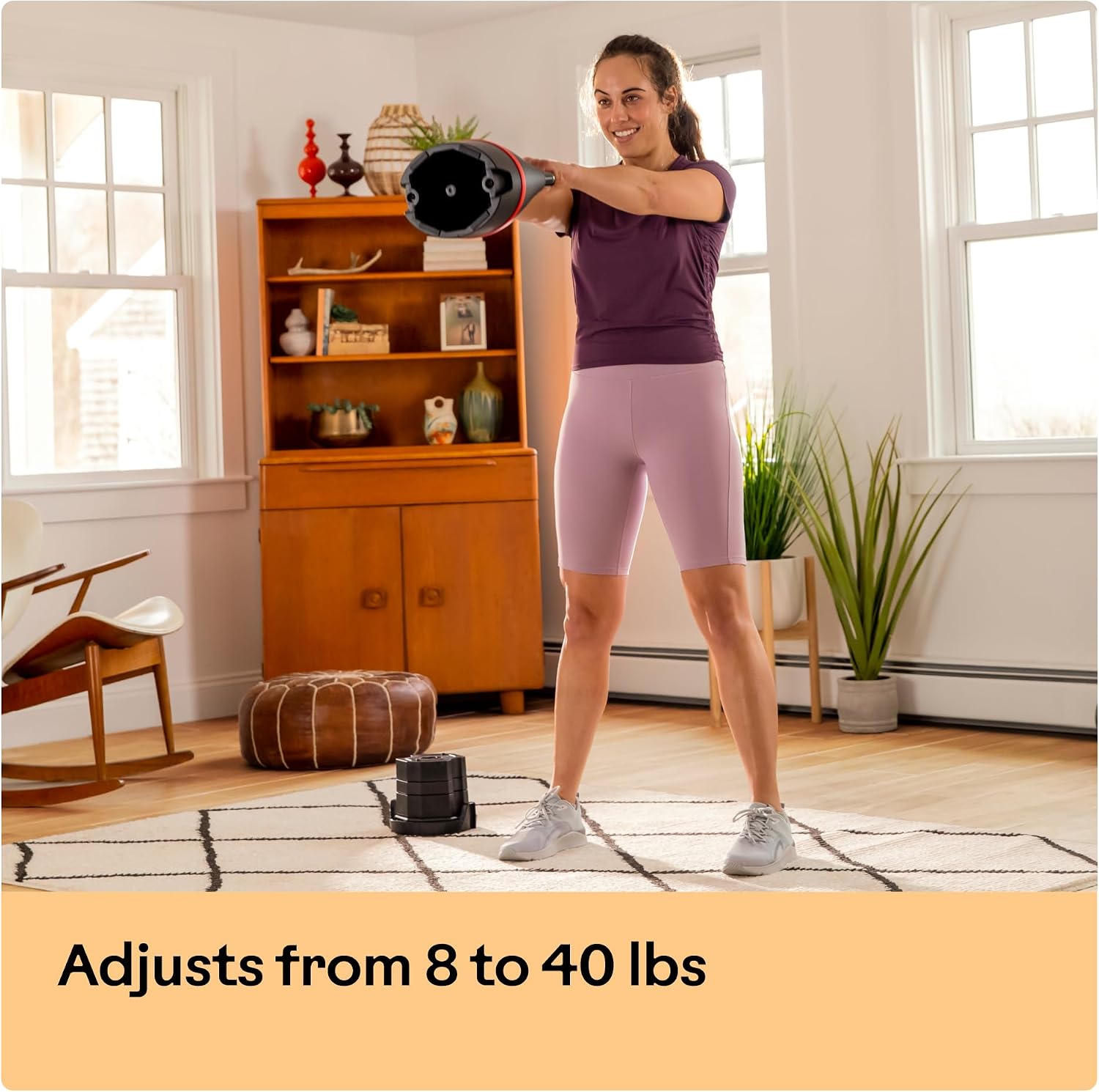
| Single adjustable kettlebell (e.g., dial-lock style) | 8–40 lb in one unit | ~1 sq ft | $150–$200 | Best — $54.99 |
| 3-bell fixed set with storage rack | 15 / 25 / 35 lb (example) | 2–4 sq ft | $120–$250 | F2C — $23.99 |
| 5-bell fixed set with full rack | 15–50 lb | 4–8 sq ft | $250–$500+ | Kettlebell — $318.24 |
A single adjustable bell covers the same weight range as three to five fixed bells while occupying the footprint of one. That arithmetic is the adjustable format’s clearest structural advantage. But footprint isn’t everything — and the fixed-set format has real arguments of its own.
According to Barbend’s “Best Adjustable Kettlebells” buyer guide, the market for adjustable bells has matured significantly in recent years, with dial-and-lock mechanisms replacing older pin systems on most mid-tier units. Men’s Health’s “Best Kettlebell Sets” review roundup notes that fixed cast-iron sets have simultaneously dropped in price as manufacturing volume from established importers increased, making the price gap between formats smaller than it was several years ago.
Where Adjustable Kettlebells Actually Win
Budget Entry Point: The Plate-Handle Option
For buyers who already own a barbell plate collection, a kettlebell plate-handle — a steel or iron handle that loads standard weight plates — is a genuinely clever unlock. You’re essentially buying a $30–$50 handle and getting kettlebell training out of iron you already paid for. Reviewers are enthusiastic about that value logic.
But two durability concerns surface consistently in owner feedback. First, some entry-level plate-handles include a plastic bottom triangle as a structural component — multiple owners note it shows wear or cracking under regular heavy use, and a few flag it outright as a failure point. Second, the minimum loading weight on most plate-handles sits around 20 pounds. For beginners just starting swings or Turkish get-ups, 20 lb is a meaningful barrier. If your starting point is lighter than that, a plate-handle isn’t your on-ramp.
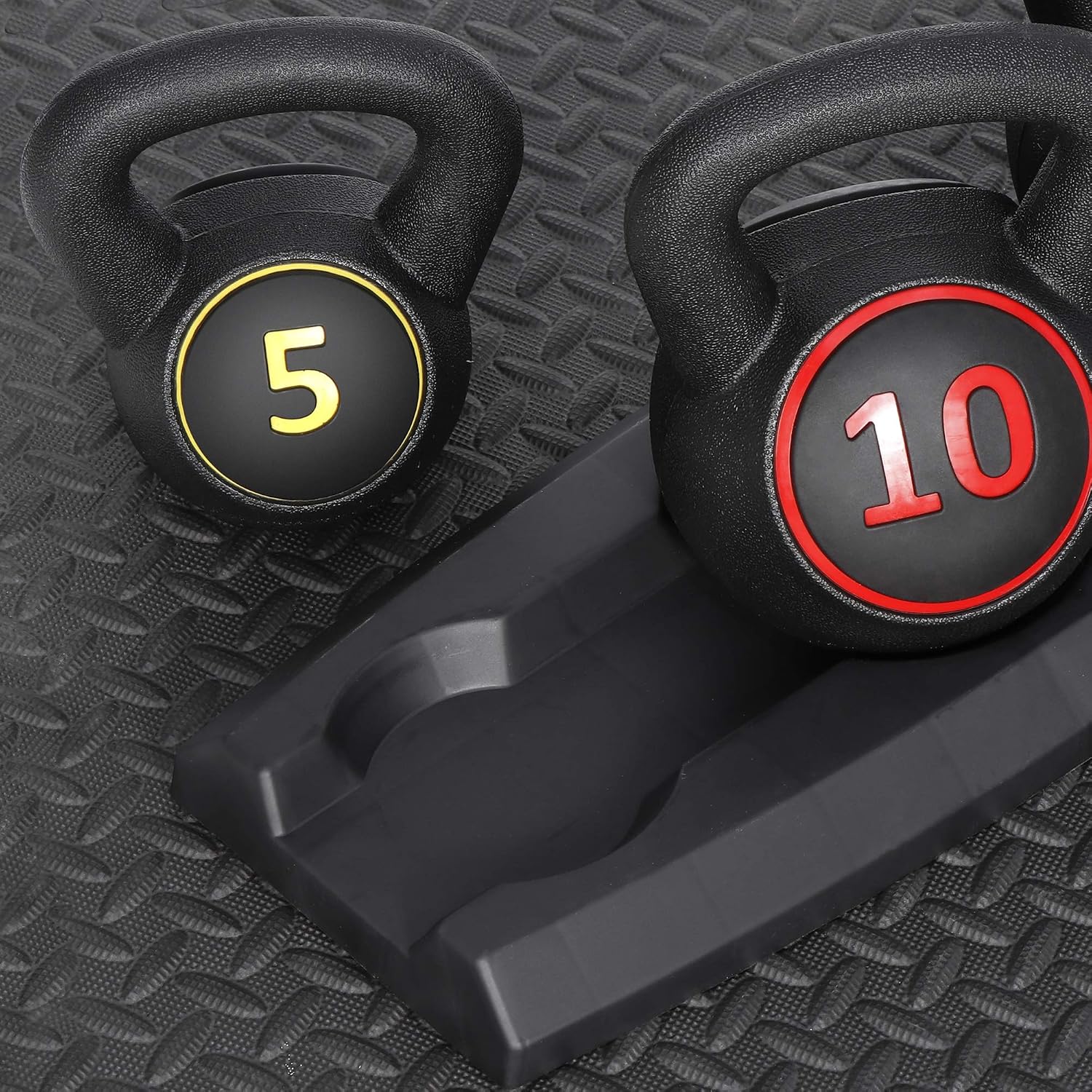
F2C
$23.99
In stock on Amazon
Check price on AmazonMid-Tier: Dial-Adjust Bells for Shared Households
The shared-household use case is the clearest real-world win for the adjustable format. Owners of dial-adjust bells — the style that adjusts from roughly 8 to 40 pounds in increments via a rotating selector — mention the “two-people-one-bell” scenario unprompted and repeatedly. A partner or housemate who swings 25 lb while you press 35 lb can both use the same unit in the same session without either person waiting or fighting for rack space. That shared-use advantage doesn’t show up in spec sheets, but it’s the thing dial-adjust owners consistently circle back to when asked what they’d tell a friend.
The adjustable format also wins on progressive overload over time. ACE Fitness’s “Kettlebell Training” exercise science overview emphasizes that most kettlebell programs call for incrementally heavier loads as you get stronger — a process that unfolds over months and years, not weeks. With a fixed set, you have to anticipate that progression and buy ahead of it. With an adjustable bell, you’re already holding the full range.
Where to be cautious with spacer-disk designs: Some adjustable kettlebells use a spacer-disk system to add or remove weight rather than a dial mechanism. Owners consistently note that the disks are slightly awkward to swap mid-workout, especially when hands are warm and attention is elsewhere. It works, but it’s slower than a dial. If fast transitions matter to you — circuit training, HIIT-style sets with short rest windows — the dial-lock format is worth the price premium.
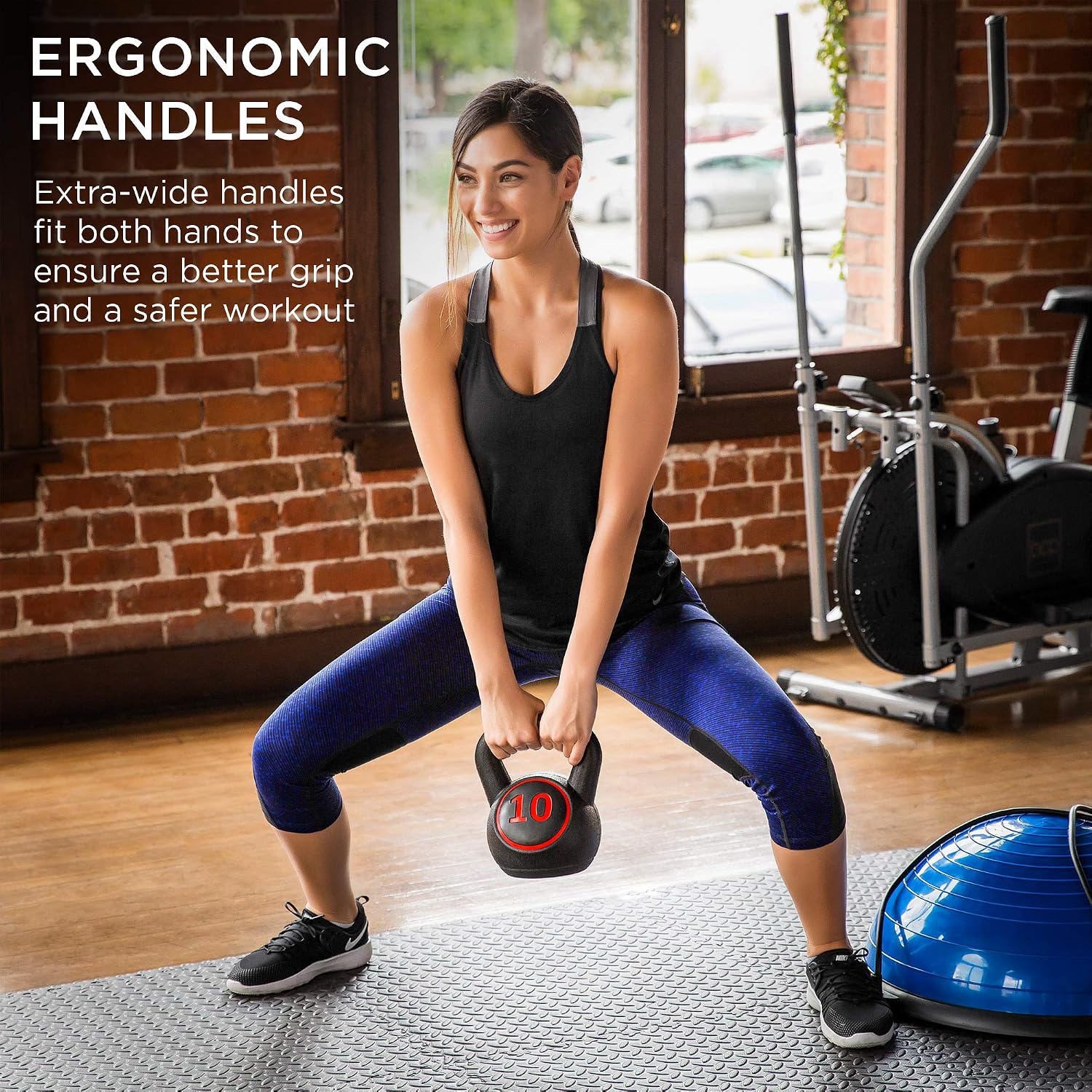
Best
$54.99
In stock on Amazon
Check price on AmazonPremium Option: Full Dial-Adjust Range With Heavier Ceiling
Top-tier adjustable kettlebells extend the weight ceiling to 50 lb or beyond and use refined locking mechanisms that seat more securely during heavy ballistic movements. Barbend’s “Best Adjustable Kettlebells” buyer guide notes that premium-tier adjustable bells are increasingly used by intermediate and advanced trainees who previously assumed fixed bells were the only option for serious programming. The tradeoff is price — premium adjustable bells can reach $250–$350 for a single unit — but for a solo trainee with a small footprint and a broad strength range, the math still closes.
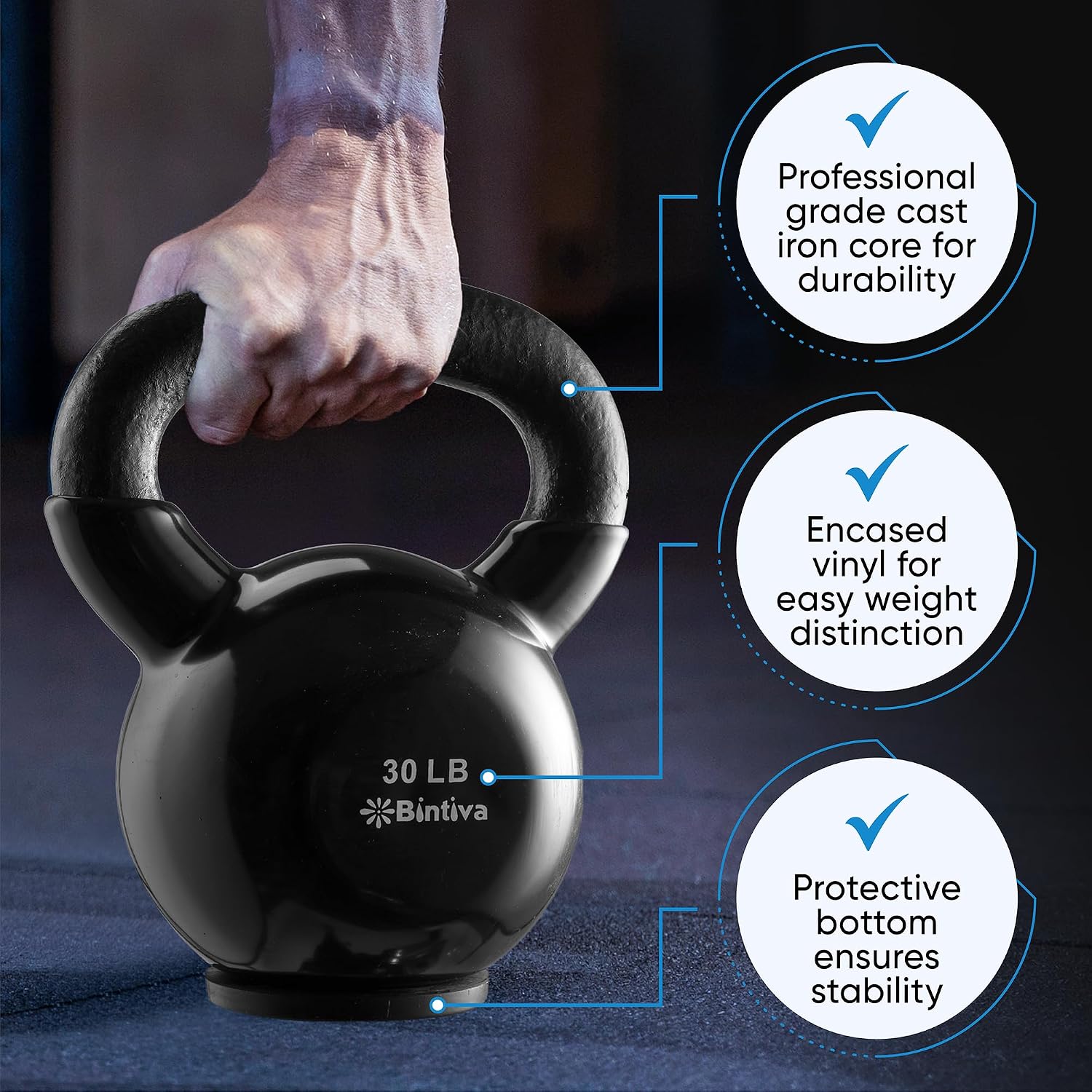
Kettlebell
$318.24
In stock on Amazon
Check price on AmazonWhere Fixed Sets With Racks Actually Win
Budget Entry Point: Three-Bell Starter Kits
Fixed kettlebells — cast iron, no moving parts, no mechanisms to wear out — have one structural advantage that adjustable formats cannot match: simplicity. You grab the bell. You put it down. Nothing adjusts, nothing sticks, nothing needs to be re-seated.
Entry-level three-bell rack combos (typically sold with a storage base at 15, 25, and 35 lb) receive consistent praise in owner reviews for organized footprint and floor protection — buyers like that the bells live in one clean spot and that rubber or foam bases keep the floor intact. However, a recurring concern in aggregate owner feedback involves concrete-filled construction. Some entry-level rack bases and even individual bells use a concrete-and-HDPE (plastic) composite fill rather than solid cast iron. Concrete fill is heavier and cheaper to produce, but the rigid fill can crack under impact during shipping, and structural integrity is meaningfully lower than cast iron over the long run. Consumer Reports’ “Home Gym Equipment: What to Know Before You Buy” guide notes that cast iron is the industry standard for durability in fixed-weight training equipment, and that buyers of rack sets should confirm material composition before purchase — particularly at lower price points where concrete fill is more common.
F2C
$23.99
In stock on Amazon
Check price on AmazonMid-Tier: Four- to Five-Bell Sets for Progressive Training
For high-volume training where you’re moving through multiple bells in a session — ladders, complexes, or circuit work with three or four weights in rotation — having bells on a rack next to each other is meaningfully faster than adjusting a single unit between sets. Men’s Health’s “Best Kettlebell Sets” review roundup notes that coaches and trainers who program this style of work tend to prefer fixed sets once training volume and sophistication increase. A four- or five-bell set covering 15 to 50 lb gives you the weight range of an adjustable bell at comparable total cost, with the added benefit of simultaneous access to all weights.
Best
$54.99
In stock on Amazon
Check price on AmazonPremium Option: Competition-Spec Cast Iron Sets
Competition kettlebells — uniform in size regardless of weight, made from a single casting — are the premium fixed-bell choice. The uniform dimensions mean your movement mechanics don’t change as you move up in weight, which is a genuine technical advantage for trainees focused on clean form. They’re also among the most durable training tools available. The cost is higher and the rack footprint is larger, but for serious long-term training, competition-spec sets are a worthy investment.
Kettlebell
$318.24
In stock on Amazon
Check price on AmazonDecision Framework: If X, Then Y
Here’s the honest summary. Skip to the row that matches your situation.
If you’re training with a partner or housemate at different strength levels → The adjustable format (specifically dial-adjust mechanisms) is your clearest win. The shared-use math is real and documented by owners who live it.
If you’re a complete beginner who needs to start below 20 lb → A single fixed bell (15 lb cast iron) or a dial-adjust bell that covers lighter increments is your path. Plate-handle adjustables with a 20-lb floor are a real barrier — don’t start there.
If you already own a plate set and want to add kettlebell movements → A plate-handle is a smart value unlock, but go in with eyes open about the plastic bottom triangle durability flag and the 20-lb minimum. It’s a solid proposition for the right buyer, not a universal recommendation.
If you’re doing high-volume circuit or ladder training with multiple bells per session → A fixed set on a rack will serve that style better. The time cost of mid-workout adjustments accumulates.
If space is your binding constraint (under 20 sq ft of usable floor) → Adjustable wins on footprint math, no contest.
If you’re buying a rack set at the entry price tier → Verify cast-iron construction. Concrete-fill bases and bells have a documented fragility pattern specific to shipping and long-run use. That’s a risk to price in explicitly before you buy.
Frequently Asked Questions
Can two people with very different strength levels share one adjustable kettlebell effectively? Yes — and this is where the format genuinely earns its keep. Dial-adjust bell owners surface this use case unprompted more than almost any other feature. As long as each person is training within the bell’s weight range (typically 8–40 lb on mid-tier adjustables), the shared-household scenario works cleanly.
How fast can you actually change the weight on an adjustable kettlebell mid-workout? Dial-mechanism bells take roughly 5–10 seconds once you’re familiar with the motion. Spacer-disk systems take longer — owners estimate 20–45 seconds depending on how many disks are moving. Neither is instant. If your program calls for very fast transitions, fixed bells on a rack are the faster tool.
Is a plate-handle adjustable as good as a purpose-built adjustable bell? It depends on your definition of “as good.” For value per dollar when you already own plates, the plate-handle is hard to beat. For feel, balance, and mechanism quality, purpose-built adjustable bells are more refined. The plate-handle also carries specific durability flags — the plastic bottom triangle concern — that purpose-built units don’t share.
Do adjustable kettlebells feel balanced during swings, or do internal plates shift? Based on aggregated owner reviews, well-designed dial-lock adjustable bells do not shift during standard swing and press movements when properly seated. The concern is real but manageable: if the locking mechanism isn’t fully engaged before you start, you’ll feel it. Most owners report no issue once they develop the habit of confirming the lock before each set. Spacer-disk designs get more mixed feedback on this point.
How much floor space does a three-piece kettlebell rack set actually require? Most three-bell horizontal rack sets occupy a footprint of roughly 24–36 inches wide by 14–18 inches deep — approximately 2–4 square feet of floor space. In practice, you also want 2–3 feet of clearance in front of the rack to set bells down safely, so budget 6–8 square feet of usable zone total.
Is a concrete-filled kettlebell as durable as cast iron for regular heavy use? No — and this distinction is worth making explicitly. Cast iron is a single continuous material with no internal seams or fill. Concrete-HDPE composite bells have an outer shell and a poured fill, and the rigid fill can crack under impact, particularly during shipping or if dropped. Consumer Reports’ “Home Gym Equipment: What to Know Before You Buy” guide identifies cast iron as the durability benchmark for this category. For light occasional use, concrete fill is a manageable risk. For regular heavy training, cast iron is the more durable material by a meaningful margin.
Sources cited in this article: Barbend’s “Best Adjustable Kettlebells” buyer guide; ACE Fitness’s “Kettlebell Training” exercise science overview; Consumer Reports’ “Home Gym Equipment: What to Know Before You Buy”; Men’s Health’s “Best Kettlebell Sets” review roundup. All citations are plain-text named sources; no hyperlinks are used.