July 13, 2026 • Brian Webb • 10 min reading time • Prices verified June 29, 2026
Adjustable Kettlebell vs. Plate-Loaded Handle vs. Fixed Set: The Home Gym Decision Nobody Makes Cleanly
If you’ve ever looked at a kettlebell — that cannonball-shaped weight with a handle on top — and wondered whether you need one, five, or some clever gadget that replaces all of them, you’re not alone. The question sounds simple until you start shopping, and then the formats multiply fast. There are fixed kettlebells (one weight, cast in iron or rubber-coated, done), adjustable kettlebells (a single shell you dial up or down in pounds), and plate-loaded handles (a bare steel handle you thread standard weight plates onto yourself). Each format makes real sense for a specific type of home gym. None of them is universally right. This article gives you the decision framework to stop second-guessing and pick the one that fits your actual situation — today and twelve months from now.
What You’re Really Comparing (Format Mechanics First)
Before price enters the conversation, it helps to understand what each format actually is mechanically, because the mechanism shapes every tradeoff downstream.
Fixed kettlebells are the oldest format. Cast iron is poured into a mold, cooled, and finished — one weight, one piece, no moving parts. Fixed sets give you multiple weights (say, a 16 kg, 20 kg, and 24 kg), each a discrete unit. You’re buying simplicity and longevity. The cost is floor space and upfront outlay for a full range. Cast iron’s durability advantage over concrete-core or plastic-shell alternatives is well documented in owner experience: concrete-filled and HDPE shells are reported to crack, chip, or leak filler material under regular use in a way that poured cast iron simply does not.
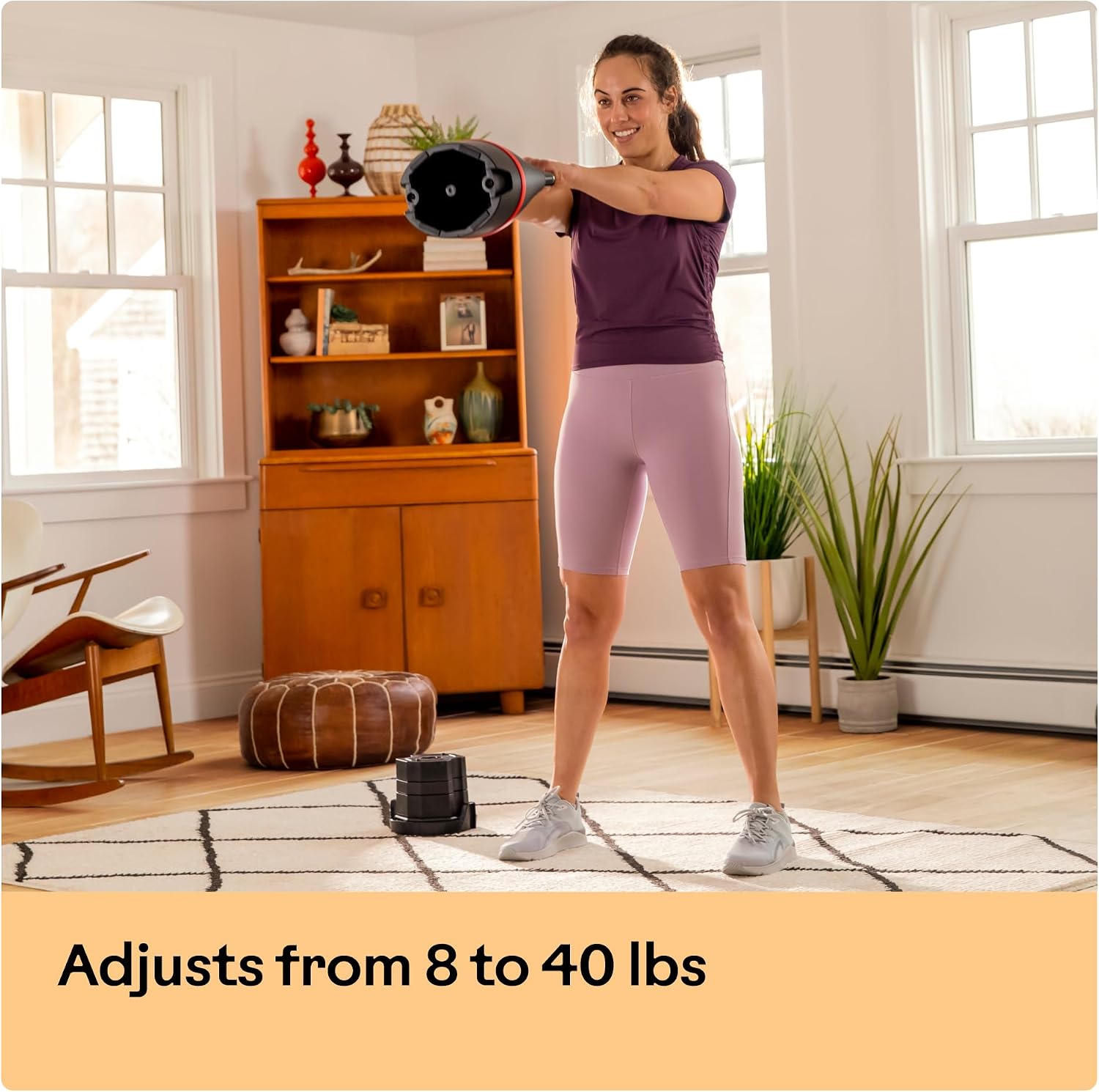
Adjustable kettlebells — the Bowflex SelectTech 840 is the most-cited example in this category — use a dial or selector mechanism to lock a specific weight increment inside a modular shell. You turn a dial, lift the handle, and the shell loads only the discs you selected. One physical unit covers a weight range (the 840 spans 8 to 40 pounds). The tradeoff is mechanical complexity: more parts means more things to eventually wear. The benefit is dramatic: one footprint, one storage spot, a range of weights accessible within seconds. Couples and housemates training at different strength levels consistently cite the shared-unit use case as the format’s biggest real-world advantage.
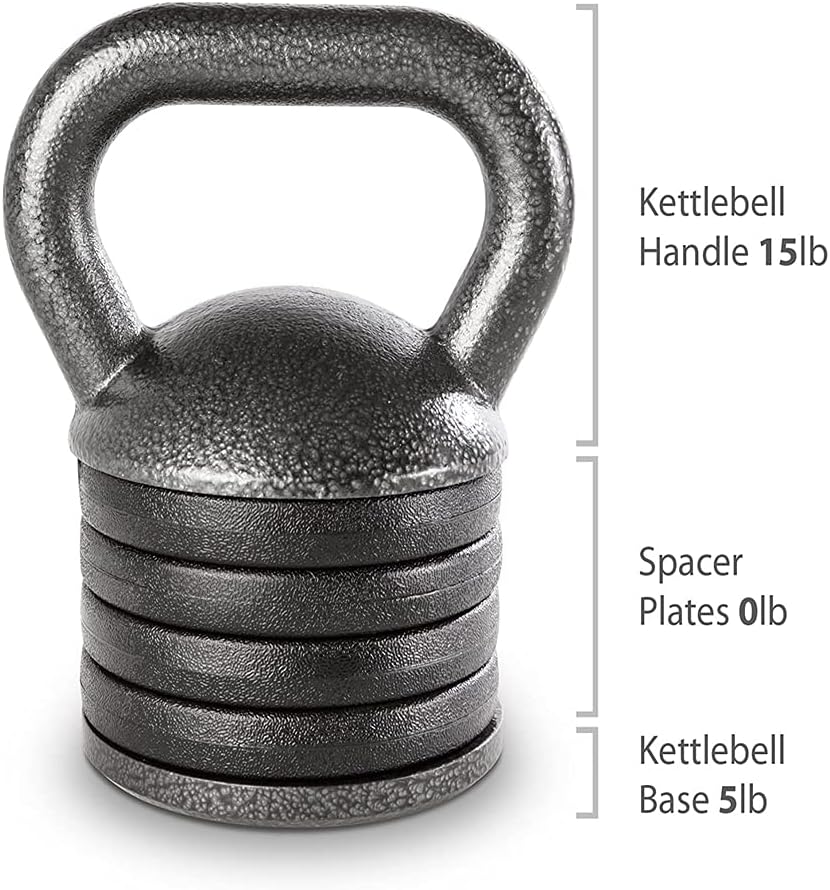
Plate-loaded handles are the stripped-down pragmatist’s choice. A steel handle accepts standard weight plates — the same plates you may already own for a barbell — via a central post and a collar or locking ring. The Apex plate-loaded kettlebell handle is among the most-reviewed options in this format. The format’s arithmetic reality is worth naming directly: moving from 15 pounds to 20 pounds on a plate-loaded handle (adding one standard 5-lb plate) represents roughly a 32-percent load increase. That’s a meaningful spike for someone trying to progress gradually, and it’s not a product flaw — it’s the math of whatever plates you happen to own.
The Decision Tradeoffs, Named Explicitly
Space and Sharing
Adjustable wins here. A single adjustable unit occupies roughly the footprint of one mid-sized kettlebell. If your home gym is a corner of a bedroom, a closet shelf, or the end of a couch, this matters enormously. The two-person daily-use case — different strength levels, one unit, no conflict — reflects something real about how couples or housemates actually use home equipment.
Fixed sets require dedicated storage: a rack, floor space, or wall-mounted holders. Three to five kettlebells — a reasonable progression range — occupy a footprint that surprises first-time buyers.
Plate-loaded handles require essentially no storage for the handle itself, but they assume you already own plates and have somewhere to keep them. If you’re starting from scratch with no plates, you haven’t actually saved anything on equipment cost.
Weight Progression Granularity
This is where the math matters most. The format shapes how finely you can advance load over time — and that granularity has real consequences for training quality.
A comparison of common configurations:
| Format | Smallest increment | Practical starting weight |
|---|---|---|
| Bowflex SelectTech 840 | 5 lb | 8 lb |
| Yes4All adjustable kettlebell | ~5 lb | ~5 lb |
| Apex plate-loaded handle | ~5 lb (1 plate) | ~15 lb (handle weight) |
| Fixed cast iron set | Per-bell purchased | Your choice |
The plate-loaded handle’s progression problem is real: you’re limited to the plates you own, and standard plates jump in increments that may be too aggressive for kettlebell-specific movements. BarBend’s “Best Kettlebells” buying guide (2025 edition) notes that for swing-based training, load jumps over roughly 20–25 percent can meaningfully disrupt mechanics, especially for newer lifters — which makes the 32-percent single-plate jump worth planning around before you commit to the format.
Durability and Failure Modes
Fixed cast iron is the durability baseline. No mechanism, no plastic selectors, no moving parts. The risk profile is simple: drop it on the wrong surface and you chip the finish, but the weight itself is functionally indestructible. The contrast with concrete-core or HDPE (high-density polyethylene) options is real. At lower price tiers, reviewers routinely report cracked bases on arrival from HDPE units — and what’s striking is that many shrug it off as cosmetic. That tolerance for a structural crack-on-arrival is a signal about the quality tier: at that price point, expectations have already been discounted considerably.
Adjustable mechanisms introduce a meaningful wear variable. Men’s Health’s “The Best Adjustable Kettlebells You Can Buy Right Now” (MensHealth.com, 2025) consistently flags the selector mechanism as the long-term unknown — fine under normal use, but sensitive to drops. Most adjustable kettlebells include warranty language about damage from dropping; check that carefully before you buy.
Plate-loaded handles are simple steel with a collar — nearly as durable as fixed cast iron, assuming the collar threads hold. The failure mode is collar looseness over time, which is manageable with regular checks before each session.
Starting Weight and Beginner Accessibility
The Yes4All adjustable and the Bowflex SelectTech 840 both start meaningfully light (around 5–8 pounds), which makes them accessible to someone beginning strength training, an older adult starting fresh, or anyone rehabbing an injury. ACE Fitness’s “Kettlebell Training: A Practical Guide for Fitness Professionals” (ACEfitness.org) emphasizes that learning the hip-hinge mechanics of a swing requires starting light enough to focus on form — and 8 pounds is a legitimate entry point for that skill acquisition phase.
Plate-loaded handles have a floor set by the handle’s own weight. The Apex handle weighs approximately 15 pounds empty. That’s not light for someone in an early training phase.
Fixed sets let you pick your starting weight, but you pay for each discrete bell. A beginner-appropriate 12 kg + 16 kg + 20 kg fixed set is three separate purchases that add up quickly.
The Three Formats, Tiered by Buyer Profile
### Budget-Conscious Buyer: Plate-Loaded Handle
If you already own a set of standard 1-inch weight plates from a barbell setup, a plate-loaded handle is the lowest-incremental-cost way to add kettlebell movements to your training. You’re not duplicating equipment — you’re adding a movement pattern to iron you already paid for.
Go in knowing the constraints: the minimum starting weight is whatever the handle weighs empty (typically around 15 pounds), and progression jumps by whatever plate denomination you own. Plan your plate inventory before assuming this format will give you the fine-grained weight ladder that adjustable bells provide.
Apex
$45.59
In stock on Amazon
Check price on Amazon### Mid-Range Buyer: Adjustable Kettlebell
The Yes4All adjustable kettlebell and similar mid-range options give you the widest weight range at a lower price point than premium adjustable systems, with the caveat that the plate-swapping mechanic takes a moment to become fluent with — reviewers note that plates can seat tightly, making quick swaps during circuit training slightly awkward. For straight-set training or a household with two users at different strength levels, the format handles daily use well.
ConsumerReports.org’s Home Gym Equipment overview (2024) notes that adjustable kettlebell satisfaction rates are highest among users who prioritize storage efficiency — which maps directly to the small-space buyer who cannot dedicate floor space to a fixed set.
Amazon
$51.99
In stock on Amazon
Check price on Amazon### Serious Long-Term Buyer: Fixed Cast Iron Set
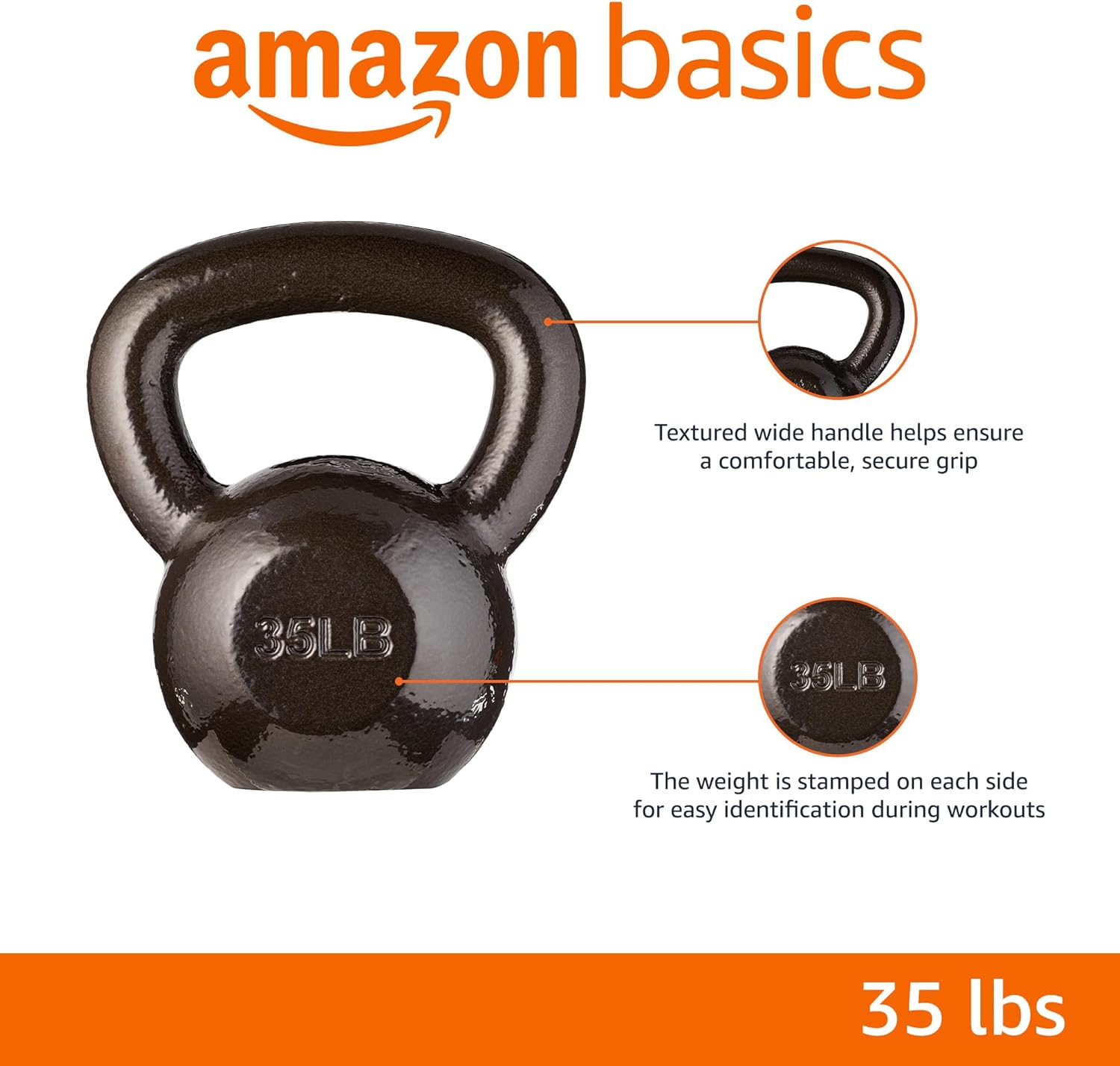
For anyone who wants zero mechanical complexity, maximum longevity, and has the floor space, a fixed cast iron set wins on durability and simplicity. There is no selector mechanism to wear, no collar to check, no plastic component to crack. You buy the weights you’ll actually use in the next 12 months — not weights you’ll “get to someday” — and two or three bells cover most people’s realistic training range for a full year.
BarBend’s “Best Kettlebells” buying guide (2025 edition) recommends cast iron as the default material recommendation for buyers who plan to train with kettlebells as a primary tool rather than a supplement to another modality. The durability gap between cast iron and alternative materials widens significantly with daily use over a multi-year window.
BowFlex
$149.00
In stock on Amazon
Check price on AmazonReal Owner Patterns (Aggregated Review Signals)
Owner reviews at scale reveal usage archetypes more reliably than any single recommendation. A few patterns stand out across the formats in this category:
- Bowflex SelectTech 840: Buyers skew toward small-space users and couples. The two-people-different-strength-levels use case appears in multiple reviews unprompted. The footprint elimination is the emotional centerpiece of almost every enthusiastic review.
- Yes4All adjustable: Praised for compactness but flagged for awkward plate removal during fast transitions. This matters for circuit training; it matters less for straight sets.
- Apex plate-loaded: Draws analytically-minded buyers who already own plates. Reviews tend to do actual math — including load-jump percentage observations — suggesting a self-selecting audience that accepts format constraints in exchange for zero redundant equipment.
- Fixed cast iron (entry-level options): Attracts buyers who had a bad experience with cheaper materials. The durability story is almost always relative — “after my concrete one cracked.” Straightforward satisfaction; no feature drama.
- Budget HDPE units: Price-driven purchases from buyers who know the tradeoff going in. Broken bases on arrival are documented frequently; reviewers who accept this outcome have already calibrated their expectations down.
Frequently Asked Questions
Can two people with different strength levels share one adjustable kettlebell? Yes — this is one of the strongest practical use cases for adjustable kettlebells. You dial to your weight, your partner dials to theirs. Owners consistently cite this as the format’s biggest real-world advantage over fixed sets.
Do plate-loaded kettlebell handles work with any weight plates? Most plate-loaded handles accept standard 1-inch hole plates (the most common size for non-Olympic home setups). Olympic plates (2-inch hole) require an adapter or won’t fit. Confirm plate compatibility before purchasing the handle if your existing plate inventory uses Olympic sizing.
Are concrete-filled kettlebells as durable as cast iron for daily training? No. Owner reports document concrete-core and HDPE kettlebells cracking, chipping, or leaking filler material under regular use. Cast iron is a poured single piece with no filler and does not share the same failure modes.
How quickly can you change weights on the Bowflex SelectTech 840? The dial mechanism takes roughly 5–10 seconds to change weight increments — turn the dial, lift the handle, done. It’s faster than swapping plates on a handle, slower than grabbing a different fixed bell off a rack.
What is the minimum starting weight on each format? The Bowflex SelectTech 840 starts at 8 pounds. The Yes4All adjustable starts around 5 pounds depending on configuration. Plate-loaded handles like the Apex start at the handle’s own weight — typically around 15 pounds empty. Fixed cast iron bells are available as light as 4–5 kg (roughly 9–11 pounds) from most retailers.
Is a cracked base on a budget kettlebell a safety issue or just cosmetic? It depends on severity. A hairline crack in the base that doesn’t affect the handle or structural integrity is primarily cosmetic — the base doesn’t bear load during most kettlebell movements. A crack that propagates toward the handle or causes the shell to flex during use is a real safety concern. The fact that reviewers routinely dismiss base cracks as cosmetic suggests they’ve accepted a quality-tolerance tradeoff that serious, sustained training demands will not survive long-term.