August 21, 2026 • Brian Webb • 10 min reading time • Prices verified June 29, 2026
Adjustable Dumbbells for Beginners: Entry-Level Sets That Do Not Embarrass Themselves Under Load
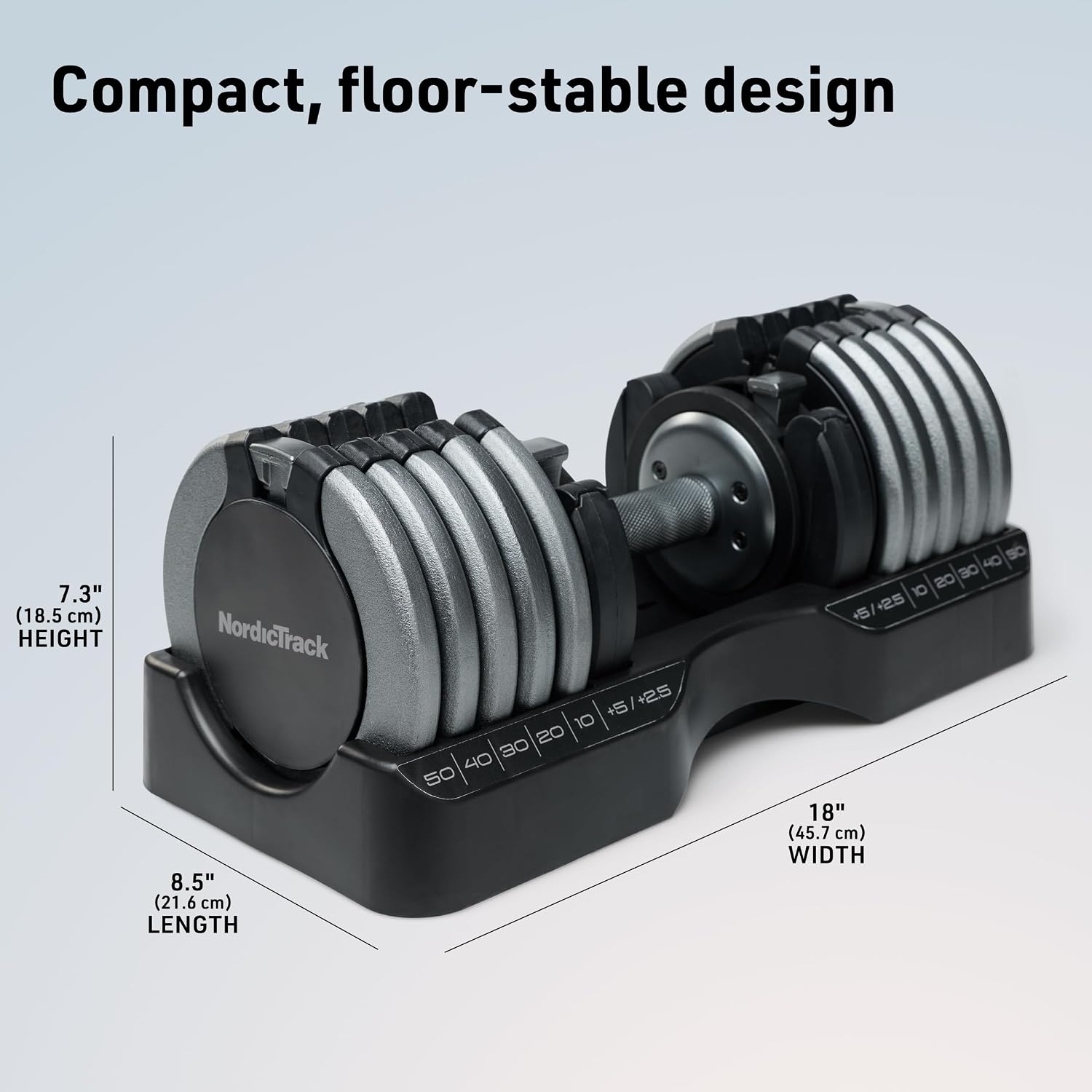
Adjustable dumbbells are exactly what they sound like: a single dumbbell (the short weighted bar you hold in one hand) that lets you dial, twist, or pin the weight up or down instead of buying a whole rack of separate weights. One compact unit replaces ten or fifteen individual dumbbells. For anyone setting up a home gym for the first time — or working out in a spare bedroom where a full rack is simply not an option — that matters a lot. The question this guide answers is a practical one: which entry-level adjustable sets actually hold up when you start adding weight and training with any consistency, and which ones will leave you wishing you had spent your money differently? We analyzed published specs, aggregated owner review patterns, and real-world feedback across hundreds of verified buyers so you can make this call once and move on to actually training.
| EDITOR'S PICKNordicTrack Select-a-Weight Adj… | Mid-tierLifePro Adjustable Dumbbells Set | Budget pickAmazon Basics Adjustable Dumbbe… | |
|---|---|---|---|
| Max weight | 55 lb | 25 lb | 25 lb |
| Pair or single | Pair | Pair | Single |
| Adjustment type | Select-a-Weight | Pin | — |
| Weight increments | — | — | 5 lb |
| Price | $319.99 | $189.99 | $89.99 |
| See on Amazon → | See on Amazon → | See on Amazon → |
The Biggest Mistake Beginners Make: Buying Too Light
Before we talk about which sets to consider, there is one sizing error worth naming directly because it shows up constantly in owner feedback: buying a set with a 25-pound maximum weight ceiling when you actually need 50 pounds.
This is not about being overly ambitious. It is about how the body adapts. ACE Fitness’s guidance on resistance training for beginners notes that meaningful strength gains arrive within six to eight weeks of consistent training — and those gains mean the weights that challenged you in week one will feel easy by month two. Wirecutter’s adjustable dumbbell coverage echoes this in practical terms: reviewers and editors consistently warn that the 25-lb cap is the single most common regret among first-time buyers who trained honestly for a year.
Amazon Basics 25-lb owners are the clearest illustration of this pattern. Across aggregated reviews, the dominant feedback is not “these broke” — it is “I wish I had bought the 50-lb version.” That is a different problem than a quality failure, and it is one you can avoid entirely by making the right call at purchase.
The practical decision rule: If you are starting from zero and plan to train three or more days per week, buy a set with at least a 50-lb ceiling per hand. If 50 lbs sounds intimidating, remember you are not going to be using that weight on day one — you are buying room to grow.
By the Numbers
| Metric | What It Tells You |
|---|---|
| ~$2.20/lb | Cost-per-pound benchmark AOTOB owners cite when comparing lesser-known brands to big names — a useful baseline for evaluating any entry-level set |
| 25 lbs | Weight ceiling where most beginners hit the wall within 6–12 months of consistent training |
| 50 lbs | Minimum ceiling Wirecutter and Barbend both recommend for anyone planning to train long-term |
| 6–8 weeks | Timeframe ACE Fitness identifies for measurable strength adaptation in new trainees |
What Actually Breaks (and What Just Sounds Like It Might)
Entry-level adjustable dumbbells have a perception problem: the plastic selector mechanisms look fragile compared to the all-steel fixed dumbbells you see in commercial gyms. That anxiety is understandable and worth taking seriously — but owner data suggests the reality is more nuanced.
Plastic parts: real risk or cosmetic concern?
LifePro adjustable dumbbell owners are a good case study here. Reviewers report going in with genuine anxiety about the plastic selector housing, then updating their reviews at the 12-month mark with a different story: the mechanism held up under regular home use. That does not mean all plastic-heavy entry sets are equally durable — it means that plastic components in a well-engineered selector mechanism are not automatically a death sentence. The distinction is between plastic used as a structural load-bearing element (bad) versus plastic used as a selector guide around a metal locking pin (generally fine under home-gym loads). Consumer Reports’ home gym equipment coverage makes this same distinction when evaluating resistance equipment: the material matters less than where in the mechanism it sits.
What the rattling noise actually means
AOTOB owners flag something specific that deserves its own paragraph: a plate-rattling sound during lifts. This is worth disclosing clearly because it causes real alarm in owners who first hear it. Across aggregated AOTOB reviews, the consensus is consistent — the rattle is a sensory issue, not a structural one. Plates on selector-style dumbbells that are not actively engaged by the pin have minor clearance gaps, and those gaps produce noise under dynamic movement. It is the mechanical equivalent of loose change in a pocket: annoying, not dangerous. If this would bother you during a workout, that is a legitimate preference — but it is not a reason to treat the dumbbell as unsafe.
The non-rolling square plate design
Eisenlink-style square-plate dumbbells solve a problem that product pages rarely mention but owners consistently praise: fixed dumbbells and round-plate sets roll when set on the floor. Square plates do not. In a small home gym where a dumbbell rolling into a wall or across an uneven garage floor is a real hazard, this is a genuine safety feature, not a marketing differentiator. Barbend’s coverage of alternative adjustable designs has noted this geometry benefit in the context of space-limited setups. If you are training on hardwood, tile, or a sloped garage floor, a square-plate design is worth prioritizing.
Adjustment Mechanisms: Dial, Pin, and Twist Compared
Three mechanisms dominate entry-level adjustable dumbbells. Each has a distinct tradeoff profile.
Dial (selector knob) You turn a dial at one or both ends of the dumbbell, and the mechanism engages only the plates corresponding to your selected weight. The Bowflex SelectTech design popularized this format. Dial systems are fast to adjust and intuitive, but the dial housing is the component most exposed to impact damage if you set the dumbbell down hard. For beginners who are still learning movement control, that is worth noting. Wirecutter consistently rates dial-style sets highly for ease of use in beginner-to-intermediate contexts.
Pin (selector pin) You remove a pin, slide it to the appropriate weight notch, and reinsert it. This is the oldest mechanism and the most mechanically simple — fewer components that can fail. The tradeoff is speed: adjusting between exercises takes longer than turning a dial. For circuit-style training where you are moving quickly between movements, this matters. For straight sets with rest periods, it does not.
Twist (handle rotation) You rotate the handle itself to engage different weight plates. This design tends to produce the most compact form factor, which is appealing for small spaces. The mechanism is typically fast, but the weight increment jumps between settings are sometimes larger than dial systems, which can feel like a bigger gap when you are progressing as a beginner. AOTOB’s design uses a variant of this approach, and the plate-rattling noise mentioned above is partly a function of how twist systems seat the unused plates.
Decision frame: If speed of adjustment matters most, go dial. If you want the simplest possible mechanism with the fewest failure points, go pin. If compact footprint is the priority, look at twist designs — but accept slightly larger increment jumps.
The Hidden Case for Lesser-Known Brands
The fitness equipment market in mid-2026 includes a genuine tier of lesser-known brands that are not household names but that deliver solid performance at a materially lower cost per pound. AOTOB is the clearest example: owners explicitly note the ~$2.20/lb cost-per-pound figure and compare it favorably against branded alternatives as evidence that the value calculation cuts toward lesser-known options when budget is a real constraint.
The honest tradeoff here: lesser-known brands carry more variance. The mean outcome across AOTOB reviews is positive. The floor outcome — when something does go wrong — is worse than it would be with a brand that has an established warranty and customer service infrastructure. Barbend’s buyer’s guide framework for adjustable dumbbells addresses this directly: for buyers who prioritize cost and are willing to accept that warranty support may be limited, a lesser-known brand at a strong cost-per-pound can be the right call. For buyers who want a clear warranty path and name-brand support, the premium is worth it.
The couples’ buying pattern
Rendpas buyers reveal something worth naming explicitly: a meaningful pattern of couples purchasing two sets simultaneously. This makes intuitive sense at entry-level price points — when a set costs under $150, buying two for a household becomes a realistic option rather than an obvious splurge. The practical case for a couple owning separate sets rather than sharing one is real: different starting weights, different training schedules, and the friction of adjusting settings between partners adds up. If you are setting up a home gym for two people, factor the pair-buy option into your math from the start.
Frequently Asked Questions
Will I outgrow a 25-lb adjustable dumbbell set within a year if I train consistently?
Almost certainly yes, for most exercises. Upper-body pushing and pulling movements progress quickly in the first year, and movements like Romanian deadlifts and goblet squats will exceed 25 lbs per hand within months for most trainees. The Amazon Basics 25-lb owner pattern — wishing for a 50-lb version — is the clearest real-world signal here. Buy the higher ceiling upfront.
Are plastic parts on adjustable dumbbells a real durability risk or just a cosmetic concern?
It depends on where the plastic sits in the mechanism. Plastic selector guides around metal locking pins, as seen in LifePro and similar designs, hold up well under home-gym use based on owner reports at the 12-month mark. Plastic used as a structural load-bearing element would be a real concern — but that is not typically how entry-level selector systems are engineered. The anxiety is understandable; the reality for reputable entry-level sets is more reassuring than the first look suggests.
What does a rattling sound from adjustable dumbbells mean — is it dangerous?
In selector-style dumbbells, rattling almost always comes from non-engaged plates moving slightly in their guides during dynamic lifts. AOTOB owners document this clearly, and the consistent verdict across reviews is that it is a sensory annoyance rather than a structural warning sign. If the rattle appeared suddenly in a set that had been quiet, inspect the selector mechanism. If it has been there from day one, it is almost certainly the clearance-gap issue described above.
How do I choose between a dial, pin, and twist adjustment mechanism as a beginner?
Use the decision frame from above: dial for speed and ease, pin for mechanical simplicity and longevity, twist for compact footprint. Most beginners who are doing structured workouts with rest periods will find all three workable — the differences matter more as training intensity and volume increase.
Is it worth buying a lesser-known brand of adjustable dumbbells to save money?
Yes, with eyes open. The cost-per-pound math, as AOTOB owners demonstrate, can strongly favor lesser-known brands. The tradeoff is warranty and customer service depth. If your budget is genuinely constrained and you are willing to accept limited warranty support, a well-reviewed lesser-known brand at a strong cost-per-pound is a defensible choice. If you want a clear return and replacement path, budget for a name-brand set.
Should a couple buy one adjustable dumbbell set or two?
Two, if you can swing it at the price point. The Rendpas buyer pattern makes the case clearly: at entry-level prices, the pair-buy is accessible, and sharing one set introduces real friction — different weight preferences, scheduling conflicts, constant readjustment. If your budget only supports one set now, buy the one with the higher weight ceiling so it serves both partners as strength develops, and plan the second purchase for a later upgrade cycle.